
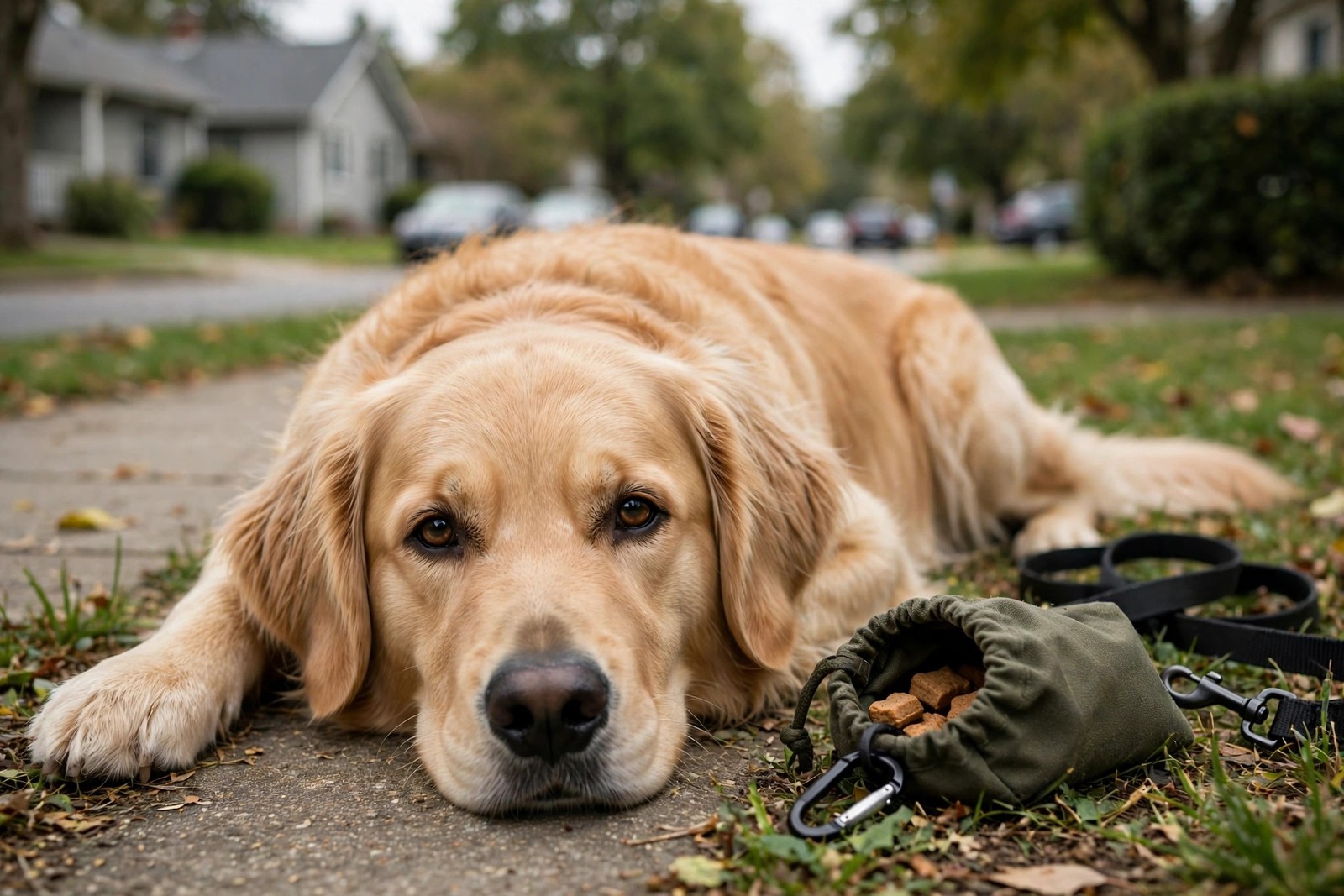
Nervousness of men is common in rescue dogs and is rarely about men as people. Height, deeper voices, direct approaches, and reaching hands can all read as pressure to a dog who may have had little early social contact, or a frightening experience you will never know about. You cannot argue a dog out of that feeling, but you can carefully teach her that men predict good things and, just as importantly, that they respect her space.
Change How Men Present Themselves
The single most powerful change is posture. A man facing a nervous dog squarely, bending over her, staring, and extending a hand toward her head is, in dog language, confronting her at close range. Ask men instead to stand or sit side-on, keep hands low and still, soften or avert their gaze, and let the dog close any distance herself. Crouching sideways at her level, without leaning in, is far less imposing than looming. Slow movements matter too — a quick step forward or a suddenly raised arm can undo a calm minute.
For the first meetings, the man should essentially ignore the dog while being rewarding to be near. That combination — no pressure, good consequences — is what changes the association.
Treats Without Interaction
Have the man toss, not hand, small pieces of something your dog truly loves — chicken, cheese, or hot dog — onto the ground near his feet or slightly to the side, without looking at her or speaking to her. Tossing matters for two reasons: she does not have to approach his hand to get the reward, and she can eat, look up, and choose to stay or leave. If she will not eat at all, she is too stressed or he is too close; increase the distance rather than coaxing her nearer with food, which can lure a dog into a situation she cannot handle and then panic her.
Repeat short sessions with the same calm man until her body language softens — looser tail, relaxed ears, voluntary glances, choosing to remain in the room. Only then reduce distance slightly, let him speak quietly, and much later allow her to initiate a sniff of a still hand, followed immediately by him withdrawing it. A sniff is a question, not an invitation to stroke.
Manage Visitors and Walks
Brief every male visitor before he comes through the door: no greeting, no reaching, treats are in the pot by the door, let the dog choose. Give your dog a genuine escape route and a safe place — a bed or crate in a quieter room — and never shut her in with company she fears. On walks, cross the road or arc wide around approaching men rather than letting strangers stop to fuss her; advocate out loud with a cheerful instruction that she is in training and should be ignored, and keep moving.
Watch the early warning signs — lip licking, yawning, tucked tail, whale eye, freezing, or low growling — and increase distance at the first of them. Growling is communication to preserve, not behaviour to punish, because a dog stopped from growling may skip the warning next time. If fear is intense, worsening, or paired with snapping or lunging, work with a qualified force-free trainer and mention the fear to your veterinarian.
Progress is usually measured in weeks, and setbacks after a startling encounter are normal. In KinsLe, Care Teams can hold the written visitor rules, the treat-tossing duty, and notes on which distances your dog handled calmly, so every person in her life helps the same careful plan instead of improvising.