
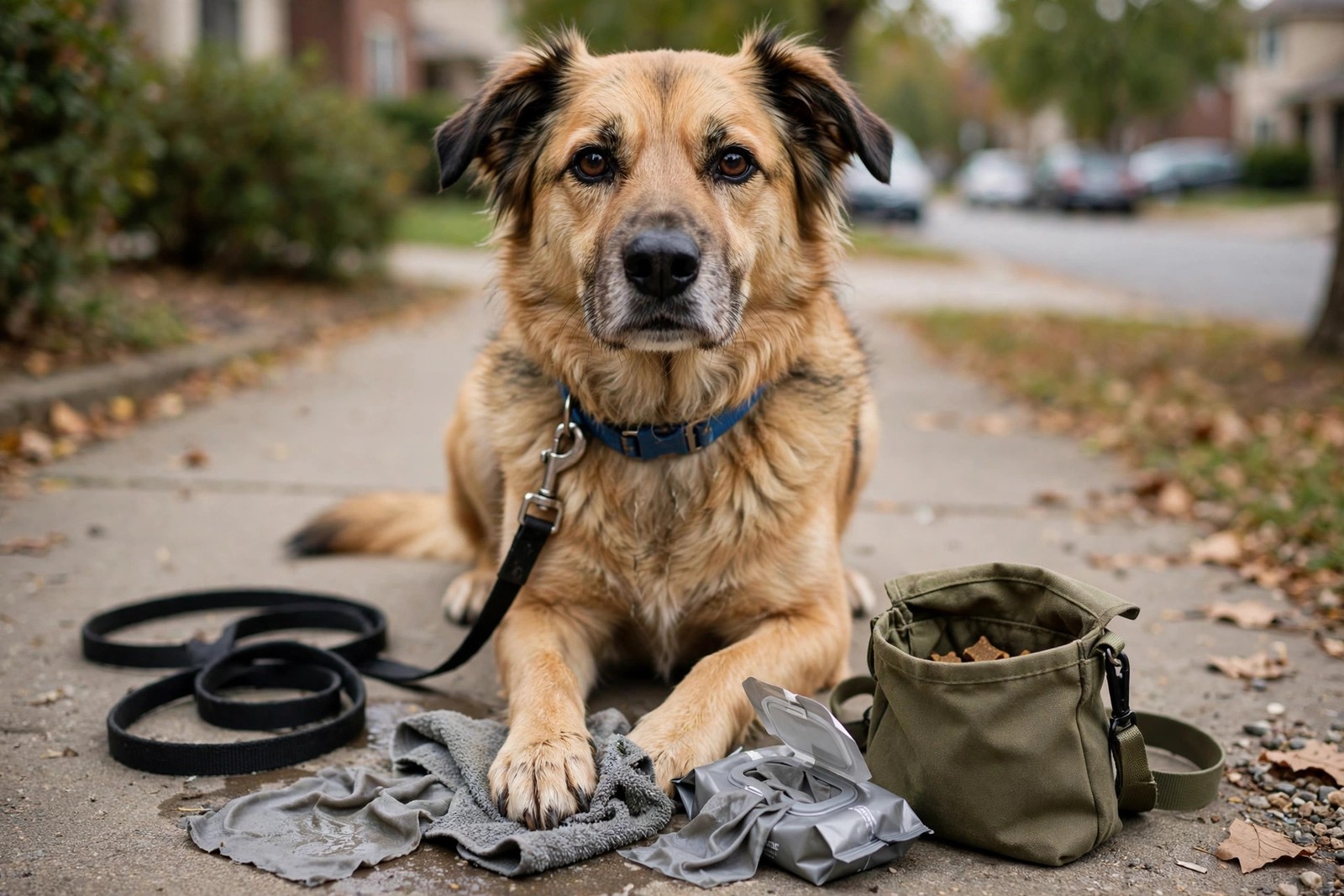
Few things are as disarming as looking up from your phone to find your dog already watching you, chin level, eyes locked, apparently mid-thought. She is. Your face, hands, and habits are her main source of news about what happens next, and staring is how a dog without words gathers it. Most staring is flattering, practical, or both, but the body that comes with the gaze decides its meaning, so learn to read the whole picture rather than the eyes alone.
What Most Staring Is Asking
The everyday stare is a prediction engine at work. Dogs become expert students of routine: the shoes that mean a walk, the cupboard that holds treats, the bag you pack before a trip. A dog watching you at six in the evening may simply be running the data on whether dinner is coming. Layered over prediction is learning. Staring has a strong track record, since owners respond to it with eye contact, conversation, food, doors opened, and leads clipped on, so a sensible dog deploys it often. It also covers direct requests you would rather she phrased differently: the fixed look at the table edge during your meal, the stare that migrates between you and the toy basket, the pointed gaze at the door. Answer those by deciding what behaviour you will pay for, such as lying on a mat during meals, and paying that instead, so the stare stops being the working strategy.
The Soft Gaze and the Hard Stare
Affectionate staring looks different in every muscle. The soft gaze comes with a relaxed, slightly squinting expression, slow blinks, ears in their natural position, and a body that may sigh and settle. Dogs offer it during quiet contact, and returning it calmly is part of how the two of you bond.
Treat a contrasting picture with respect. A hard stare is fixed and unblinking, with a closed mouth, a stiff, forward-leaning body, and often a high, still tail, typically aimed at another dog or at a person approaching something the dog values, such as food, a chew, a bed, or a resting spot. That stare is a warning in dog language, not a cuddle request. Do not stare back, lean over, or reach in. Increase distance, let the dog disengage, and if hard staring over resources is a pattern in your home, bring in a qualified trainer promptly, because guarding escalates when it is challenged head-on.
When Staring Is a Health Signal
A new staring habit deserves a second look. An older dog who stares at walls or into corners, gets stuck in doorways, or watches you with an unusually blank expression may be showing cognitive change or failing vision, and pain can also produce a fixed, distant look. Sudden behaviour change of that kind is a vet conversation, not a training problem. For the ordinary, hopeful, dinner-forecasting stare, the fix is mostly structure: regular times for the things she monitors you for, clear cues she can act on, and attention given for settled behaviour rather than for surveillance, and KinsLe Care Teams supports that structure by letting the household assign the set-time feeding, walk, and play duties your dog is watching for, so her day becomes predictable enough to relax in.