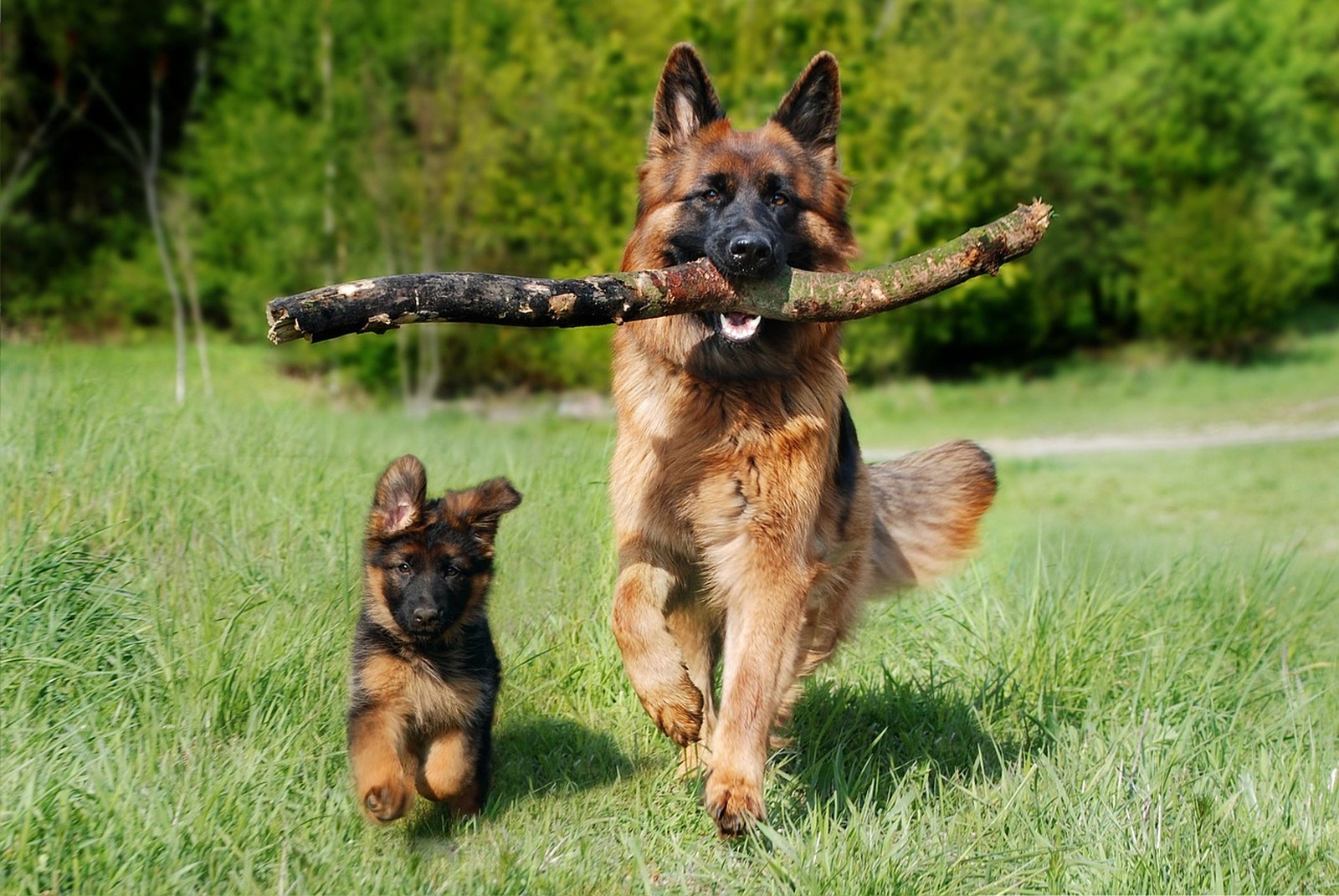
The risk in a new-puppy household is rarely the puppy's training — puppies learn quickly almost by accident. The risk is the adult dog watching its walks shorten, its training games vanish, and its favourite human disappear behind a small, demanding newcomer. Dogs notice lost privileges precisely. The plan below inverts the usual mistake: the adult dog's routine is protected and even upgraded first, the puppy gets proper foundation work separately, and joint training arrives only when it will succeed.
Give the Adult Dog First Turn, Every Day
Keep the adult's established anchors exactly where they were — the morning walk at its usual time and length, the evening game, the training slot if you had one. Where you can, schedule the adult's session before the puppy's, and add something the adult values that is new since the puppy arrived: a longer sniffy walk, a favourite retrieve game, or one-to-one time on the sofa while the puppy naps in a pen. The adult should experience the puppy's arrival as the start of a better season, not an eviction.
Train the Puppy Separately, in Puppy-Sized Sessions
A puppy of eight to sixteen weeks can concentrate for two or three minutes at a time, and needs those minutes to be entirely about them: name recognition, recall from a few steps away, sit, settling on a mat, and accepting handling. You cannot give that focus with an adult dog competing for every treat, and the adult cannot relax while a puppy is being paid at high speed in front of them. So work in different rooms, or with the puppy in a pen and the adult elsewhere with something good.
Let the Adult Observe Without Being Shut Out
Exile feels like punishment. When you train the puppy, set the adult up behind a baby gate or in an open crate within sight, with a long-lasting chew or a stuffed food toy of their own, so they are part of the scene with a job of their own. If the adult barks or frets at being gated while the puppy works, swap the arrangement: puppy in the pen with a helper, adult loose with you for their own quick session first, then resting.
Add Joint Sessions Only When Both Dogs Are Ready
Once the puppy knows the basic cues alone and the adult is relaxed watching from behind the gate, try a joint session of two or three minutes. Use cues both dogs know cold — sit, hand target, name-and-look — with the puppy on a light lead, one dog each side of you, and pay the adult first and generously for every repetition. The adult's calm performance will genuinely tutor the puppy: puppies copy what the older dog does far faster than they decode your instructions. End while it is easy, then release the puppy to play elsewhere and give the adult a quiet fuss.
Stop and go back a stage if the adult starts leaving the room when training gear appears, guards you or the treat pouch, or corrects the puppy more sharply than a brief, proportionate grumble — a lip lift and a walk-away is normal communication, repeated chasing and pinning is not. A puppy who pesters a resting adult should be redirected by you every time; the adult must never be left to do all the disciplining, because that is a quick route to an adult who dislikes the puppy.
A Shape for the Day
A workable rhythm is: adult's walk first while the puppy has a pen chew with another household member, puppy's two-minute session mid-morning, adult's game at the usual afternoon slot, puppy's session before dinner, joint mini-session in the evening once ready. Written down, that rhythm survives a busy week, and KinsLe Care Teams turns it into assigned duties — adult walk, puppy foundations, joint practice — each timestamped when done, so the adult's protected time is visibly kept rather than vaguely intended.