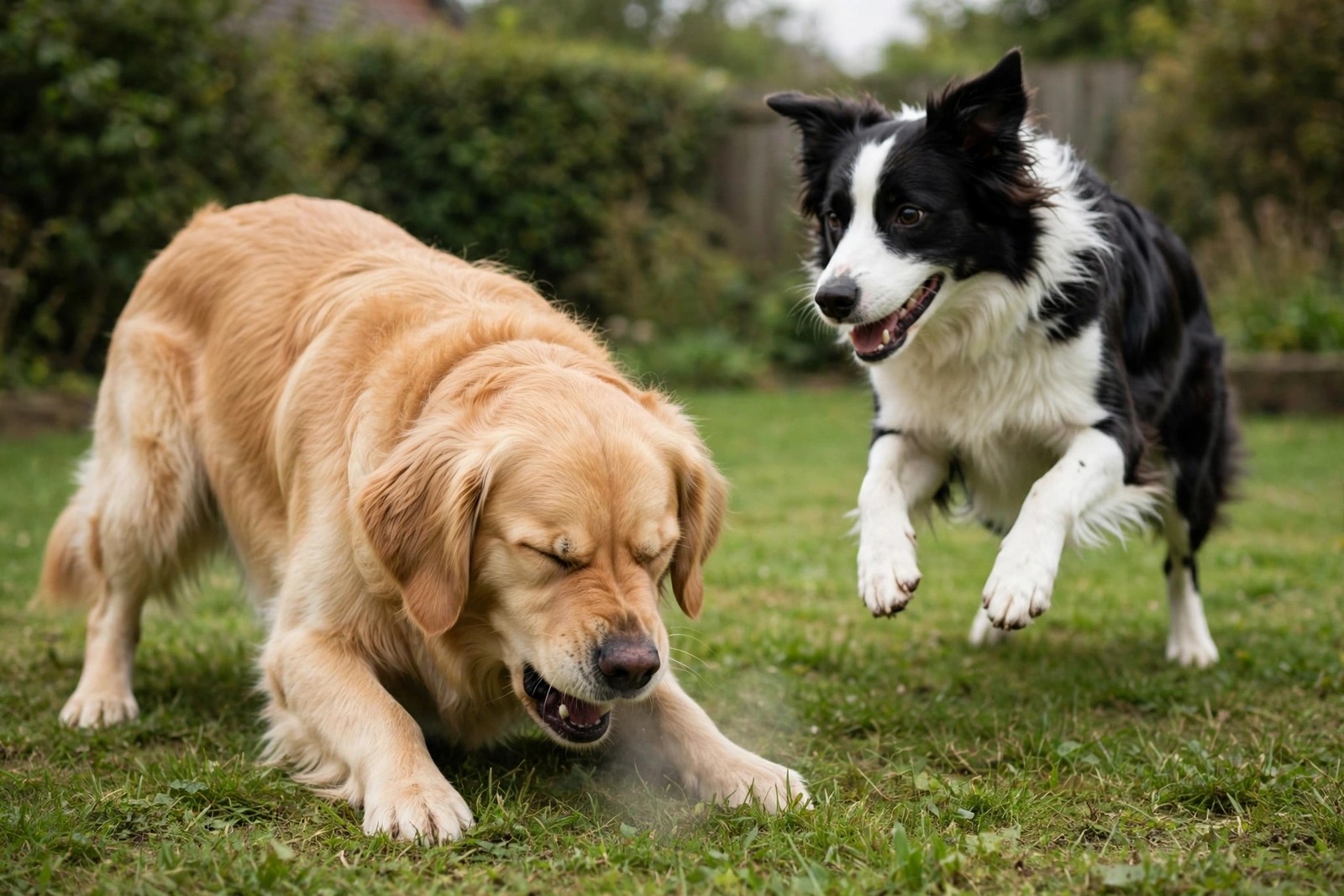
Mid-wrestle, your dog stops, shakes her head, and lets out an explosive sneeze — then dives straight back into the game. She is almost certainly not coming down with anything. That sneeze is a piece of social language, one of the signals dogs use to manage play and keep it friendly, and once you learn to spot it you will notice it everywhere dogs play well together.
A signal that means this is still a game
Play fighting borrows the movements of real fighting — chasing, pinning, mouthing, growling — so dogs need ways to tell each other the encounter is pretend. The play sneeze is one of those signals: a short, deliberate snort or sneeze, often with a head shake, that essentially says the rough stuff is not serious. It tends to appear exactly when play intensifies — a wrestle speeds up, one dog lands on top of the other, mouths get wider — as if the sneezing dog is renewing the agreement before carrying on. Dogs who sneeze often in play are usually skilled, well-socialised players.
The company a play sneeze keeps
A play sneeze rarely travels alone. Look for play bows, loose and bouncy movement, exaggerated bouncing approaches, self-handicapping by the bigger dog, role swaps between chaser and chased, and frequent brief pauses where both dogs shake off, sneeze, and re-engage by mutual choice. The sneeze itself sounds different from a genuine nasal sneeze, too: shorter, snortier, and often repeated in a little series during the liveliest moments. If the whole picture is loose and reciprocal, the sneeze is part of healthy play and needs no response from you beyond enjoying it.
When sneezing is not about play
Sneezing from real nasal irritation follows a different schedule. Sneezing that happens at rest, on walks, and around the house — not only in play — points away from communication and toward something in the nose or airways. Discharge from one or both nostrils, pawing or rubbing at the face, noisy breathing, reduced appetite, or fits of reverse sneezing, where a dog stands still and pulls air in through the nose in rapid honking snorts, all belong in a vet conversation if they persist or worsen. A sudden bout of violent sneezing after running through long grass deserves a prompt call, because inhaled grass material is a possibility a vet will want to rule out.
Supporting good play at home
You do not need to teach the play sneeze — dogs arrive knowing it — but you can protect the conditions it works in. Let playing dogs take their own pauses rather than being separated at every sneeze, recall your dog briefly if play tips into frantic, one-sided chasing, and give young dogs access to calm, experienced playmates whose signals they can copy. Noting which dogs your dog plays with most loosely helps you choose her company wisely.
Teaching children and visitors to read it
Adults new to dogs often misread play sneezing in the opposite direction, worrying that a sneezing, growling, wrestling pair of dogs is fighting. Teach visitors the checklist instead: loose bodies, turns taken, pauses both dogs choose, sneezes sprinkled through the roughest moments. A dog who sneezes and then play-bows is actively keeping the game friendly. Real conflict looks starkly different — stiff bodies, one dog repeatedly trying to escape, no pauses, and no sneezing at all. Children should still never be left to supervise dog play alone, but learning that the sneeze means the game is friendly helps the whole household relax and intervene only when intervention is actually needed.
The play-versus-illness question is really a pattern question, and patterns are easier to see written down. KinsLe's Care Teams lets everyone who walks or supervises your dog add timestamped notes on sneezing episodes, so a sneeze that only ever appears mid-wrestle is clearly documented as play, and one that starts appearing at rest stands out.