
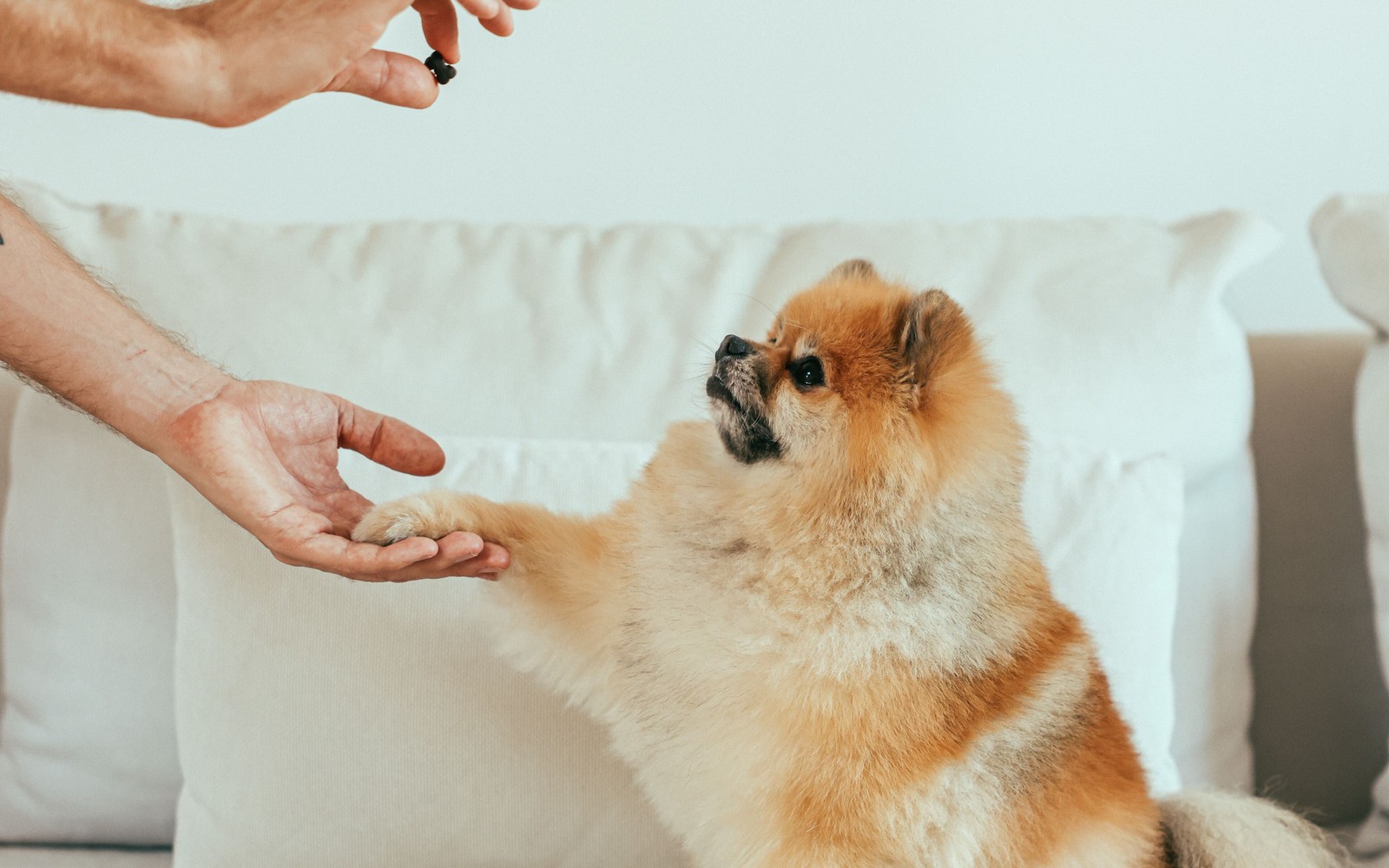
The best first tricks are quick to learn, need no equipment, and each teach something different. Touch builds targeting, spin builds body awareness and following a lure, shake builds paw control, while the mat trick builds settling in a chosen place. Together they give a beginner dog — and a beginner trainer — four early wins that are actually four separate skills, not the same behaviour wearing different names.
Touch: nose to palm
Hold your flat palm a few centimetres from your dog's nose, fingers pointing down. Most dogs lean in to investigate; the instant her nose bumps your palm, say yes and feed a tiny treat from your other hand. Repeat until she is deliberately bumping your hand the moment it appears, then make it a game: palm a little higher, a little lower, and finally a step away so she moves to reach it. Touch becomes a steering tool for life — redirecting attention from a distraction, guiding a nervous dog through a doorway, or positioning her on the vet's scales without grabbing her collar.
Spin: a full turn for a lure
With a treat at nose height, move your hand in one slow, wide circle so your dog follows it all the way around and faces you again. Mark and reward the completed turn. Keep the circle big at first; a tight circle makes many dogs sit or give up. After several smooth turns, shrink the hand movement a little each round, then pair the smaller gesture with the word spin. Teach the opposite direction on a different day, with its own cue if you like, so she works both sides evenly and does not become a dog who can only turn one way.
Shake: a paw in your hand
Hold a treat inside a closed fist at about your dog's chest height and wait. Most dogs sniff, lick, and then paw at the fist to investigate it. The moment a front paw lifts off the floor — even a small scrape against your hand — mark it, open the fist, and reward. If she mouths your hand instead, lower the fist slightly and reward any paw movement at all; you are shaping, not demanding. Only add the word shake once she is offering the paw reliably, and only take the paw gently once she is placing it in your open palm rather than swatting at a fist.
Go to your mat: a place, not a hand target
This trick targets a spot on the floor, which is why it is different from touch. Put a distinct mat or folded towel down, and reward any interest in it: a look, a step toward it, then a paw on it, then all four paws on it. Feed every reward on the mat itself so the mat becomes the good place. Next, reward her for staying standing on it for two seconds, then for sitting on it, building gradually to a down with short pauses before the treat. Add the cue go to your mat only when she is heading there confidently when the mat appears. A dog with a mat cue has a portable settle for cafes, visitors at the door, and your own mealtimes.
Rules that keep all four easy
Use pea-sized, soft treats so each reward takes a second to eat, train before a meal when food has extra value, and reward every small step early on. Stop at three to five minutes, even mid-success, and practise little and often — three touches while the kettle boils beats one long drilling session. If a trick stalls, drop back to the last step your dog could do easily rather than repeating the hard step. For help choosing the next step for the trick you are shaping, put a follow-up question to KinsLe's Kimmy; she answers using the KinsLe Answers library.