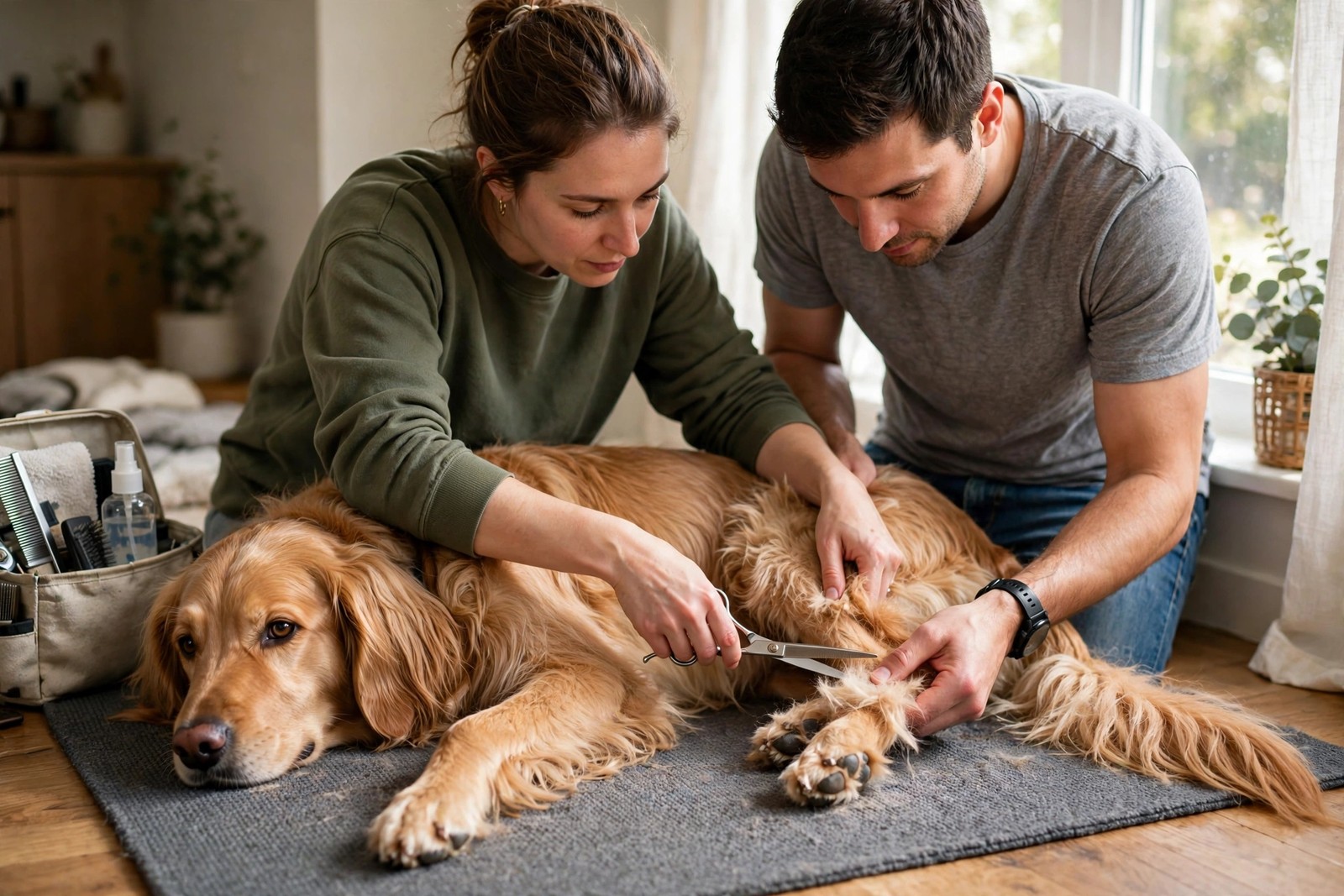
A home sanitary trim is a hygiene tidy, not a shortened version of a salon groom. Your scope is three places only: hair that grows between and over the paw pads, longer hair in the groin that traps urine and dirt, and hair around the rear where stool can catch. Anything beyond that scope, including shaping the coat or working through matting, belongs to the professional groomer who already knows your dog's coat and skin.
Set Up the Trim Properly
The owner gathers blunt-ended scissors or small clippers, a comb, treats, a damp cloth and a towel before the dog is brought over. Blunt ends matter around folded, loose skin, and good light matters just as much, since the skin in the groin sits close under the hair you are lifting. The helper settles the dog on a non-slip surface at a height that spares everyone's back, then feeds small treats at a steady pace while the trimmer works. Two calm people make this job safer than one person trying to hold, lift hair and cut at the same time. The trimmer stops at the first sign of wriggling, panting or pulling away, and resumes only once the dog has settled again.
Work Each Area in Turn
The trimmer combs the paw hair upward first, then snips only the tufts that splay beyond the pads, keeping the scissor tips angled outward. Hair left between the pads can hold grit and form hard little mats that change how the foot lands, so the pads themselves get a quick check for redness or cracks while the hair is lifted. In the groin, the trimmer lifts loose hair with the comb and takes a small amount at a time, never pressing blades flat against folded skin. Around the rear, the trimmer shortens the hair that forms a path for stool to catch on, working outward from the skin and checking the result with a hand rather than by pulling the hair taut. The owner also times the trim around the dog's day: a tidy lands better after a walk, when the dog is warm, exercised and inclined to rest, than straight after a meal or during an excitable first hour home. Treats come from the helper in a slow rhythm, one every few snips, so the dog's attention stays on the helper's hand rather than tracking the tool around its body. The owner wipes the rear with the damp cloth after toileting on days when the coat has caught anything, and dries the area afterwards, since damp hair left against skin invites soreness.
Know When to Hand the Job Over
The owner leaves the trim alone and books the groomer when mats sit tight against the skin, since pulling or digging under a tight mat can nick skin that is already stretched thin. A hand mirror or a phone torch helps the owner check the rear and groin on a dark-coated dog, where caught dirt hides against dark hair. Sore, broken, red or smelly skin in any of the three areas is a reason to contact the vet instead of trimming around the problem, and a dog that cannot settle even with a helper and treats is telling you the job needs professional handling. Between grooms, a brief tidy every few weeks usually keeps pace with regrowth, and the owner shortens that gap during wet weather when pads and rear hair pick up more dirt. Put the weekly paw and rear check down as a recurring duty in Care Teams, and KinsLe will show who handled it and when it was finished.