
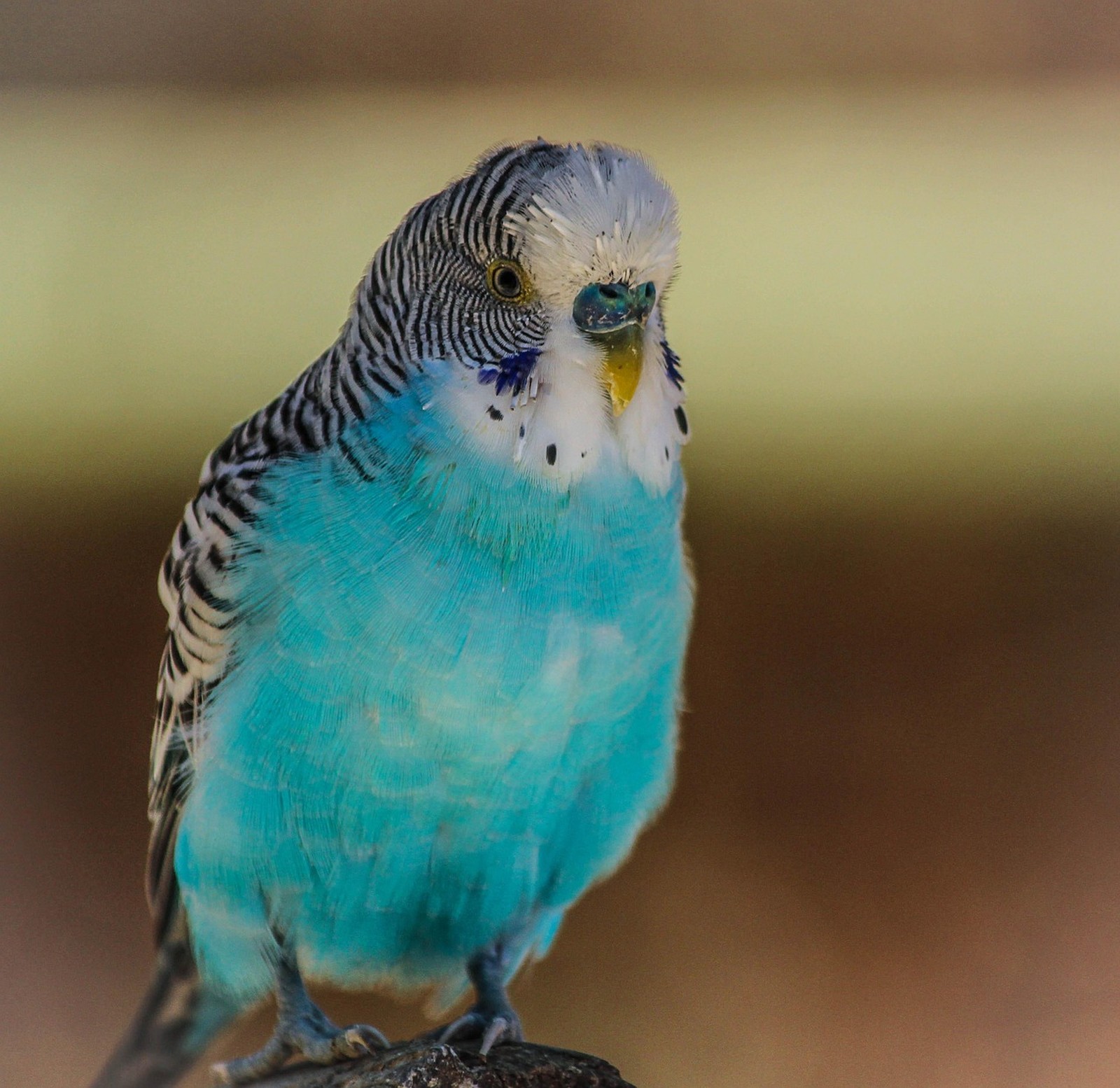
Budgies are one of the easier pet birds to sex without any test, because the answer is worn openly on the face. The fleshy, slightly bulging patch at the top of the beak, pierced by the two nostrils, is called the cere — and its colour, read together with the bird's age and colour variety, separates most males from females reliably.
Reading an Adult Cere
In a mature budgie of a standard colour variety, the difference is plain once you know where to look. A male's cere is smooth, glossy, and evenly coloured — a rich royal blue in green and blue series birds, sometimes shading toward purple. A female's cere is never that solid blue: out of breeding condition it is whitish, pale blue-white, or light tan, with a drier, slightly rougher texture, and when she comes into breeding condition it deepens to a rich brown and can look distinctly crusty or built up in layers. The nostrils themselves are a useful anchor — in females the area immediately around each nostril often stays paler than the rest of the cere, giving a faint ringed effect males do not show.
Why Young Budgies Confuse Everyone
Almost every uncertain owner is looking at a young bird. Budgies sold shortly after weaning carry juvenile cere colours that reverse the adult logic: a young male's cere is pink to pinkish-purple and fairly uniform, while a young female's is paler still — whitish or pale blue with noticeable white rings around the nostrils. The barred feathers on a youngster's forehead, running right down to the cere, are a clue you are looking at a juvenile whose colours have not settled. Over the first several months the cere firms into its adult colour, so a bird you cannot place at three months may be unmistakable at seven. If the sex genuinely matters now — for naming it rarely does, for pairing it can — patience beats guessing, and an avian vet can confirm sex with a simple DNA test from a feather if you need certainty immediately.
Colour Varieties That Break the Simple Rule
Selective breeding scrambles the blue-versus-brown shorthand in some varieties, and this is where confident owners get caught. Albino and lutino males, and males of several pied varieties, keep a pink to purplish-pink cere for life instead of turning blue — in those birds it is the females who follow the usual pattern, shifting between whitish and brown. Dark-eyed clears behave similarly. So before applying the rule, identify the variety: solid blue cere means male only when the variety is one that produces blue ceres at all. If your bird is a pale or pied variety and the cere is a smooth, even pink-purple on a mature bird, male is the likely reading — but this is the group where a vet's confirmation is worth having before you introduce a companion on the assumption of a pair.
Behaviour: A Supporting Clue, Never the Verdict
Owners often hear that males sing more, and there is truth in it as a tendency — males typically produce longer, more varied warbling, bob their heads, and tap their beaks socially, while females tend toward shorter, sharper calls and a reputation for being the more determined chewers. But a quiet male and a musical female both exist in large numbers, and behaviour alone mis-sexes plenty of budgies. Use it to support what the cere says, never to override a clear cere reading.
Once You Know, Write It Down
Sex affects practical decisions — the name on the vet record, whether a future companion is likely to be welcomed or fought, and how you interpret breeding-condition cere changes later. Record the sex, the approximate age, and the bird's colour variety together while the reasoning is fresh, rather than reconstructing it at the clinic. That is the sort of detail KinsLe's Pet Passport is designed to hold in one portable packet — your budgie's identity, markings, and settled sex kept with the rest of the record every vet visit can draw on.