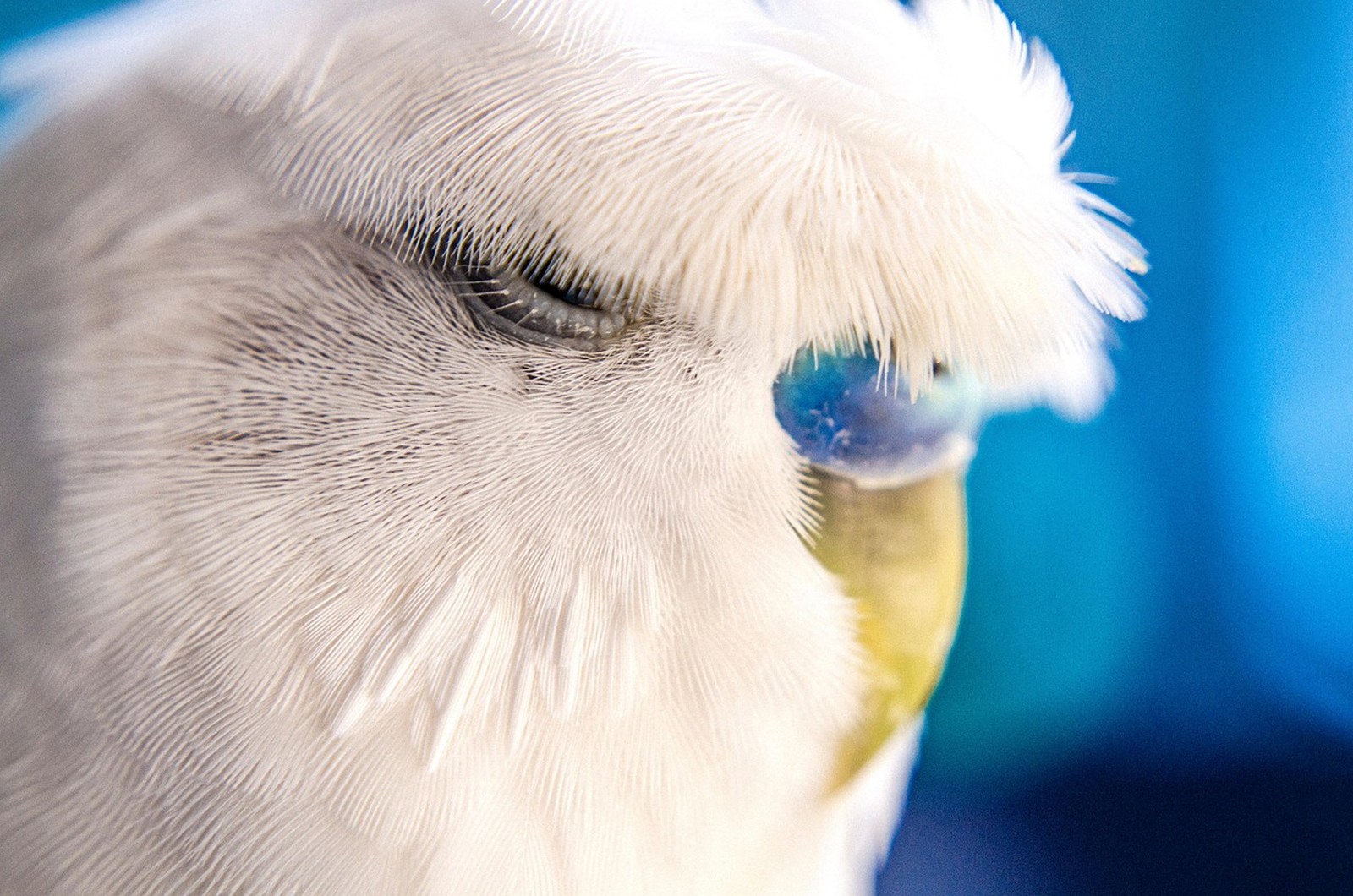
If you hear a soft, crackling grind from the cage after lights go down, you are most likely listening to a budgie going happily to sleep. Beak grinding is the sound of a bird slowly rubbing the edges of its upper and lower beak together in a relaxed, rhythmic motion. Owners often compare it to a cat purring, and the comparison is fair: grinding appears when a budgie feels safe, full, and finished with the day, and many birds grind for a few minutes each evening as they drift off.
What the evening grind looks like
The timing and posture give it away. Grinding usually starts at dusk or after the cage is covered, once the room quiets. The budgie sits on a high perch with feathers slightly fluffed, eyes half closing, often standing on one foot with the other tucked into warm belly feathers. The sound is soft and even, sometimes paired with quiet chattering or a few sleepy beak movements, and the bird is easy to leave alone because everything about its posture says it is winding down rather than worked up. Interrupting to check repeatedly can undo the settling, so listen from outside the cover rather than lifting it.
Grinding, clicking, and beak care
Grinding is different from the louder beak clicking or chattering a budgie may do during the day, which can signal excitement, greeting, or occasionally irritation, depending on posture. It is also different from a bird rubbing its beak along a perch after eating, which is simply wiping the beak clean. Night grinding has a maintenance benefit as well: the gentle rubbing helps keep the beak's edges worn and even through normal use, alongside chewing wood and cuttlebone during the day. A healthy beak stays smooth and aligned without intervention from you.
The few times to pay closer attention
Grinding at night needs no action, but changes around it do. A budgie who stops its usual evening routine, sleeps fluffed on the cage floor instead of the perch, breathes audibly, or shows an overgrown, flaking, or misaligned beak should see a veterinarian, as should a bird who seems to grind because it cannot close its beak comfortably. The useful habit is knowing your own bird's normal wind-down well enough to notice when it changes. Protecting that routine helps: a consistent covering time, a quiet room, and a full night of undisturbed rest keep the grinding a nightly event. Putting the covering time and the evening feed into KinsLe's Care Teams keeps your budgie's bedtime identical on nights when a family member, rather than you, closes up the cage.