A budgie's bite is information, not bad character. Budgies are prey animals with a small, precise beak, and biting is one of the few tools a budgie has to make something stop. When owners look closely, most bites trace back to one of a handful of causes, and each cause asks for a different response from you.
Fear of hands
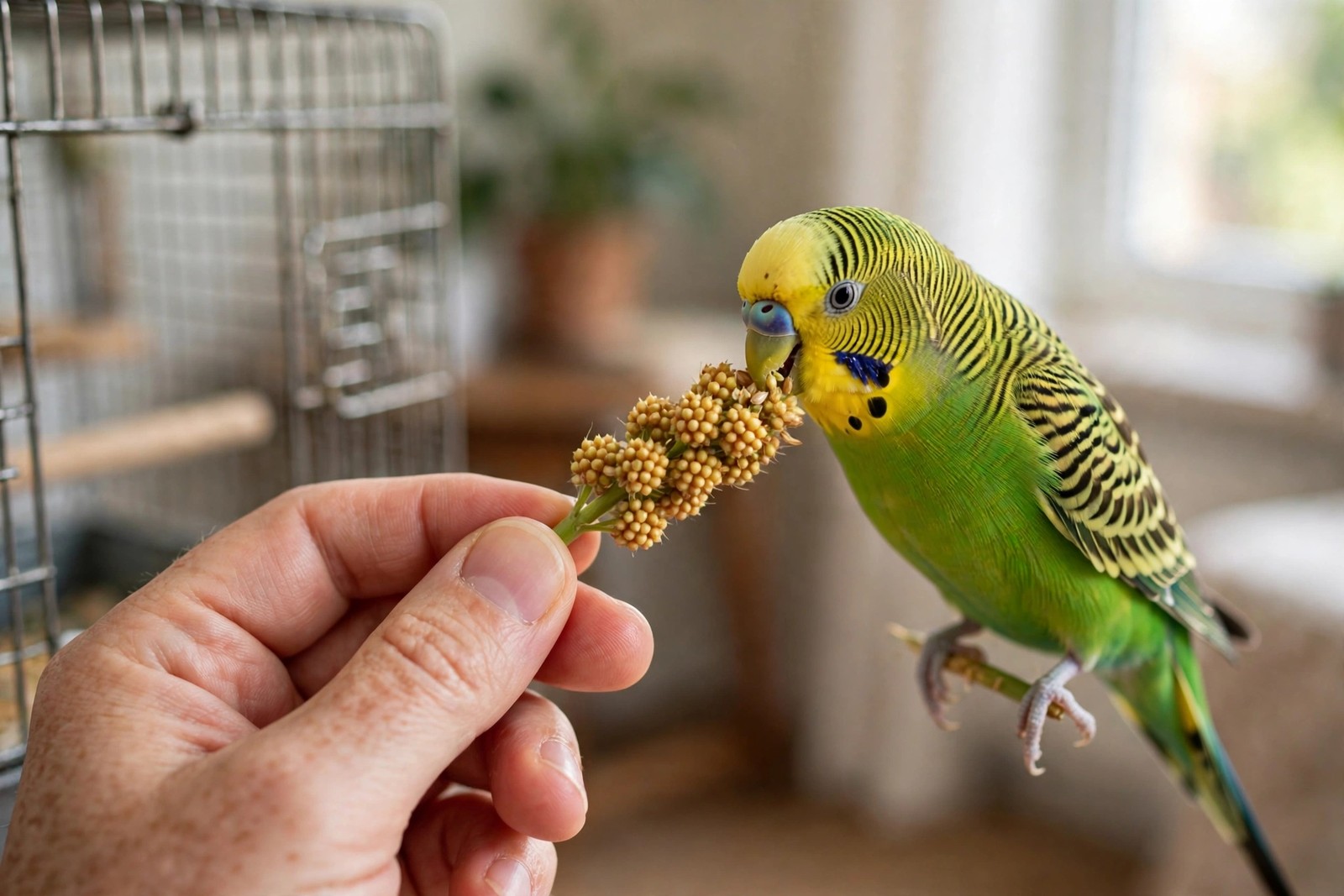
The most common reason is fright. A hand looming from above looks like a predator to a small bird, and a newly rehomed budgie, or one grabbed in the past, may bite the moment fingers come close, especially inside the cage where it cannot fly away. This bird leans back, slicks its feathers tight, and bites as the hand arrives. Slow down: rest your hand near the cage without reaching, offer millet through the bars, let the budgie come to you, and approach from the front and below rather than from overhead. Trust built this way can take weeks, and rushing it teaches the bird that biting is what finally makes the hand leave.
Territory, hormones, and mood
A budgie who is gentle on a play stand may lunge at fingers pushed through the cage door, because the cage is its safe territory and the intruding hand is the problem, not you. Hormonal birds in breeding condition can become possessive about a mirror, a nest-like corner, or a favourite person, and bite hands that come near what they are guarding. Overstimulation matters too: a budgie who has been playing, flying, and being handled for a long stretch may bite from tiredness, much like a toddler melts down, and an excited bird mid-chatter sometimes bites from sheer arousal. Shorter sessions, a proper sleep routine of a quiet, darkened rest period each night, and handling at calmer times of day prevent many of these bites.
Beak-testing and learned biting
Young budgies explore with their beaks, nibbling and testing pressure on fingers the way they test a new perch. That is not aggression, and yanking your hand away with a shout can either frighten the bird or turn the reaction into a game. Stay calm, keep your hand still for a moment, then redirect the beak to a piece of millet or a shredding toy. If a budgie bites only in one situation, such as being removed from a favourite spot, train a step-up onto a hand-held perch with a treat instead of reaching in. A sudden change in a previously gentle adult, especially with less eating or quieter behaviour, deserves a veterinarian's check, since pain can shorten a bird's patience. Noting the time, place, and trigger of each bite in KinsLe's Care Teams gives the whole household one shared record of what sets your budgie off, so handling stays consistent instead of each person learning the same lesson by being bitten.