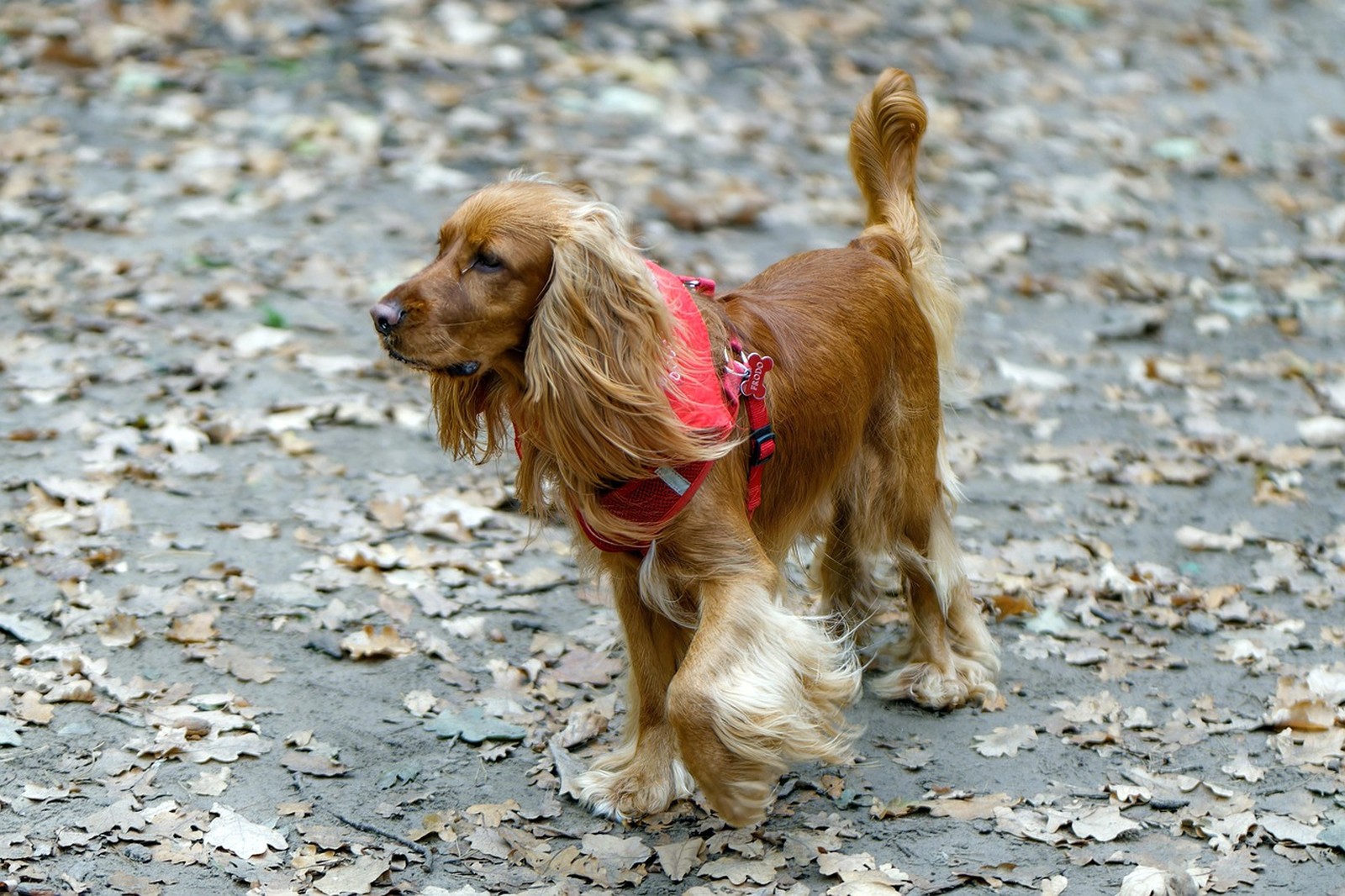
Country recall is different from park recall because the price of one mistake is not embarrassment. A dog chasing sheep can injure or kill them through panic and exhaustion even without biting, farmers may lawfully act to protect their stock, and cattle with calves can injure the dog and you. Deer, ground-nesting birds and hares trigger the same chase instinct with no fence to save anyone. So the working rule is simple and non-negotiable: in livestock country, and anywhere wildlife is likely to burst from cover, your dog is on a lead or a managed long line. Training happens inside that safety system, never instead of it.
Build a recall worth trusting, somewhere boring
Create a recall that is separate from your everyday cue: a whistle pattern or a distinctive word, used for nothing else. At home and in the garden, pair it with genuinely exceptional pay — warm chicken, liver, cheese, a whole scatter of food at your feet — every single time, with no exceptions and no follow-up disappointment such as the walk ending. Practise a handful of reps daily until the dog whips around at the sound mid-sniff, mid-play and mid-meal in easy places. That reflexive turn, built over weeks, is the asset you will later proof; a cue the dog considers in quiet conditions will be ignored in loud ones.
Layer in a second safety behaviour — an emergency down at distance, and a rehearsed “this way” turn — because a dog who will not recall from a chase may still drop.
Proof in stages, at distances where he can still think
Move through environments by temptation level, keeping the long line on throughout. Start beside a fenced field with stock far away: reward calm looking, then looking away, then recalls parallel to the fence at a distance where he notices the animals but can still take food and respond. Many dogs need fifty metres or more at first — find his thinking distance honestly rather than testing how close you can get. Over sessions, and only over sessions, reduce distance, ask for recalls with his back to the stock, and practise walking past behind the fence with the line loose.
Apply the same ladder to wildlife: recall away from a thrown ball, from a scent trail in an empty field, from watching birds at a distance, before ever expecting a response near deer. End every stage while he is succeeding. A single rehearsal of blowing you off to stare, stalk or pull toward stock is information to step back a stage, not a challenge to repeat closer.
Walk the real countryside defensively
Scan ahead constantly. Clip the short lead on before gateways, stiles and blind corners, keep the long line gathered near fences or other walkers, and cross stock fields on the path, quietly, giving animals a wide arc. In lambing and calving seasons, give those fields an even wider berth or choose another route entirely — a ewe or cow defending young changes the risk completely. If you meet stock loose on a path, turn away calmly rather than squeezing past with a straining dog.
If he gets loose among stock, recall once with the emergency signal, then move away calling — many dogs follow a retreating owner — and inform the farmer immediately afterwards, whatever the outcome.
Know when off-lead is simply not his future
Some dogs, particularly strong hunting and herding types, are never safe off-lead around stock no matter how good the training, and accepting that is responsible ownership, not failure. Those dogs get their freedom in enclosed fields, secure hired paddocks and stock-free spaces, and live full lives on long lines elsewhere. Judge your dog by his behaviour at thinking distance over months, never by one good day.
Writing your lead rules, thinking distance, proofing stage and emergency routine where every walker can see them stops a well-meaning friend unclipping him “just to try”, and KinsLe Care Teams lets you set those country-walking duties for each person who walks him, with completed walks timestamped, so the safety system holds whoever holds the lead.