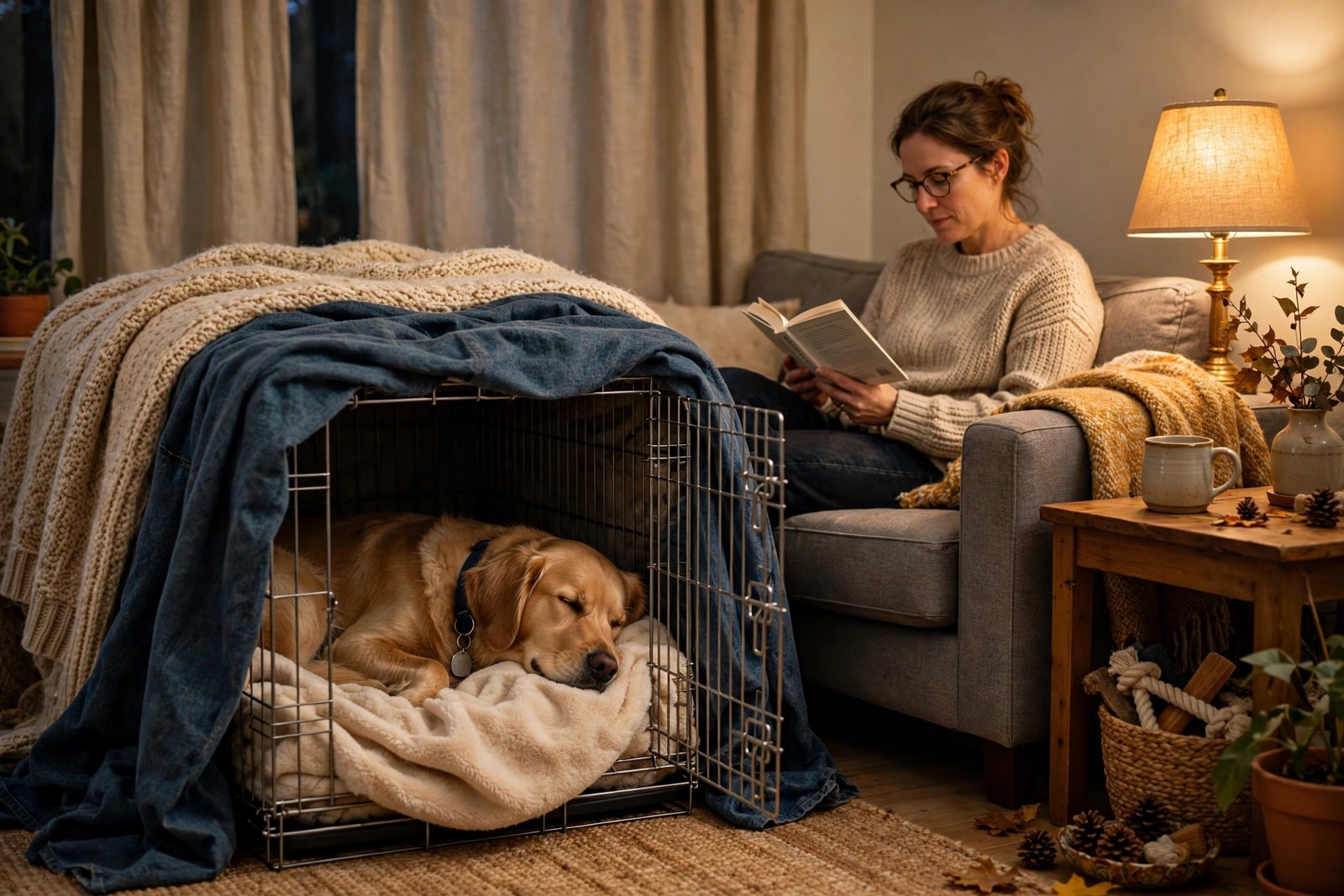
Starting in early autumn is the single biggest kindness you can do a noise-sensitive dog, because sound training only works below the fear threshold, and that careful work cannot be compressed into the final week. By the time displays begin, you want three things in place: a dog who has heard recorded bangs at gradually rising volume while eating wonderful food, a den that already smells like safety because he has chosen it for weeks, and a dark-evening routine everyone can run without improvising. None can be faked on the night.
Sound training, done slowly enough to work
Find a good-quality recording of fireworks with real depth — distant rumble, whistles and irregular bangs — and play it first at a volume so low he pricks an ear and nothing more. Feed exceptional treats or a meal scattered in grass while it plays for a few minutes, then switch it off. Repeat most days, raising the volume by the smallest step your player allows, and only when the current level produces relaxed, treat-focused behaviour. If he glances at the door, stops eating, yawns, lip-licks or leaves the room, the level is too high: drop back two steps next session and end that day kindly.
Real displays are louder, longer and felt through the floor, so the realistic prize is a dog who hears the first bang and looks for his den and his person instead of panicking blindly. Young dogs with no bad history benefit most; a dog with established terror needs the management plan below as the main strategy, plus veterinary advice.
Build the den before he needs it
Choose the spot he already retreats to — a corner, under a table, or his crate — and furnish it now: a crate covered with blankets to muffle sound, or a bed in an inner room away from windows, with household-smelling bedding, a reserved long-lasting chew and a worn item of your clothing. Feed occasional meals and special chews there through autumn, and let him come and go freely; a den he is first shut into on the loudest night is just a trap in his experience.
On the night, add curtains closed against flashes, television or radio at a steady volume, room lights on so flashes register less, and someone staying with him.
Logistics to finish while it is still light and quiet
Walk and toilet him well before dark on display nights, on a lead even in the garden — one close bang sends frightened dogs over fences they never challenged. Check gates latch, fences have no ground-level gaps, and his collar is snug. Confirm his microchip details carry your current phone number, as does his tag. Note local display dates and ask neighbours about private parties, then plan which nights need the full routine. If he has previously trembled for hours, injured himself escaping, or refused food the next day, book the vet now — vets are swamped in the final week, and a calm conversation in autumn about how he coped last year produces a far better plan than a panicked call on the day.
On the night, and the morning after
Run the routine early and without fuss: walk, feed, den, curtains, sound on, person present. Let him choose his spot, including following you from room to room if that is what settles him, and comfort him freely if he seeks it — calm contact does not reward fear; it relieves it. Keep doors to the outside open as briefly as possible and only one at a time, and take any late toilet trip on a lead in the garden. Next morning, check fences, gates and the garden for unexploded fireworks and debris before letting him out loose, and give him a quiet, ordinary day to recover.
Splitting den practice, sound sessions most days, chip checks and pre-dark walks across the household keeps the plan from depending on one person's memory, and KinsLe Care Teams lets you roster those autumn preparation duties with timestamps, so by the first display every task is done and every person knows the night routine by heart.