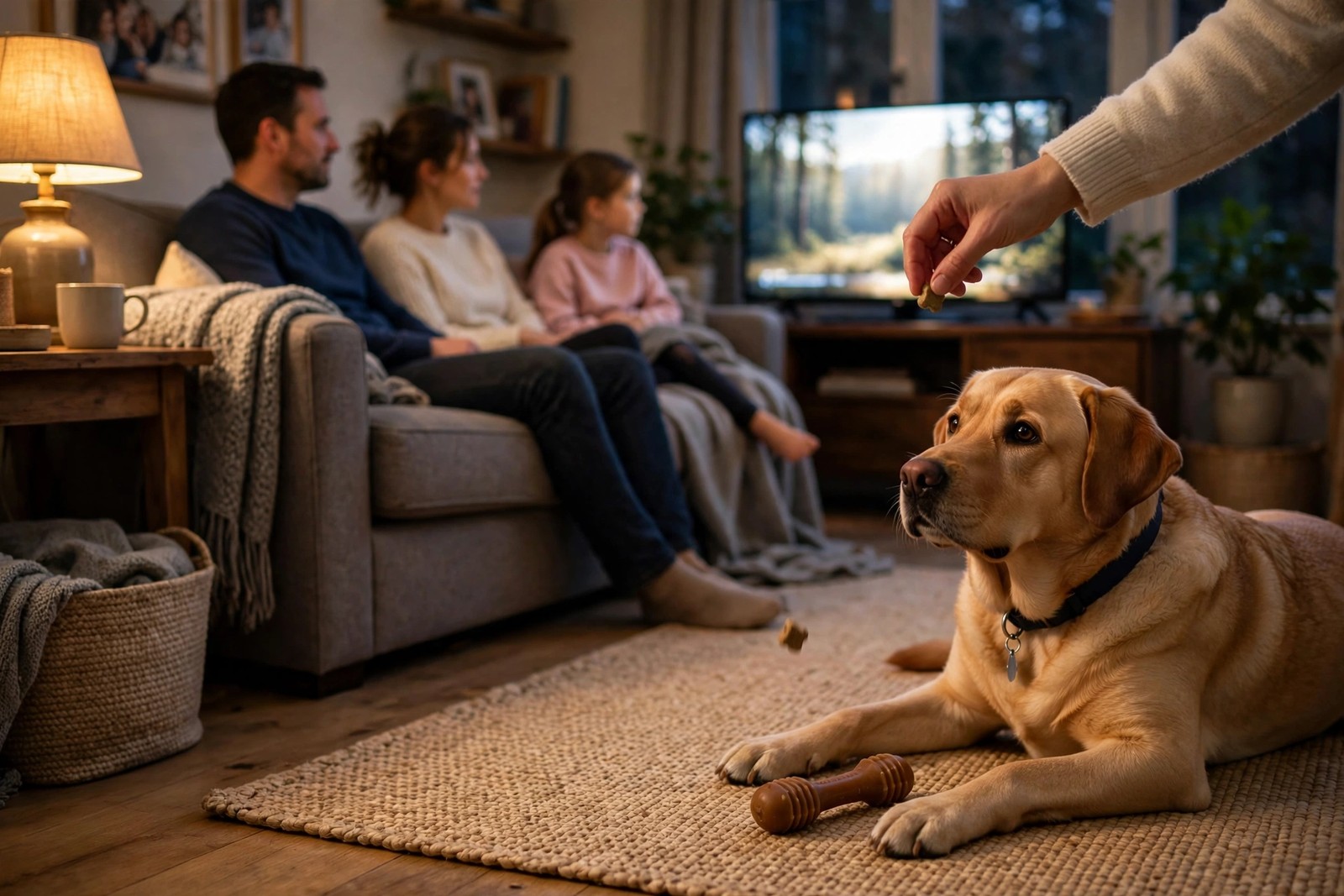
Evening whining is rarely spite or stubbornness. It is usually the sound of a dog whose day has a hole in it, or of a dog who has learned, accurately, that whining is the household's doorbell: whine, and someone looks, talks, sighs, pets or finally plays. Both causes are fixable, but in order. First make sure the whining is not reporting a real need, then remove the hole in the day, then change what whining buys and what quiet buys.
Rule Out Needs Before Behaviour
Start with the plain checklist at the time it happens. Does your dog need the toilet? A last garden trip before the household settles removes a surprising share of evening whining, especially for puppies and seniors. Is your dog hungry, thirsty, too warm, or uncomfortable? A dog who is newly whining at night, restless, licking at a joint or off food deserves a veterinary check rather than a training plan, since pain and illness often show up first as evening restlessness when distractions stop.
Then audit the whole day honestly. How much exercise, sniffing, chewing and company did your dog actually get, and when? A dog walked at dawn and ignored until bedtime is not being dramatic at 8 p.m.; the tank is empty at exactly the hour the family finally sits down and looks available.
Reshape the Evening Before It Starts
Move the day's good things later and make them predictable. A proper afternoon or early-evening walk with sniffing time, a sniffing game or food puzzle with dinner, and a toilet trip afterwards give the evening a full stop. Then install a settle routine in the same place each night: a mat beside the sofa, a long-lasting chew or a lickable mat, and a dog who is asked to settle there as the household sits down.
Pay for quiet like you mean it. In the first week, reward settled lying down frequently, every minute or two at first, with a calm treat delivered to the mat, praise in a low voice, and occasional gentle petting if your dog enjoys it. Attention given during quiet teaches the real lesson: silence is what makes good things arrive, promptly and often.
Change What Whining Buys
While whining is happening, give it nothing: no eye contact, no talking to or about the dog, no petting to hush it, and no scolding, because scolding is still attention and can add anxiety. The moment there is a pause, even a breath, mark it and pay on the mat. Warn everyone in the house about the surge: when a behaviour that used to work stops working, most dogs try it louder and longer for a night or two before giving it up. If one person cracks during the surge and plays with the dog, the household has taught that persistent whining at higher volume works, and the next surge will be worse.
Consistency across people matters more than technique. Puppies may need a toilet trip built into the settle plan, and senior dogs may need an earlier, gentler evening with pain ruled out by their veterinarian before any ignoring is fair. If a fully exercised, settled dog whines persistently every evening despite two consistent weeks, or the whining comes with pacing, panting or drooling, ask your veterinarian for advice or a behaviourist referral rather than ignoring harder. In KinsLe, Care Teams keeps the early-evening walk, the settle setup and the household's no-response agreement in one shared plan, so one person's soft heart does not quietly reset the training each night.