
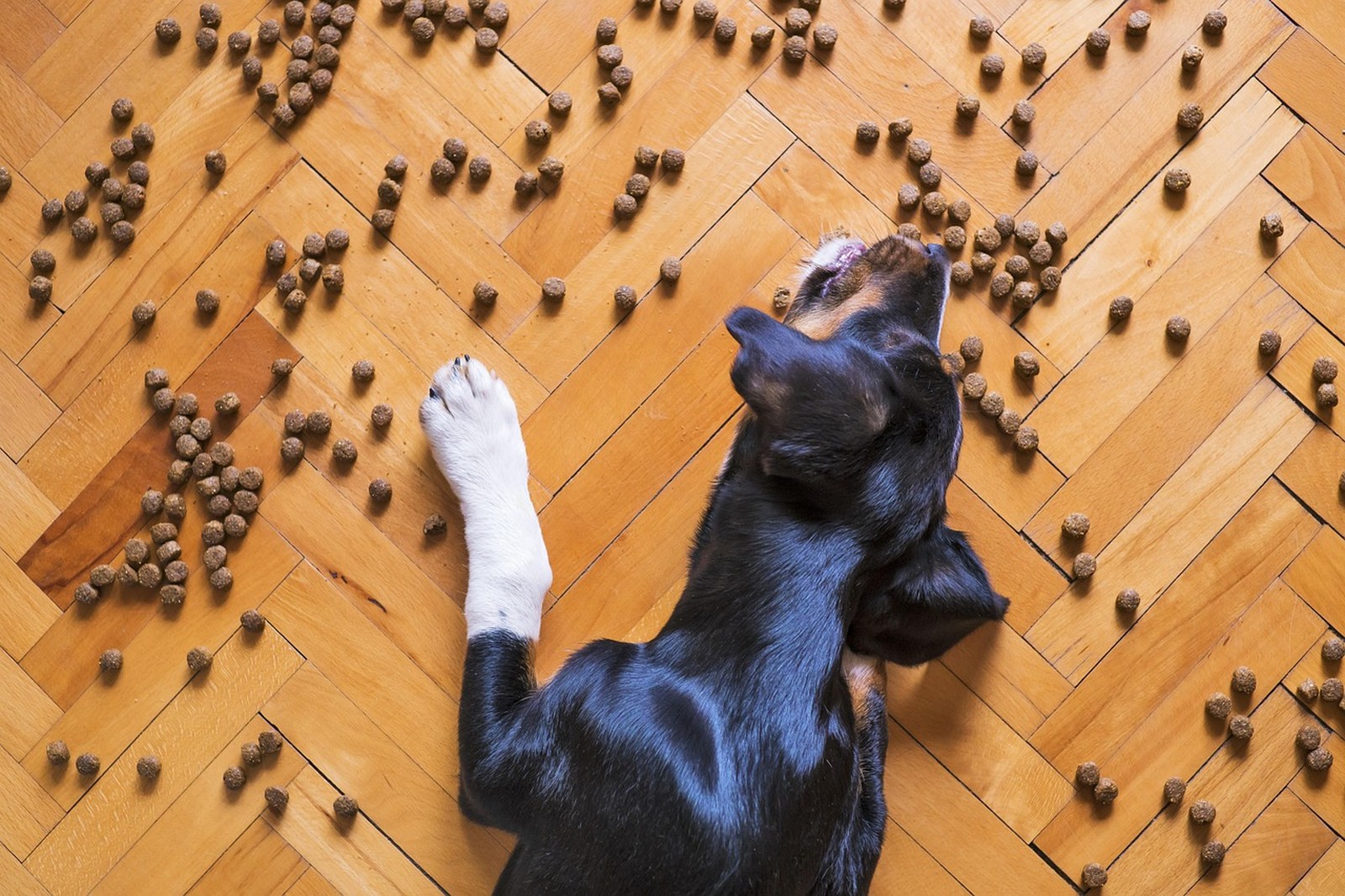
Recognising frustration before it boils over
Frustration in training has a recognisable shape. A dog who was working happily starts barking at you, pawing or nudging the treat hand, mouthing sleeves, spinning, snatching at rewards, or offering every behaviour she knows at high speed. Some dogs go the other way and shut down: they sit, stare, sniff the ground, or wander off as if the session stopped existing.
Learning to spot the early version saves the session. A slight increase in speed, a harder stare at the reward, a single sharp bark, or ears and body getting tense are the moment to act, while she can still think.
What to do in the moment it happens
Do not push through, and do not repeat the failed cue louder. Instead, drop immediately to something she can do in her sleep, such as a simple sit or a hand touch, pay her generously for it, and end the session there on a genuine success. Scattering a few treats on the ground to sniff out is a kind reset if she is wound up, because sniffing lowers arousal and gives her a job with no wrong answers.
Then give her a real break, not a thirty-second pause before trying again. Play, a drink, a wander in the garden, or simply finishing for the day all work. Ending early feels like losing progress, but it protects the training relationship, which is the progress that matters most.
The usual causes, and how to fix each one
The commonest cause is a step that grew too fast: asking for a thirty-second stay because a ten-second one worked, or practising recall in the park because it worked in the kitchen. Break the behaviour into thinner slices and reward each slice more often. If she fails twice at a new level, the level is wrong, not the dog, so return to the last version she found easy and build again in smaller increments.
Session length is the second culprit. Many dogs concentrate beautifully for three to five minutes and poorly at fifteen, especially puppies and adolescents. Train little and often, and quit while she still wants the game. The third cause is economics: a reward that was worth a sit in the kitchen may not be worth ignoring a squirrel for, so upgrade the pay for harder work. Finally, check the basics: a tired, hungry, thirsty, or unwell dog has a much smaller frustration budget than a rested one.
Rebuilding so frustration becomes rare
Structure future sessions so success comes thick and fast, introducing only one new element at a time and keeping your criteria clear, because dogs get frustrated fastest when the rules keep moving. If you are shaping a behaviour by rewarding successive approximations, raise the bar in increments so small she barely notices the change.
Also examine your own signals, since muddled cues and late rewards create confusion that looks like stubbornness. Filming a session is uncomfortably illuminating: owners regularly discover their timing was a beat slow or their hand signal changed between repetitions. If frustration keeps appearing despite smaller steps, shorter sessions, and better pay, or if it tips into snapping and guarding, bring in a qualified trainer to watch the partnership live, and mention any sudden change in tolerance to your vet.
Training notes shared between handlers prevent the same wall being hit twice. With KinsLe, Care Teams lets whoever practised last record where your dog struggled and confirm the session finished with a timestamp, so the next family member resumes at the easier step that works instead of cheerfully re-asking for the one that caused the barking.