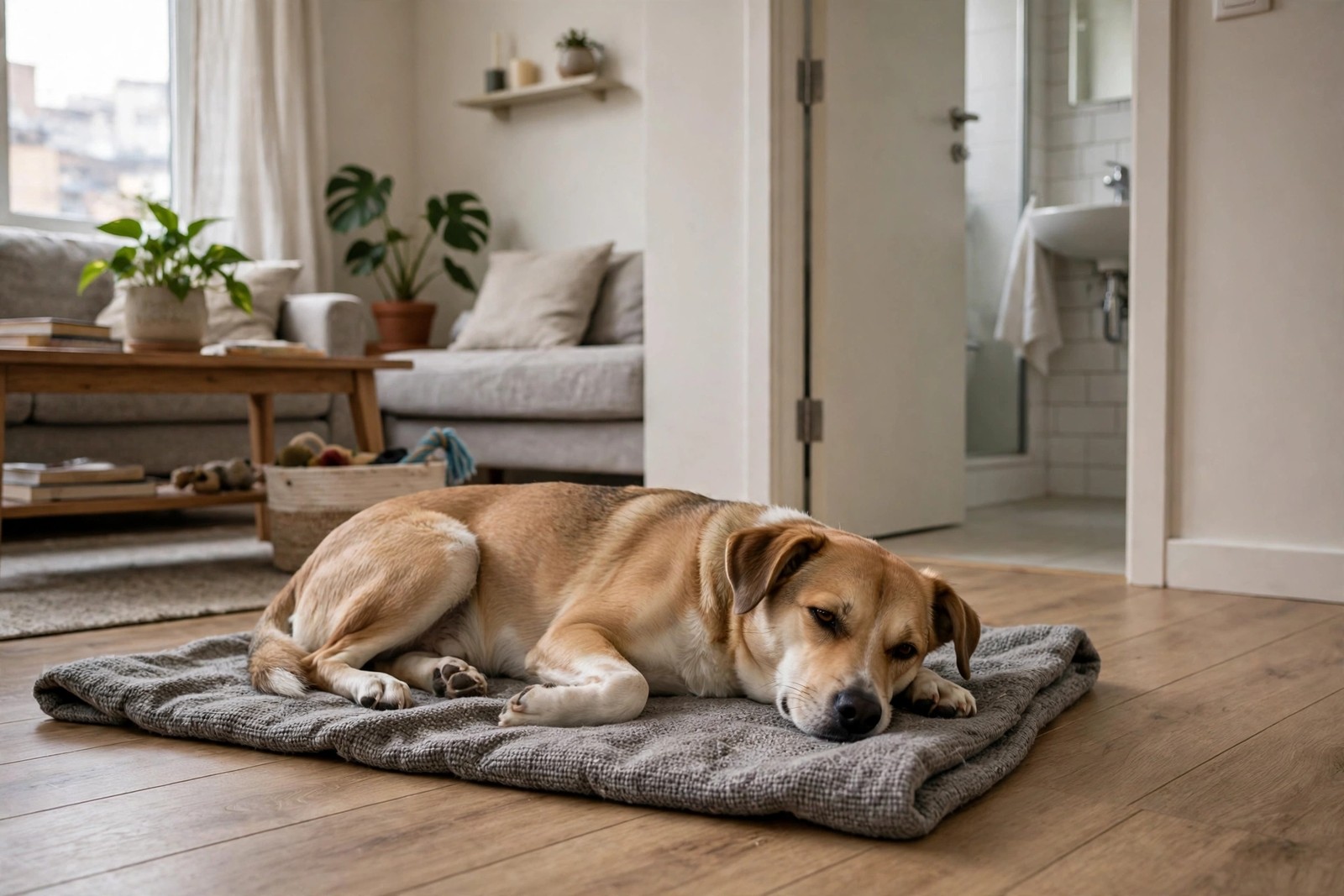
In a flat where doors rarely close, alone-time has to be built from distance rather than doorways. Practise micro-separations with gates, furniture barriers and different rooms — step out of sight for seconds while the dog has a chew, and return without ceremony, many times a day. Build a station habit: a mat or bed where good things land, so being settled away from you becomes a paid occupation rather than exile. Deliberately vary your movements — pick up keys, put on shoes, then sit back down — to drain departure cues of meaning, and if following is paired with distress rather than habit, treat it as separation work and involve a behaviourist.
The Basics First
Following you to the bathroom is information before it is a problem: watch what happens just before she trails after you, and whether she settles once she arrives or stays wound up and watchful. A dog who simply likes company relaxes on the bath mat; a dog who cannot bear the gap keeps scanning, pacing or vocalising. Reward the settled alternative the moment it appears — a dog lying on her own mat while you move around is doing the exact behaviour you want more of. Change one variable at a time, distance first, then duration, so you can see which step she finds hard.
Practical Steps That Help
Build the separations in this order:
- Set up a mat station where chews and treats reliably land
- Step out of sight for a few seconds, then return without ceremony
- Lengthen the absences in small jumps, mixing in some very short ones
- Practise departure cues — keys, shoes, coat — without actually leaving
- Note each day's longest calm absence, so progress has a record
Agree as a household that everyone plays by the same rules: nobody sneaks back for a fuss, and nobody follows the dog when she chooses her mat. Mixed signals — one person practising distance, another calling her over for company — undo the lesson faster than any single missed session.
Making It Part of Everyday Life
Micro-separations fit inside a normal day in a flat: a shower, a trip to the bins, making tea in another room. That is their strength — the practice happens in the real setting, dozens of times, rather than in one formal session a week. Keep a simple note on the fridge of today's calm duration, and raise the bar only when the current step looks boring. Household practice turns can be organised through KinsLe's Care Teams, with a timestamp in KinsLe marking each session somebody completes.