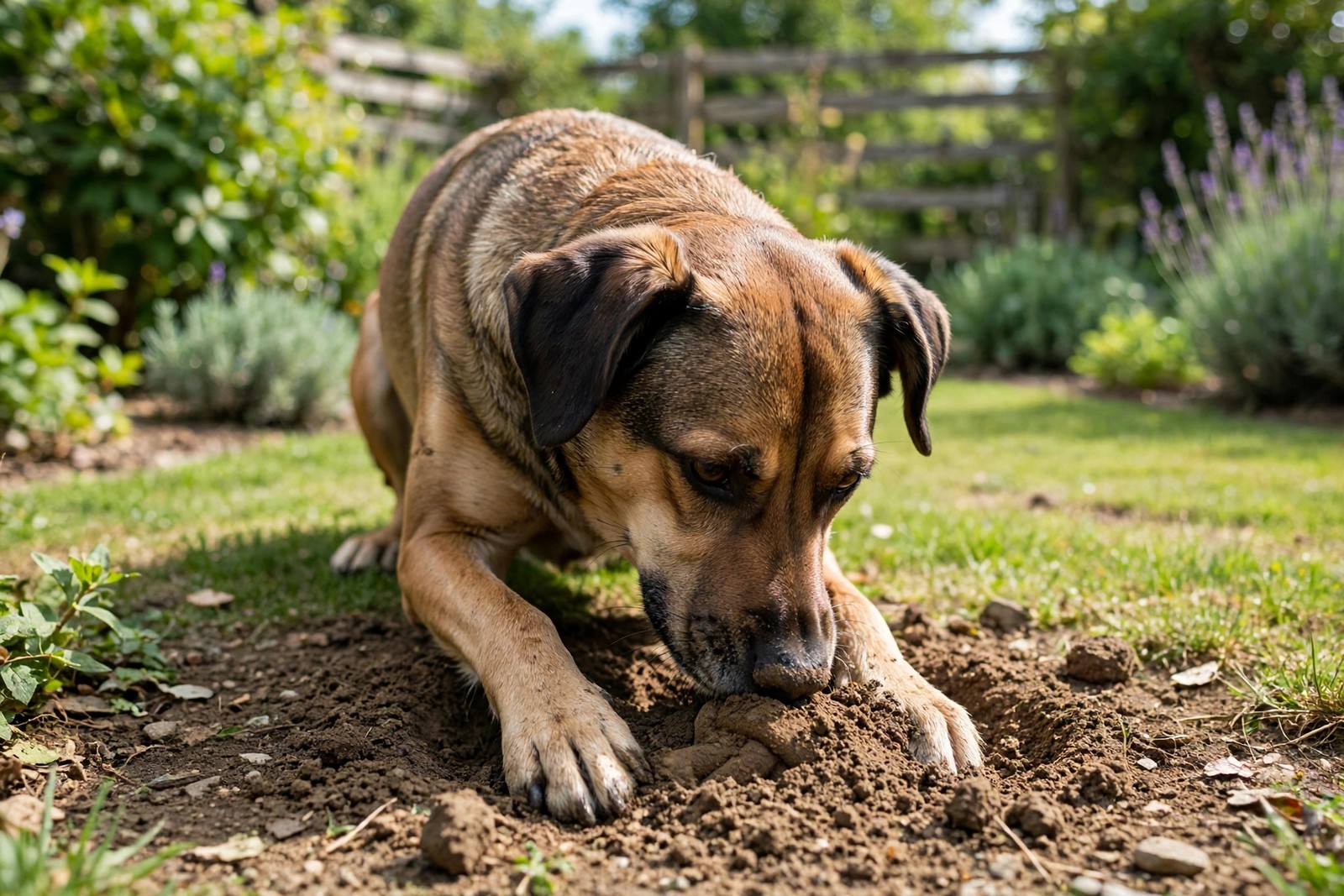
The dog nosing a chew into the corner of the sofa is not confused, and it is not hiding its prize from you personally. It is performing one of the oldest behaviours in the canine repertoire, inherited intact from wild ancestors for whom burying food was the difference between a feast wasted and a meal saved.
An Old Storage Instinct
Wolves and other wild canids cache. When a kill or a lucky find provides more than can be eaten at once, they carry pieces away, dig a shallow hole, lay the food in, and push soil over it with the nose. Burial cools the food, hides it from scavengers and flies, and masks some of its scent from rivals, and the owner returns later to dig it up when hunting has been poor. Domestic dogs have lived on reliable human feeding for thousands of years, but the instinct never left, because nothing in domestic life selected against it. It surfaces most strongly in exactly the situation it was built for: a dog that is already full receiving something valuable and durable, such as a long-lasting chew, a bone-style treat, or a favourite toy it treats as a possession worth keeping safe.
Why Carpets and Sofas Count as Soil
Owners are often most puzzled by indoor burying, where the dog scrapes at carpet, pushes a treat behind a cushion, or makes covering motions in the air over a hard floor. The behaviour runs as a fixed sequence, triggered by the urge to cache rather than by the presence of actual earth, so the dog performs every step faithfully on whatever surface it has. Outdoors, the same dog will use real soil, mulch, or leaf litter, and many dogs keep several cache sites and remember them well. A dog that carries a toy to its bed and noses bedding over it is doing the same thing at a lower intensity, putting its valued object somewhere safe and scent-marked as its own.
When Caching Turns Toward Guarding
Caching itself is calm behaviour: the dog works steadily and trots away relaxed. Resource guarding is the pattern to watch instead, and it looks different. A guarding dog hovers over the item, freezes or goes still when approached, eats faster or positions its body between the item and the room, and may hard-stare, growl, snap, or bite if someone reaches toward a cache or a prized possession. Dogs that were raised competing for food, dogs that have had valued items repeatedly snatched away, and dogs in multi-dog homes where caches get raided are more prone to it. Never punish a growl, because the growl is a warning you want to keep, and never corner a guarding dog over an item. Trade up instead, offering something clearly better in exchange, keep high-value chews for settled solo time, and bring in a qualified behaviour professional for any snapping or biting.
Working With the Instinct
Most caching needs no correction at all, just a little management. Give chews sized to be finished in the sitting, or take the remainder away through a fair trade before the urge to bury it sets in. Rotate toys so a few are available at a time rather than a hoard worth defending. If your dog digs in the garden to bury things, a permitted digging spot, a patch of loose soil or a sand-filled corner where buried toys are a game, gives the instinct a legal outlet. Mention a sudden change at the vet if a dog that never cached begins hiding food while eating less overall, because appetite change matters more than the burying itself. Pay attention to what gets hidden, where it goes, and how it behaves when anyone walks near a hiding place. A relaxed cacher trots off contentedly; a dog who freezes over the spot or guards it needs professional help. Put a follow-up question to KinsLe's Kinny; he answers using the KinsLe Answers library.