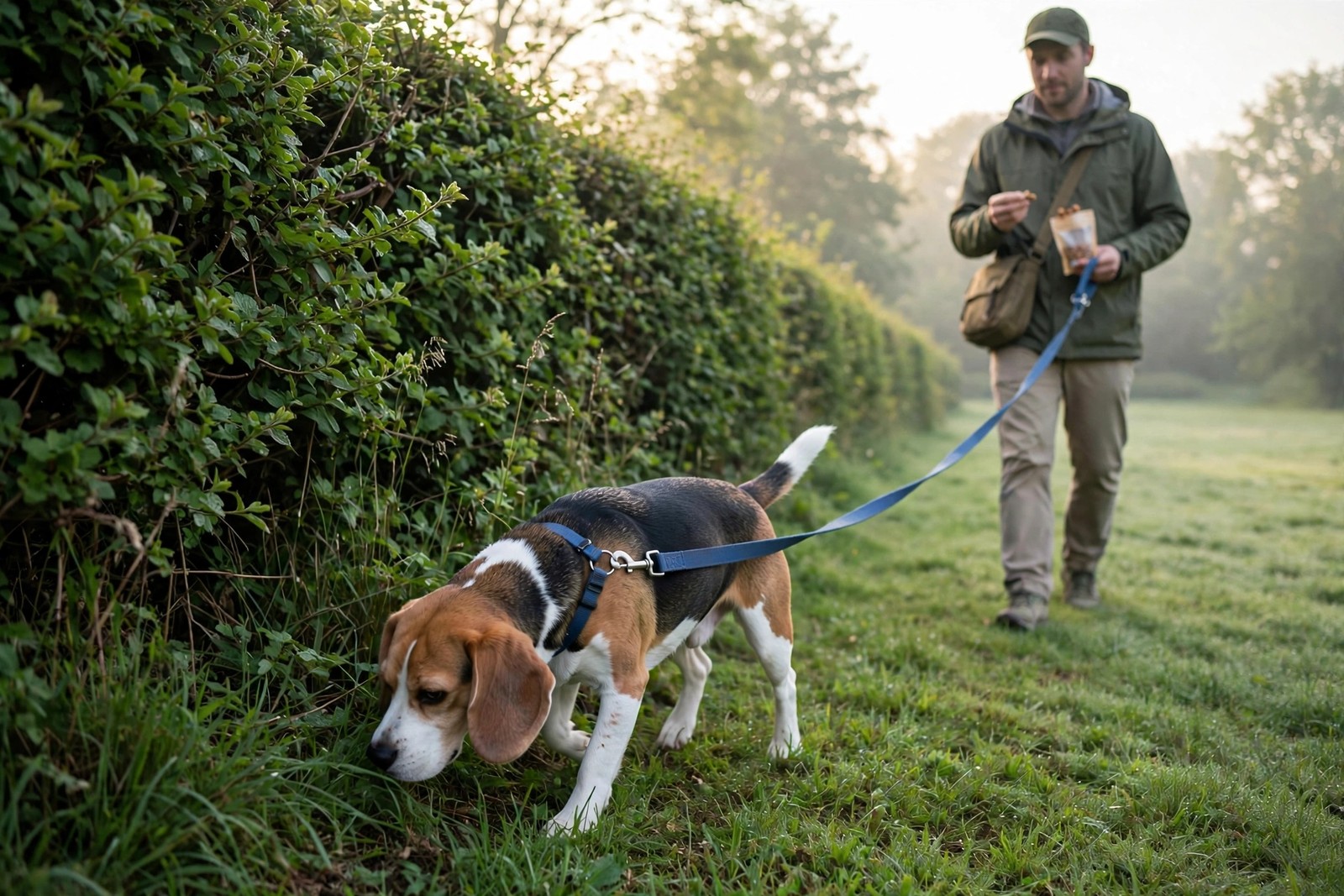
A Beagle's nose is not a distraction from the dog — it is the dog. The breed was built to follow scent for hours with the brain locked happily onto a trail, and a park is a library of fresh stories written overnight by foxes, rabbits, dogs and picnics. Asking a Beagle to ignore all of that for a long, formal training session is asking him to fail, and his apparent stubbornness is usually a scent drive that has been given no legal outlet. Owners who succeed do not suppress the nose: they spend it first, train in the gaps, then pay focus with more sniffing.
Spend the scent drive before you ask for anything
Arrive at the park and give him ten to fifteen minutes of pure sniffing on a long line: let him choose the route along hedges, tree lines and path edges, follow him, and ask for nothing beyond basic safety. This decompression sniff is not wasted time — a dog who has read the park's headlines can spare attention for you, while a dog dragged straight from the car to a sit-stay is spending the whole session straining toward the smells he was denied. On very scent-rich days, after rain or at dawn, extend the sniff rather than shortening it, because those are the days his drive runs highest.
Then train in the middle of open, close-mown ground, away from hedgerows where scent pools, and upwind of interesting ground where you can, so smells arrive diluted.
Train in bursts, pay in sniffing
Keep each work burst tiny: three to five repetitions of one behaviour — a recall between two people, a hand target, a short stretch of lead walking with turns — then release him with a clear cue such as “go sniff” and walk him to a good smell for thirty seconds. That release is the wage. A Beagle who learns that focus earns sniffing starts offering focus promptly to unlock it, and the alternation keeps his brain from saturating with either frustration or scent.
For food rewards, outgun the environment: warm sausage, strong cheese and other genuinely smelly food, delivered often. Dry biscuits cannot compete with a rabbit trail. Pay the recall extra generously — a whistle recall rewarded with a jackpot, then release back to sniffing — because coming back must not end the interesting part of the walk, the fear underneath most Beagle deafness.
Choose the park, the hour and the line wisely
Not all park time is equal: early mornings, the quiet far corner rather than the dog-meeting lawn, and weekdays all lower the scent and social load while his skills are young. A long line on a harness gives sniffing range without rehearsing the run-off: step on it calmly if he commits to a trail, gather it hand over hand — never let it jerk him to a halt at speed — and re-earn freedom with a burst of good focus.
Progress honestly: garden, quiet verge, the park's boring middle, then nearer the hedges, over weeks. A recall that works at twenty metres in an empty field is a genuine achievement for this breed.
When the nose wins anyway
Some days the trail is fresh and he is simply gone mentally, even on the line: shorten the session, bank easy wins, and finish with sniffing. If he ever slips the line, do not chase — run away noisily, crouch, rattle the treat bag, or start an exaggerated food party of your own on the ground; Beagles investigate parties far more reliably than they flee punishment. Persistent total deafness outdoors, especially with weight gain or lethargy, is worth a vet mention.
Logging which locations, times of day and sniff-first lengths produced real focus helps every walker pick winnable battles, and KinsLe Care Teams lets your household share those park-session duties and notes with timestamps, so your Beagle gets the same patient structure — sniff first, bursts second — from every person who clips on his lead.