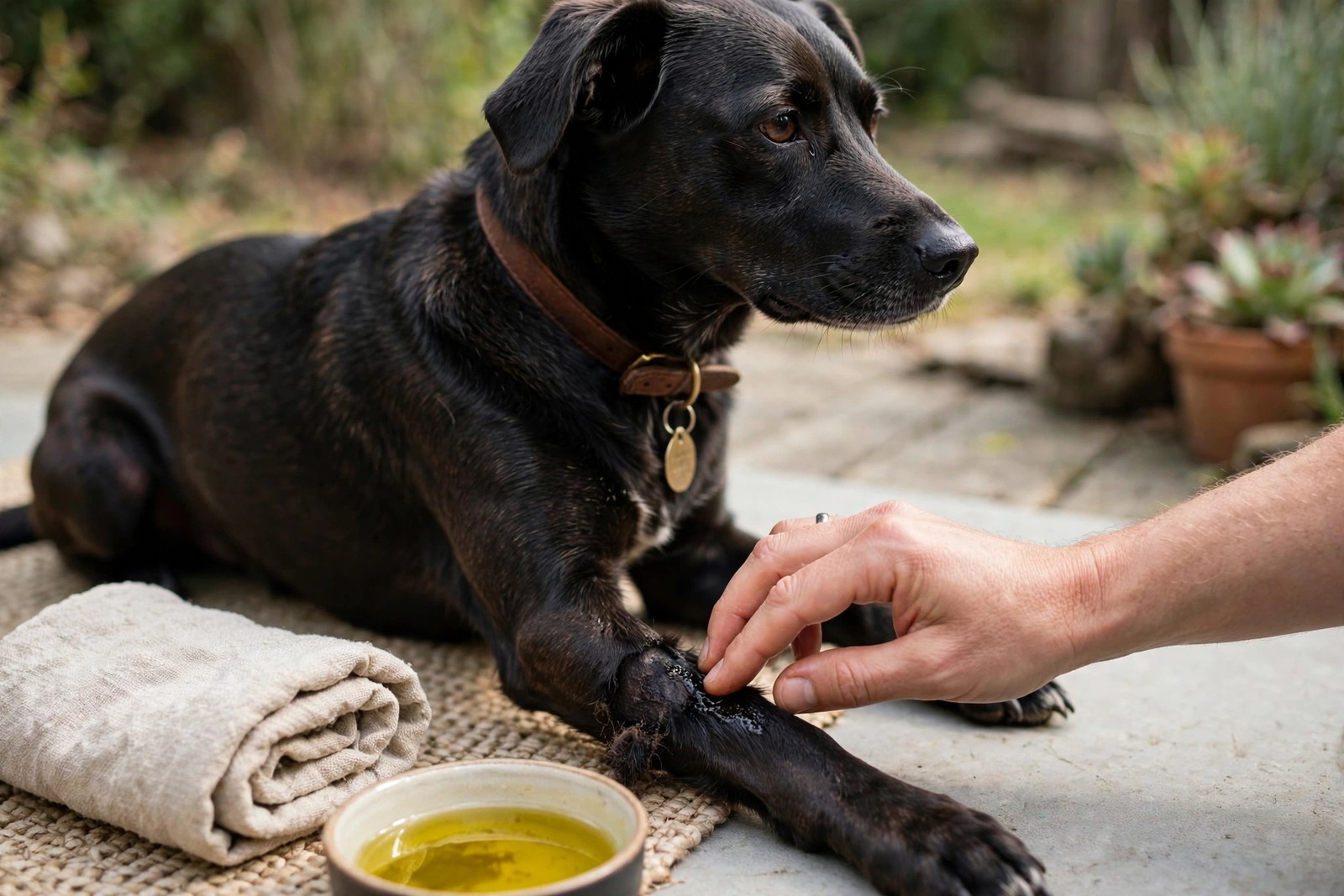
Three sticky problems arrive on coats after roads, pavements, and woodland walks, and each behaves differently once it cools on hair. Tar sets hard, gum stays elastic, and sap stays tacky. The safe method for all three rests on oil, time, and fingers, with two firm exclusions: no solvents anywhere near a dog, and no blades close to skin that moves and folds.
Tar first: soften the bond and free a few strands at a time
Tar differs from sap in a way that changes the whole job. Fresh tar smears, then it cools into a hard, crusty bind that locks many hairs into one solid patch, and pulling that patch transmits force straight to the skin. Soften the bond instead. Work food-grade oil, such as olive or coconut oil, into the edges of the patch with your fingertips, wait several minutes, and test whether the outermost strands release.
Ease freed strands away in small handfuls and set them aside from the patch so they cannot stick back down. Reapply oil to the newly exposed edge and repeat the cycle, shrinking the patch in layers. Warmth from your hands helps the oil work; haste does the opposite, tearing hair and frightening the dog. A patch the size of a small coin may take several rounds, and that pace is correct rather than slow.
Gum and sap: chill one, oil the other
Chewing gum releases when its texture changes. Chill the gummed hair with an ice cube held in a cloth or a cold pack until the gum firms and turns brittle, then pick the hardened pieces out with your fingers, working from the edges. If chilling fails or the dog objects to the cold, oil loosens gum as well: massage oil around and under the gum until the mass slides along the hair and lifts away.
Tree sap responds to oil alone. Rub oil into the tacky area, let it sit, and tease the hair apart strand by strand, adding oil as the sap re-grips. Wash every treated area afterwards with dog shampoo, rinse until the water runs clear, and dry fully, because oil left in a coat collects dirt and mats quickly. A line on burrs, since walks that produce tar and gum can also produce them: ease any you find out singly by hand, and return to the sticky work afterwards.
The two exclusions and the groomer threshold
Never reach for solvents. Paint thinner, turpentine, white spirit, petrol, and similar products must never touch a dog's coat or skin, because they irritate and burn skin and a dog will lick a treated patch. Naming them here serves one purpose only: keeping them out of the process entirely. Nail polish remover and strong alcohol gels belong on the same excluded list for the same reasons.
Never cut a sticky patch out with scissors close to the skin. Coat folds, skin tents upward when hair is lifted, and a calm dog can flinch at the wrong second. Send the large cases onward instead: a wide tar patch, tar worked deep across the belly or legs, or any patch where skin already looks sore belongs with a professional groomer, and sore, red, or broken skin belongs with a vet. Care Teams, viewed in KinsLe after a road walk, shows whether the coat check and wash actually happened.