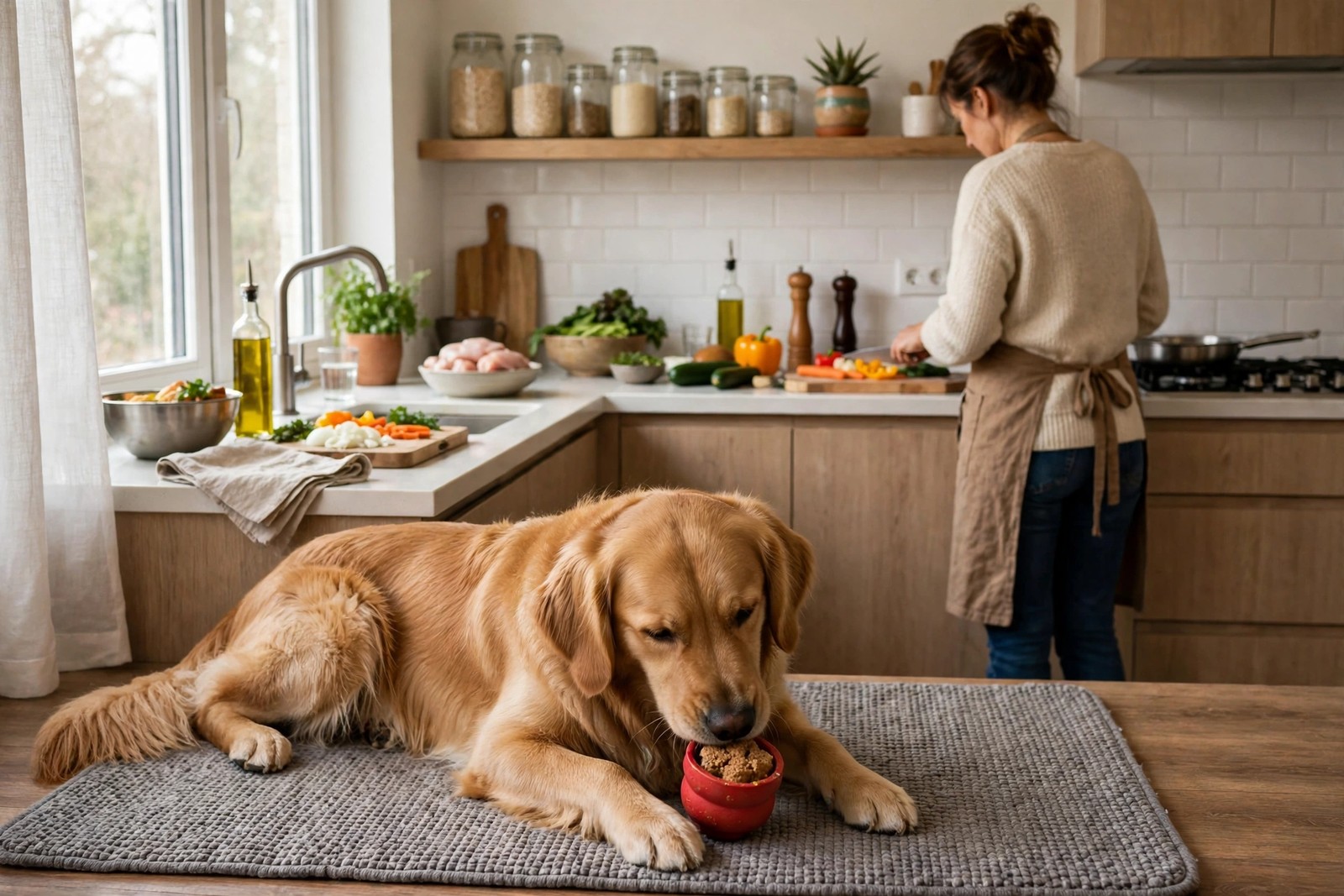
He has learned the kitchen script perfectly. The cupboard opens, the food bin rattles, and the barking starts, because in his experience barking is part of how dinner happens: he barks, you keep preparing, the bowl lands. Nothing about that sequence feels like a reward to you, especially if you are ignoring him or telling him to be quiet, but from his side the meal still follows the noise every single time. Undoing the habit means rewriting what predicts the bowl, and giving him a better job to do during the exact minutes when anticipation peaks.
Never Let Barking Be the Trigger
The core rule is simple to state and briefly hard to live with: the bowl never lands during or immediately after barking. If he starts up while you are preparing, stop moving, hands still, and wait. The moment a real quiet pause arrives, even a few seconds of silence with four paws settled, continue preparing and deliver the meal promptly so quiet is what visibly produced it. Expect an escalation first. A dog whose barking always worked often barks longer and louder when it suddenly stops working, the way a person presses a stalled elevator button harder. That surge is the habit testing itself, not proof the approach failed, and giving in mid-surge teaches him that bigger barking is the upgraded key. Weather it once or twice and the pauses start arriving sooner.
Pre-Empt the Whole Performance
Waiting out barking is only half the plan; the stronger half starts before the first bark. Put his mat in a set kitchen spot and send him to it before you touch the food bin, not after the noise begins. Give him something legitimate to do on the mat while you work: a stuffed food toy prepared earlier, a lickable spread frozen onto a mat, or a scatter of his own kibble to hunt in the grass if the kitchen opens to a yard. You are not bribing him out of barking; you are scheduling the anticipation into a calmer activity that rehearses the exact behavior you want at dinner time. Over a week or two, the mat itself becomes the opening scene of dinner, and many dogs begin trotting to it when they hear the first cupboard sound, which is the routine doing the work for you.
The Written Kitchen Rule
This only holds if nobody in the house freelances. In the Care Teams plan, the household writes the dinner rule down where everyone who feeds him can see it: Sam starts the mat routine and settles him with his food toy before any prep begins, Priya does the actual feeding only after a quiet pause, and anyone else who cooks that week follows the same pause rule with no exceptions for being in a hurry. The plan also assigns who notes the evening's result, because barking that drops from ten minutes to two is real progress that tired people easily miss. One soft-hearted family member who feeds him mid-bark to restore peace will reset the lesson for everyone, so the agreement has to be explicit rather than assumed.
Keep the rest of the picture honest while the rule beds in. A dog who is under-exercised, fed on an unpredictable schedule, or left alone all day will bring a bigger tank of frustration to the kitchen, and no protocol fully compensates. A walk or play session before the evening feed, and dinner at a roughly predictable time, shrink the pressure the mat routine has to hold. Most demand barkers improve noticeably within a couple of weeks of consistent handling, and the kitchen becomes the calmest part of the evening instead of the loudest. On KinsLe, the household can record the settle routine in the Care Teams notes so whoever cooks follows the same pause-and-feed sequence.