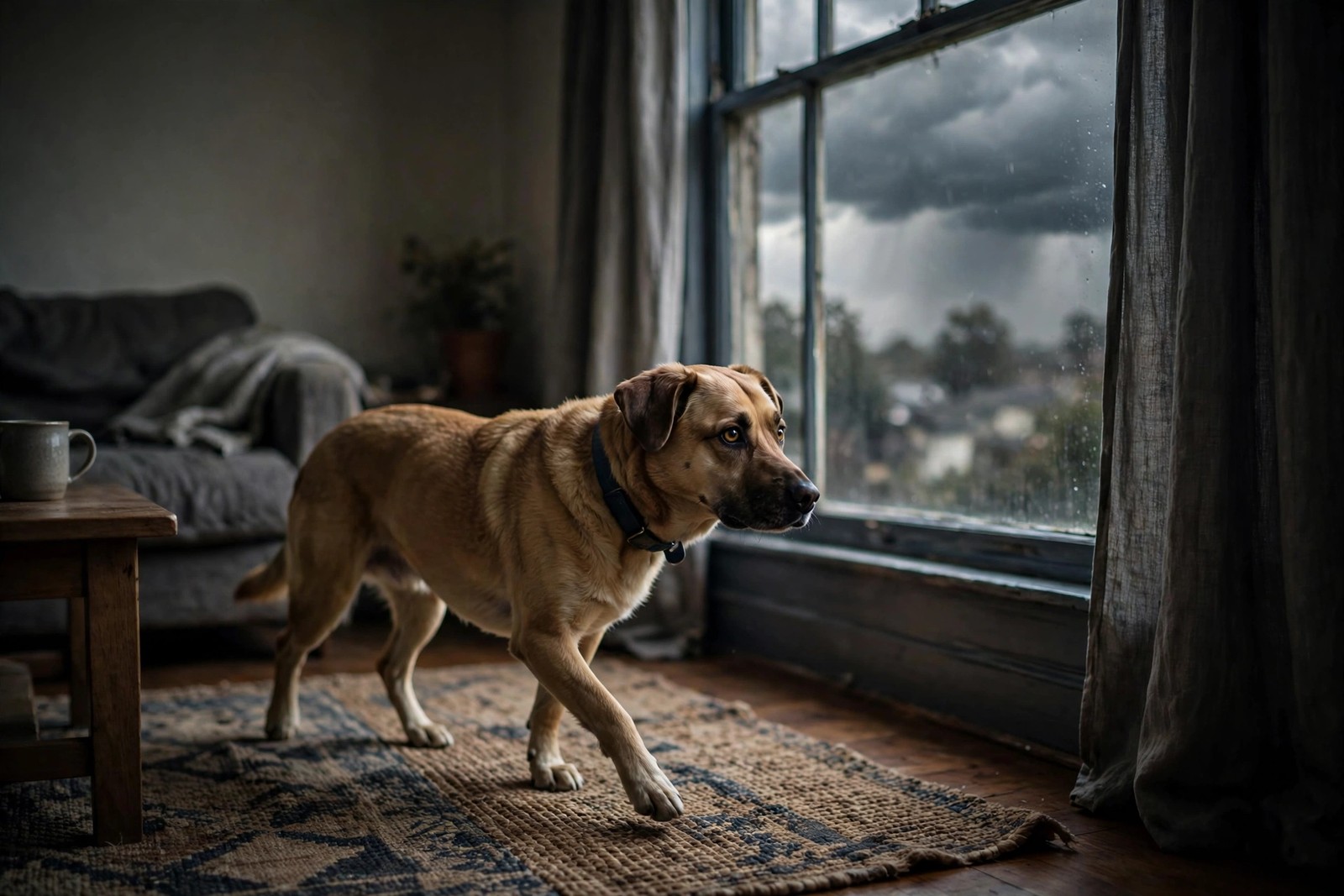
It can feel uncanny when a dog starts pacing, panting and checking windows under a sky that still looks harmless. She is not predicting weather; she is reading it earlier than you can. Dogs hear lower rumbles at greater distances, smell rain and ozone carried ahead of a storm front, and appear sensitive to the pressure drop and the build-up of static that precede thunder. Once a dog has connected those early signals with the frightening noise that followed in past storms, the signals themselves become enough to start the anxiety. Her pacing before the storm is that learned prediction in motion.
The Early Signals She Is Reading
Falling pressure is the quietest cue and often the earliest. Wind shifts bring new smells, including wet earth and rain from miles away, and dogs process scent in a level of detail humans cannot match. Static changes can make a coat feel strange and may drive some dogs to ground themselves in particular spots, which is one reason storm-anxious dogs are often found in bathrooms, against plumbing or in low interior rooms. Distant thunder reaches her long before it reaches you, and flashes beyond your notice register too. None of this means every dog reacts; it means a dog with a storm fear has several channels warning her at once, and her body responds to the combined forecast rather than to any single clue.
What to Do When the Pacing Starts
Treat the first pacing as the start of the storm, because for her it is. Set up her sanctuary before the thunder arrives: an interior room or a den-like corner she already likes, bedding in place, curtains or blinds drawn against flashes, and steady background sound such as a television or radio to blunt the contrast between quiet and cracks of thunder. Offer a long-lasting chew or a lick mat, since rhythmic licking and chewing help many dogs settle, and let her choose where in that space she wants to be. Stay nearby if you can, behave normally, and reward calm moments without turning comfort into a performance. Avoid dragging her outside for a last toilet trip once she is frightened; take her out earlier when the forecast first threatens, on a lead, in case an early clap spooks her into bolting.
When Storm Fear Needs a Bigger Plan
Storm anxiety often deepens across seasons if it is left to rehearse itself, so a pattern of pacing that is growing into trembling, drooling, destructive escape attempts or refusal to eat deserves a plan made with your veterinarian well before storm season peaks. Your veterinarian can rule out pain or other conditions that lower her tolerance and can discuss support options suited to her. A reward-based behaviour professional can build a desensitisation programme using recorded storm sounds at low volume on calm days, paired with good things, which must stay below the level that frightens her. Keep notes on what helped: which room she chose, whether background sound reduced her pacing, and how long she took to settle after the last thunder. Those details sharpen the plan each time. Also record how she behaves the morning after a storm, because a dog who stays subdued, off her food or unusually clingy is showing you the cost of the night more clearly than the pacing alone does.
Anyone who stays with her while you are away needs the plan in writing, including the instruction to start it at the first pacing rather than at the first thunderclap. KinsLe's Care Pass makes that handover clear by giving a sitter time-limited access to her storm routine, safe room setup and settling steps in one place.