
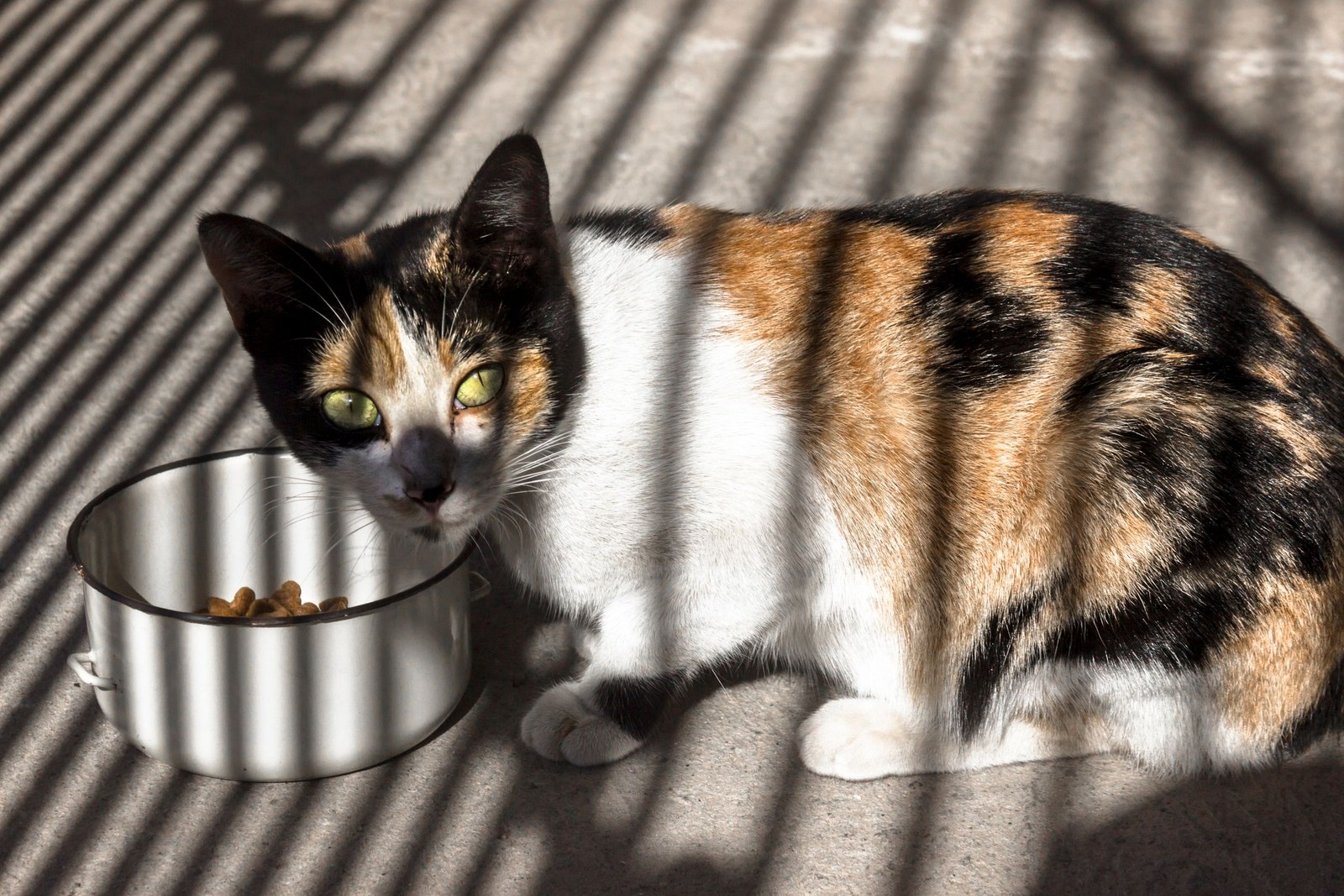
Switch your senior cat from free feeding to scheduled meals gradually over one to two weeks: first pick up the all-day bowl between set mealtimes for a few days, then settle into two or three measured meals a day at consistent times. For a senior, the pace matters — abrupt changes and long gaps without food are a bad idea — and the payoff is big, because a set routine makes appetite changes, a key health signal in older cats, easy to spot.
Week one: shrink the free-feeding window
Start by measuring what your cat currently eats in a day, so your scheduled portions are based on reality, not a guess. Then offer a measured breakfast, pick the bowl up afterward, offer a measured dinner, and pick it up again. For the first few days you can add a small midday meal if your senior is used to grazing, rather than forcing two large meals immediately. Many seniors actually prefer smaller, more frequent meals because they are easier to digest.
Use the food she already knows for the transition. Do not change the schedule and the food at the same time — if she then refuses to eat, you will not know which change caused it. If a new senior diet is planned with your vet, establish the meal routine first, then transition foods gradually within those meals.
Expect some confusion and complaining at the empty bowl spot, usually worst on days two and three. A predictable routine, play before meals, and calm consistency settle most cats within a week.
Setting portions and times for a senior
Choose times you can keep every day, including weekends — for example 7 a.m., 1 p.m., and 7 p.m. for three meals, or morning and evening for two. Measure with a scale or cup, include treats in the daily total, and adjust portions based on monthly weight and body condition, not just the package guide.
Seniors must not be left to “get hungry enough.” If your cat skips a meal, offer something appealing at the next mealtime, and if she refuses food for a full day, or eats much less for two days, call your veterinarian. Older cats who stop eating can decline quickly, and appetite loss can signal dental pain, nausea, or other health issues that need attention rather than tougher feeding rules. Warming wet food slightly can help by releasing aroma for cats whose sense of smell has dulled.
Make it easy for an older body
Feed in a quiet, ground-level spot she can reach without jumping or stairs, away from younger, faster cats who might steal her portion. A shallow, wide bowl is often more comfortable. Keep water nearby but not right beside the food if she prefers separation. If she eats slowly, give her undisturbed time — shutting a door for 20 minutes protects her meal in a busy house.
Keeping every feeder on the new routine
A schedule only works if everyone follows it, including on days you are out. KinsLe's Care Teams can assign those set mealtimes across family members, with timestamped completions, so your senior never misses a meal and never gets an accidental extra one from a well-meaning second feeder. Log whether she finished each meal, too — that record is gold at a vet visit. Ready to build a steadier routine for your older cat? With the mealtime roster written in the Care Teams plan on KinsLe, each feeder knows their slot, checks it off, and leaves a finished-meal note the next person can trust.