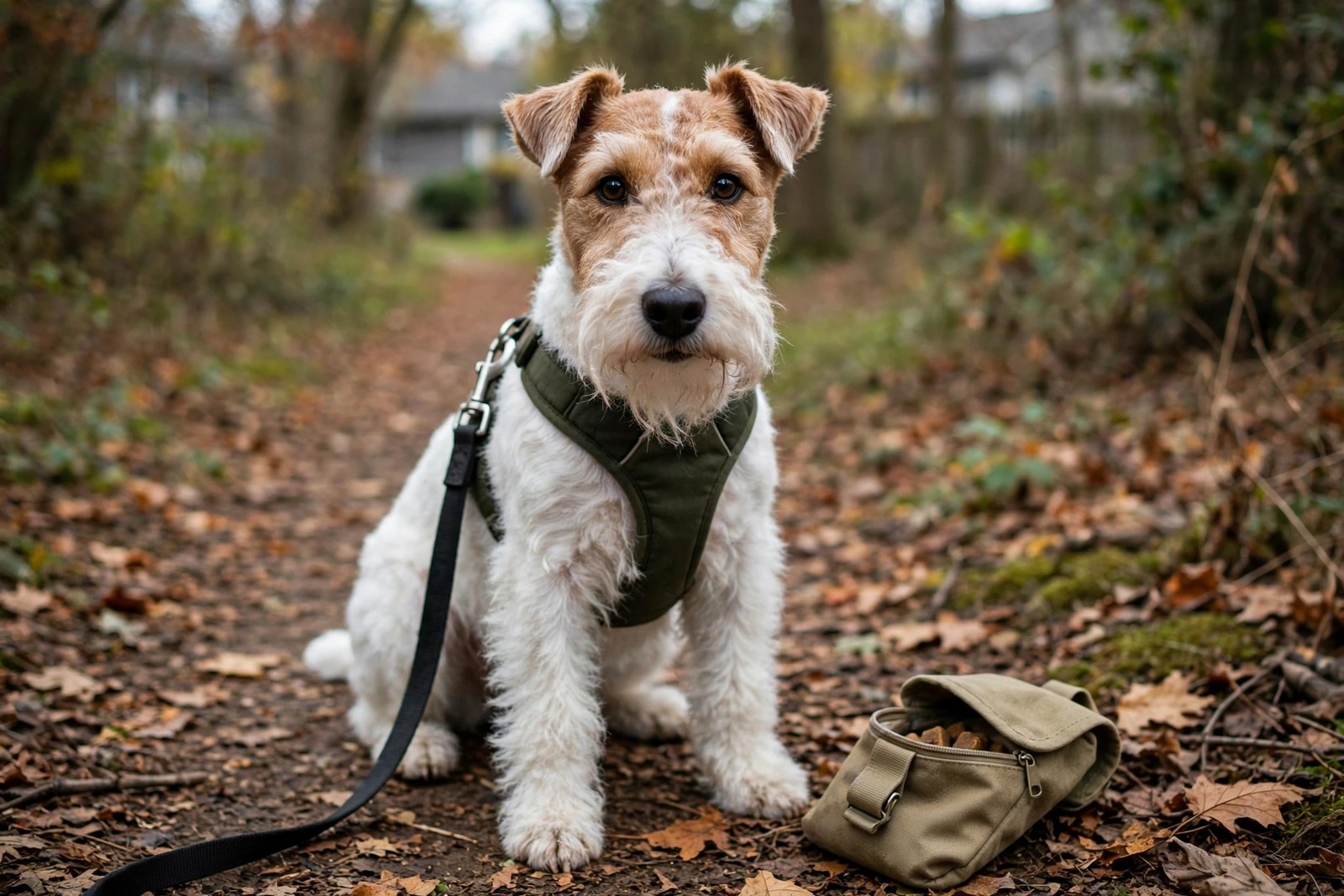
Start Far Below Squirrel Level
A terrier who has locked onto a squirrel is not ignoring you out of spite; his whole attention has narrowed to movement, scent and the promise of a chase. Training therefore begins where he can still think. Choose an open edge of the woods where squirrels appear at a distance, keep him on a long line attached to a harness, and work at a range where he notices movement yet can still turn his head, take food and respond to his name. If he is lunging, barking or trembling with fixation, you are too close, and distance is the first correction.
Teach Look, Turn, Get Paid
The core exercise is simple to describe and takes weeks to build. The moment he spots a bird or a distant squirrel, mark that calm look, invite his attention back to you, and pay with food he genuinely values. You are rewarding the turn away, not dragging him away. Practise in this order:
- Birds and rustling leaves at a generous distance, until the head-turn is prompt
- A stationary squirrel far off, seen briefly before you angle away
- Squirrels moving across a ride or clearing, still well beyond chase range
- Shorter distances only when the previous stage stays calm on several outings
Keep each outing's hardest repetition brief. End while he is succeeding, because a terrier who practises turning away twenty times learns more than one who finally explodes at the twenty-first squirrel.
Pay the Drive Legally
Disengagement is easier to teach when chasing is not forbidden everywhere in his life. Give the drive a wage at home and in the garden: a flirt pole worked with a clear wait, chase and drop routine, tug games that pause when you ask, and scent searches that let his nose hunt without wildlife involved. These outlets do not remove prey drive, and they should not be sold to yourself as a cure. They do lower the pressure, so a squirrel in the woods is no longer the single exciting event in an otherwise underfilled week.
Work Woodland Routes Honestly
Woodland adds cover, blind bends and squirrels that appear at three metres rather than thirty. Scan ahead at junctions, shorten the line before corners, and step off the path early when you see movement on the ground. Judge success honestly for this individual dog: a terrier who can disengage at twenty metres on a line, recover quickly and keep walking is showing a real triumph of training. Off-lead reliability around squirrels may never be a safe skill for him, and choosing management in squirrel country — a line, a different route at dawn when activity peaks, an open field for free running — is wisdom, not defeat.
Keep Every Handler on the Same Plan
Terriers repeat whatever each walker allows, so one person permitting a lunge undoes another person's patient distance work. Agree the working distance, the marker word and the point at which you turn away, and hold that line on every walk. Woodland practice stays consistent when KinsLe records it through Care Teams: assign the day's helper a specific long-line session as their duty, and let the timestamp on each completed duty show who worked which distance.