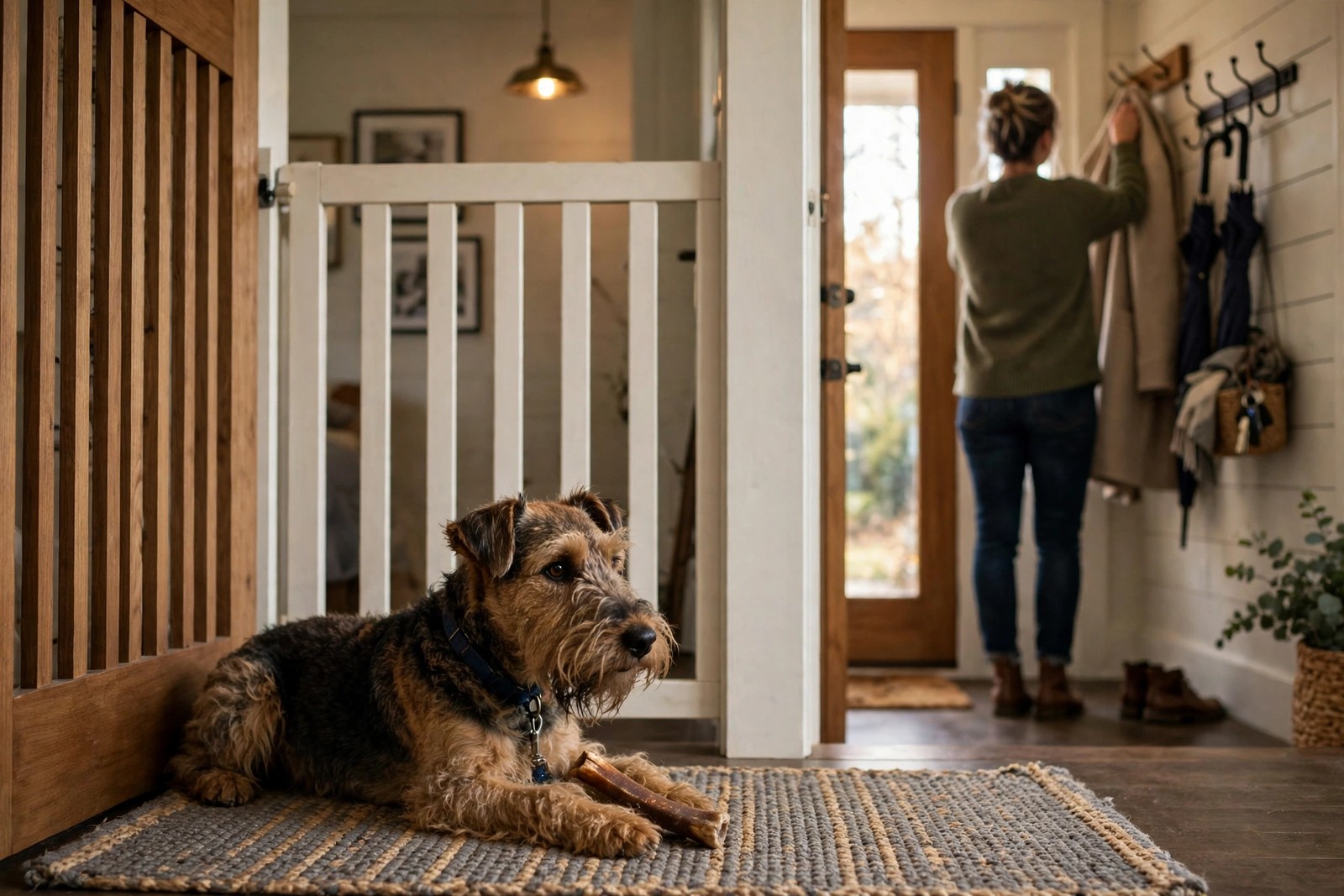
Frantic arrivals are rarely a manners problem; they are an improvisation problem. The bell rings, people shout, the door opens on waving strangers, and the dog invents a response at maximum volume. A ritual removes the invention. When every arrival follows the same steps in the same order, the dog learns the script, and a known script is calming in the same way a familiar walk route is calming: nothing needs deciding.
Set Up the Mat, Gate, and Chew
Place a recognisable mat a few metres from the front door, behind a baby gate or a doorway barrier, where your dog can see arrivals without reaching them. The mat needs to already mean settle, so build that association on ordinary days first: send your dog to the mat, feed calm behaviour there, and release before restlessness starts. Keep a stock of long-lasting chews by the door, reserved for arrivals only, so the chew itself becomes part of the cue. Stage the physical side too: the lead hangs by the door for dogs who need it early on, treats live in one pot in one place, and coats and bags have a spot that is not in the dog's greeting lane.
Rehearse the Sequence When Nobody Visits
Rehearse the full sequence twice a week with household members playing the guest, keeping every step in the same order. The bell or a knock sounds; your dog is sent to the mat; the gate closes; the chew lands; the pretend guest enters, hangs up a coat and sits down without looking at the dog. Wait for the visible shift: breathing slows, the body softens, the dog glances at the guest and back to the chew. Only then release your dog to greet, briefly and on the floor, with the guest stroking the chest rather than patting the head. After a short greeting, send your dog back to the mat and pay the return too, because a ritual that only works in one direction falls apart the first time a guest stays for dinner.
Brief Real Guests Before They Arrive
Real visitors can undo a fortnight of rehearsal in one enthusiastic entrance, so brief people before they reach the door: come in quietly, ignore the dog entirely until released, no eye contact, no high voices, no pushing the dog down if excitement spills over. People can be briefed, and guests are often relieved to be given a job. For guests who cannot follow the script, such as small children or anyone nervous of dogs, keep the gate closed for the whole visit and let the dog enjoy the chew in peace; a skipped greeting is a success, not a failure. Choose your first real guests carefully: one calm adult who likes dogs and follows instructions is worth more than a houseful of helpers.
Shorten the Celebration, Not the Welcome
The goal is not a dog who ignores guests forever; it is a dog whose excitement lasts two minutes instead of twenty. Keep early greetings short, end them while they are still going well, and let the length grow across visits as the mat behaviour gets stronger. If arousal boils over mid-greeting, quietly return your dog behind the gate with the chew and try again later, with no scolding and no drama. Over weeks of identical arrivals, dogs often start running the ritual themselves: bell, mat, chew, wait, greet, settle. That self-run script is the sign the habit has landed.
Using KinsLe's Care Teams, give the ritual named owners before guests arrive: assign the door to one person and the mat, gate and chew to another, and the completed arrival is logged with a timestamp, so everyone can see the same sequence ran in the same order, whoever was home.