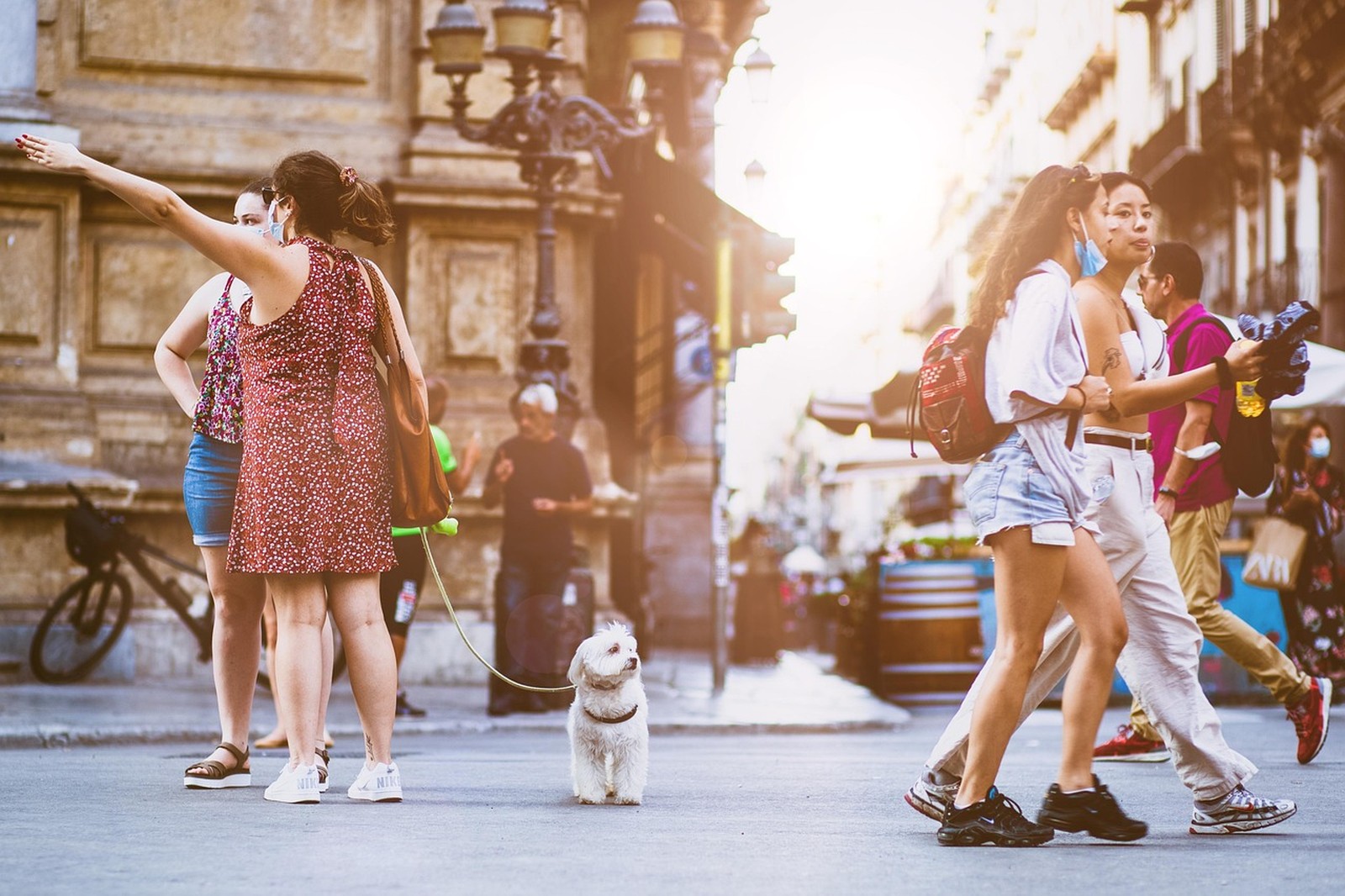
Outdoor markets and festivals concentrate everything a scavenging dog dreams about into a few crowded yards: dropped fries, spilled sauces, chicken bones in the grass, and a hundred smells layered over the ground. Asking a dog to ignore that buffet on the day, with no preparation, is asking for willpower no untrained dog owns. Leave it has to be built like any other skill, in a quiet kitchen first, at difficulty levels the dog can win, until turning away from ground food is a habit the dog carries into chaos rather than a command you shout inside it.
Build It at Home, Under a Cover
Begin with a boring piece of food sealed under a bowl or your cupped hand on the floor. The dog sniffs, paws, and stares; the moment the dog disengages, glancing away or looking back at you, mark it and pay with something better from your other hand, never with the covered item itself. Once disengagement is quick and cheerful, raise the cover slightly, then work with the food visible on the floor while your foot stays ready to cover it again if the dog dives. Progress from low-value food to high-value food only as each level turns easy, because a dog who can ignore a dry piece of kibble has not yet agreed to ignore a sausage, and discovering that gap should happen in your kitchen, not at a festival. Keep sessions to a few minutes, and finish on a win the dog understands.
Proof It in Stages, Not Leaps
Proofing is where leave it becomes real, and it works as a ladder: the yard first, with food items planted by you in known spots; then a quiet street, working at a distance from any dropped food you spot; then busier streets; and only finally the edge of a market, on the perimeter where smells arrive diluted and retreat is easy. At the market itself, management carries half the load: a short leash that keeps the dog at your side rather than ranging to the end of a long line, a route that skirts the densest food stalls on the first visits, and your own eyes scanning the ground ahead of the dog so you spot the dropped kebab before the dog does and can ask for leave it early, while it is still a decision rather than a lunge.
Why the Stakes Justify the Generosity
Dropped festival food is not merely a manners issue. Cooked bones are the headline hazard: they splinter in ways raw bone does not, and a gulped bone shard can injure the mouth, throat, or gut badly enough to need emergency care. Turning away from a dropped sausage is expensive obedience, so pay it like it matters: the best treats you carry, delivered every single time early in proofing and often forever at markets, because the dog is doing the hardest version of the job in the hardest place it exists.
One Standard for Every Walker
Leave it frays when one walker proof-tests at market level while another lets the dog graze dropped crumbs at the park. Check the Family Sharing progression on KinsLe before outings so every walker knows the stage the dog has genuinely mastered, the reward the disengagement currently earns, and the household rules for markets: short leash, perimeter first, no grazing anywhere. Noting near-misses helps too, because the item the dog lunged for tells the next walker exactly which value level needs more kitchen work before the next festival.
Given the ladder, most dogs reach a point where a market walk becomes almost restful: the nose works, the eyes come back to you at the interesting moments, and dropped food turns into background scenery the dog has been paid, many times, to ignore. Before a market trip, every walker in the household works from the same Family Sharing progression in KinsLe, so nobody asks the dog for more than the stage it has already mastered.