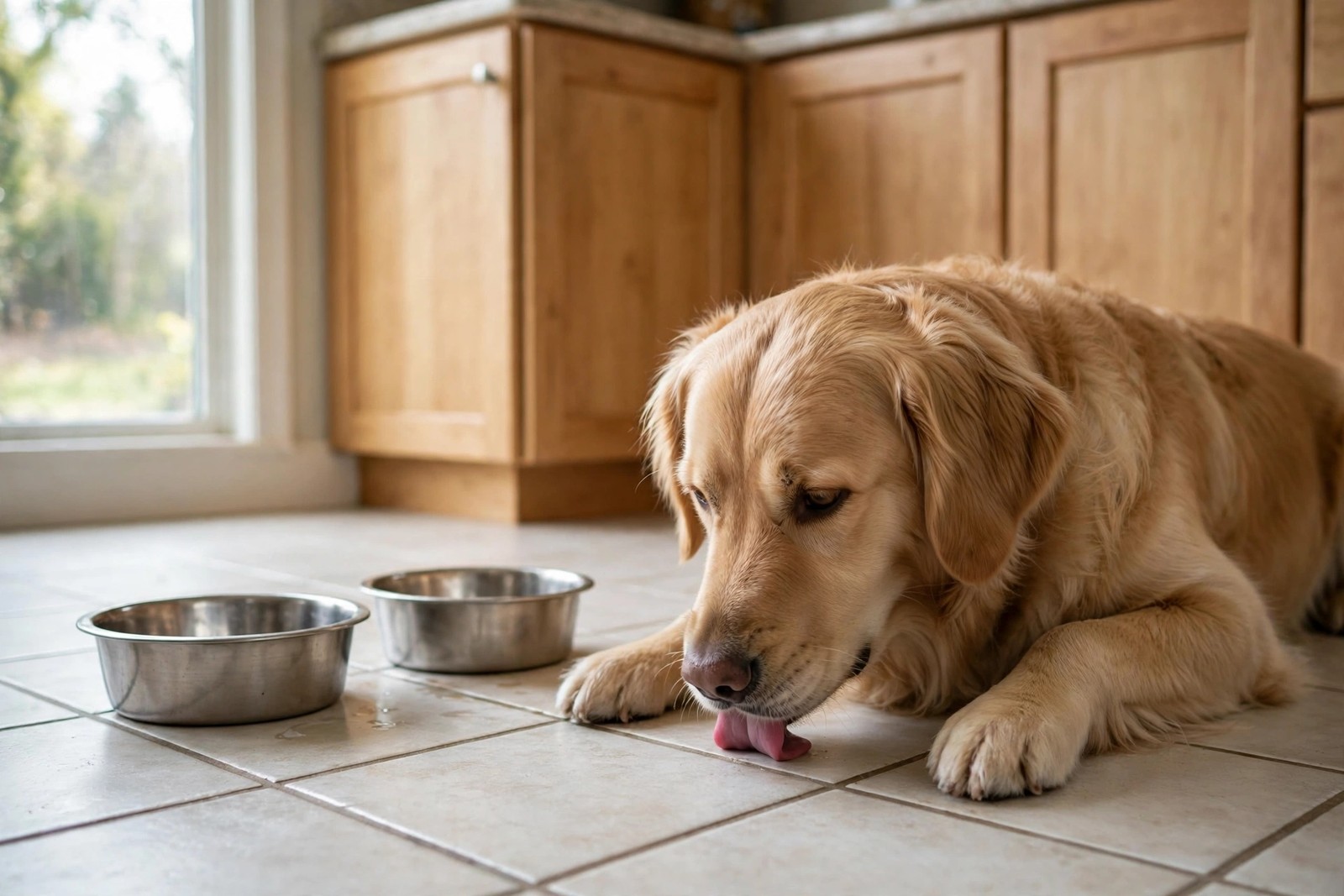
Owners usually notice this at the same moment each day: the bowl is empty, the visible crumbs were gone ages ago, and the dog is still working the kitchen floor tile by tile, tongue out, fully absorbed. Often, the floor explains it. A dog's sense of smell operates at a level that makes a freshly wiped kitchen still rich with information, and licking is both sampling and collecting. Only a subset of these dogs are signalling a health problem, so the useful skill is telling ordinary floor foraging from the pattern that deserves a veterinary conversation.
What Is Still on a Clean Floor
Fat is the main residue. Cooking sprays a fine mist of it, pans drip it, and it bonds to grout, textured tile, laminate seams and the kick space beneath cupboards. Meat and stock splashes dry into those same low places, exactly at tongue height. Dogs return to the preparation zone rather than the eating zone because that is where ingredients were chopped, dropped and wiped, and wiping often spreads a thin flavour film wider instead of removing it. A dog who licks in a wandering pattern, sniffs between licks and eventually wanders off satisfied is usually harvesting scent. Posture helps you judge: a relaxed body, normal tail carriage and pauses to look up suggest foraging, while fixed, repetitive licking in one spot reads differently.
When Floor Licking Points Towards the Gut
Excessive licking of surfaces is a recognised presentation vets hear about in dogs with nausea and gastrointestinal discomfort. The surrounding signs matter more than the licking alone. Watch for lip licking when no food is present, gulping or hard swallowing, drooling, grass eating, burping, a reduced appetite, or licking that extends to carpets, furniture, walls and her own lips and paws. Timing matters as well: licking that starts before meals, happens on an empty stomach, wakes her at night or is steadily increasing week by week is a stronger reason to book a check than a stable post-dinner habit in a dog who is otherwise bright, eating well and keeping a normal weight. Puppies need a lower threshold, because they also lick floors to explore and may swallow things they should not.
Simple Changes That Test the Benign Explanation
Try a short experiment before worrying. Feed her, then offer a lick mat or a stuffed food toy in another room; a dog who transfers happily and settles was probably looking for more oral activity after the meal, and the floor was the available option. Clean the preparation zone with hot water and a degreasing wash, paying attention to grout and the cupboard kick space, and see whether the licking shrinks. Move her bowl away from the cooking area if she camps between the two zones. Keep a two-week note of when it happens, how long it lasts, which surfaces are involved and any gulping, grass eating or appetite change alongside it, and film one typical episode on your phone. A food change, a new treat or a recent scavenged meal in the days before an episode is also worth writing down, since gut discomfort often follows something eaten. That record, plus the video, is exactly what a veterinarian needs to judge whether the gut belongs in the conversation.
Habits at mealtimes involve everyone who feeds her, so agree who offers the post-meal activity and who logs the episodes you are watching. KinsLe's Pet Passport brings that record together with her feeding notes and veterinary history in one organised profile, so the pattern you have tracked is ready to share at her next appointment.