The Biggest Number in the Small-Dog World
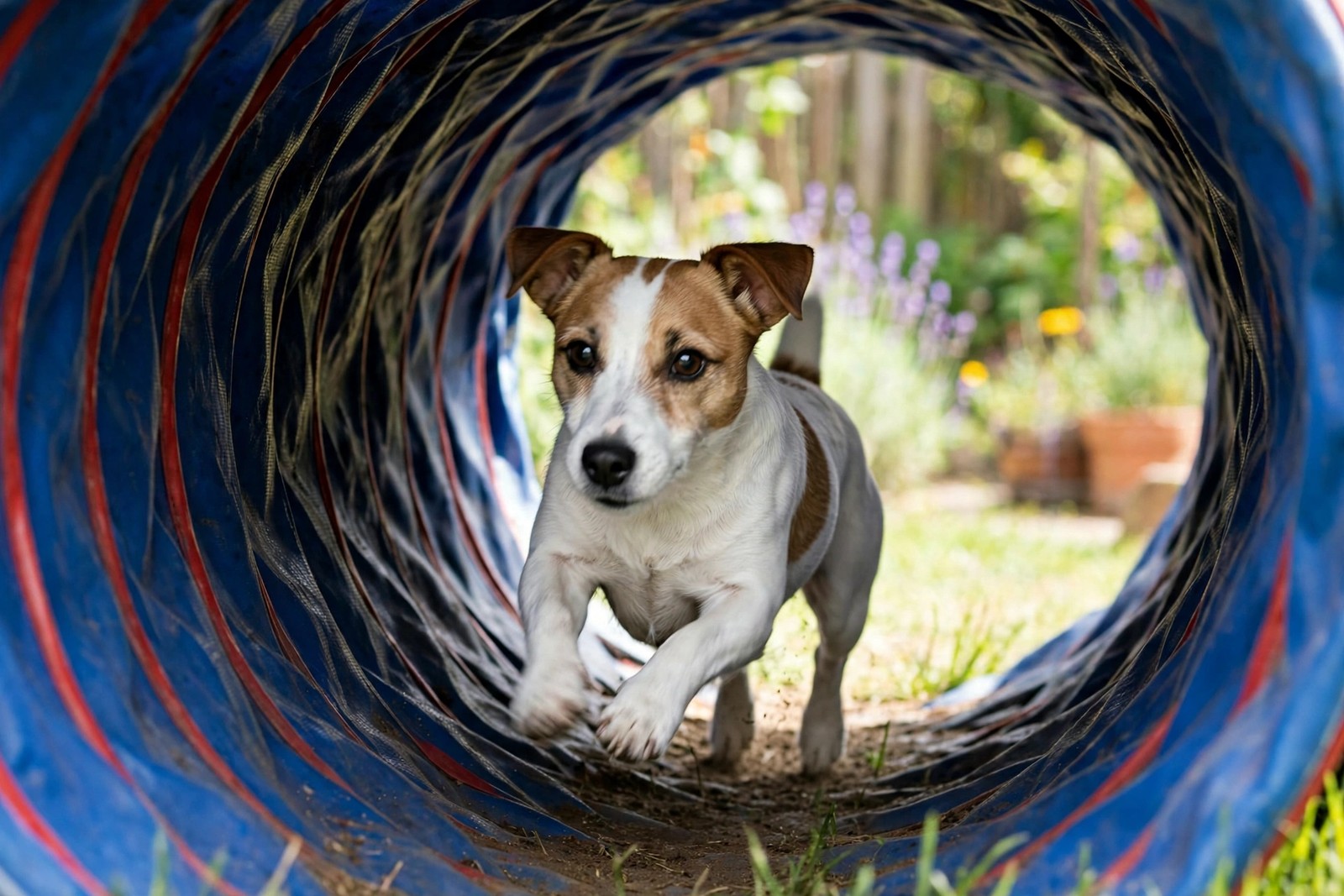
A healthy adult Russell Terrier needs about one and a half to two hours of exercise a day. New owners, charmed by a dog who stands barely a foot tall, routinely budget for a fraction of that and spend months wondering what went wrong. The Russell is a pure working fox terrier, bred to run with hounds all day and then go to ground after a fox without hesitation. That is not a decorative history. It is a job description the dog still carries, fully staffed, in a body that fits in a shopping basket.
What Two Hours Actually Looks Like
A workable Russell day has structure: a substantial morning outing with real running in a secure space, training and play broken into lively bursts through the day, and an evening session long enough to produce an honest flop afterwards. Games that use his mind — hide-and-seek, scent searches, learning tricks, a flirt pole used in short, controlled sets — tire him in ways that lead walking alone never will. Russell Terriers also dig with professional commitment, so a sanctioned digging pit is less a luxury than household insurance for the garden. Even his shorter neighbourhood loops count properly when they stay brisk and are broken up with sniff stops, training repetitions, and at least one real game.
Security Is Part of the Exercise Plan
Every outing decision for a Russell runs through his prey drive. A squirrel, a cat, or a blowing leaf with ambition can erase months of recall training in a second, and this breed will go over, under, or through obstacles that would stop a larger dog. Free running belongs in truly terrier-proof spaces, fences get checked at Russell height and below ground level, and a long line is the honest compromise on open land. Owners who plan around the instinct get to enjoy the athleticism; owners who pretend it is not there get very fit chasing him.
Puppies With an Adult Reputation
Russell puppies are famously relentless, which tempts owners into marathon play sessions their growing joints do not need. Short, frequent bursts of play, exploration, and training — with enforced rest before the puppy becomes overtired and frantic — build a better dog than exhaustion does. Adolescence is the peak-demand period, when exercise, training, and management all need reinforcing at once; owners who expect the teenage Russell to be more work, not less, come through it with their sense of humour intact.
The Russell Verdict Each Evening
This breed delivers its exercise report in behaviour. A Russell who has run, dug, chased, and thought will curl up in a borrowed lap and sleep like a stone. One who has not will patrol, bark at developments three streets away, excavate soft furnishings, and audition household items for destruction. Before consulting anyone about behaviour problems, audit the previous week honestly — with Russells, the minutes and the mental work almost always explain the mayhem. On KinsLe, Care Teams lets a Russell's people divide his outings, digging sessions, and training games into assigned duties and timestamp them as done, so his demanding daily programme survives even the busiest household schedule.