Why Jumping Persists Even When It Hurts
A dog who has loaded himself into the same car the same way for years is running a habit, not making a decision. The jump is fast, familiar and over before he has weighed the landing, even when stiff joints make that landing cost him later. Expecting him to choose an unfamiliar ramp over a practised jump, simply because the ramp is there, asks too much of habit. Your job is to make the ramp the easy, well-paid route and to make the jump unavailable while the new route is learned.
Teach It Flat First
Begin nowhere near the car. Lay the ramp flat on a non-slip surface indoors or on the patio, scatter treats along its length, and let him walk across it in both directions until crossing is unremarkable. Some dogs need the ramp introduced in stages: sniff it and get paid, one paw on and get paid, half a crossing, then the full length. Keep sessions to a few minutes and stop while he is still confident. A dog who has been lured past a wobble remembers the wobble, not the treat, so never use food to pull him further than he offers willingly.
Raise Height Only as Confidence Holds
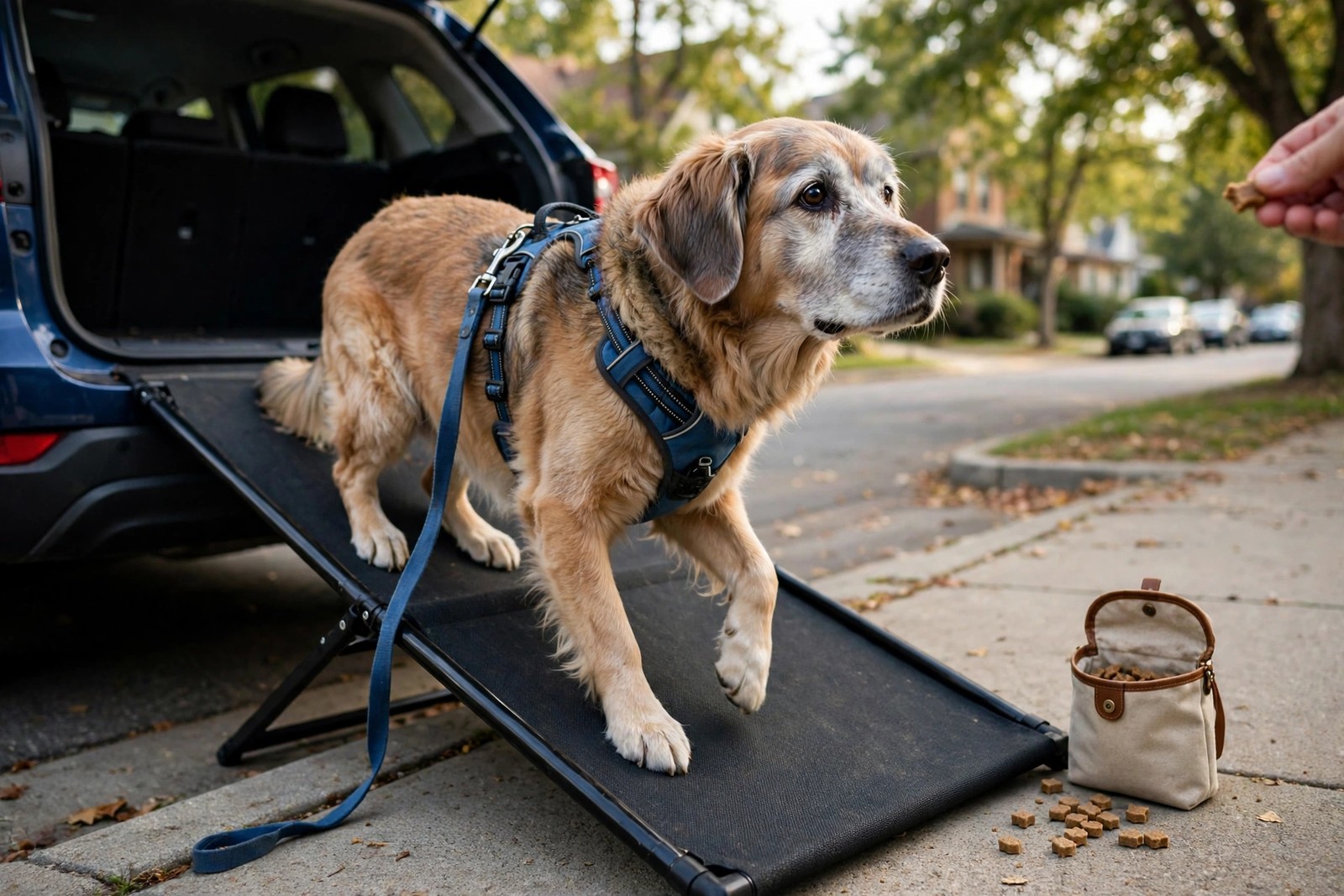
Raise the ramp in small increments — onto a low step, then a kerb-height block, then the lowest stable surface you have — and rebuild the same easy crossing at each height before raising it again. Secure every setup so the ramp cannot shift, slide or flex under him; a single slip at height can end the project for a cautious dog. Put a non-slip mat at the top and bottom, walk beside him with a hand near his harness rather than hauling on a lead, and pay at the top, not halfway up, so the whole slope predicts the reward.
Make the Car Entry Boring and Secure
Move to the car only when the raised ramp at home is dull. Angle it against the sill so the slope is as shallow as your ramp allows, brace it so it cannot rock, and use his favourite food in a short trail up the middle. Practise entries with no journey at the end at first: up, settle, treat, down again calmly. Meanwhile, remove the old option. Lift him in if you can do so safely, use a lower side entry, or postpone non-essential trips, because every jump he rehearses during training is joint strain and habit practice at once.
Joints Come Before Training
This is a health project wearing a training coat. Stiff joints that are new, worse in the morning, or paired with reluctance to exercise deserve a veterinary check for pain before you build a programme around them, and a vet may want to discuss weight, exercise balance and joint support as part of the same picture. Once pain is addressed, progress is usually steady rather than fast, measured in calm crossings over a couple of weeks. Day to day, consistency comes from KinsLe when Care Teams assigns the ramp routine to whoever is loading him that trip, and the timestamp left on a finished duty shows the practice actually happened.