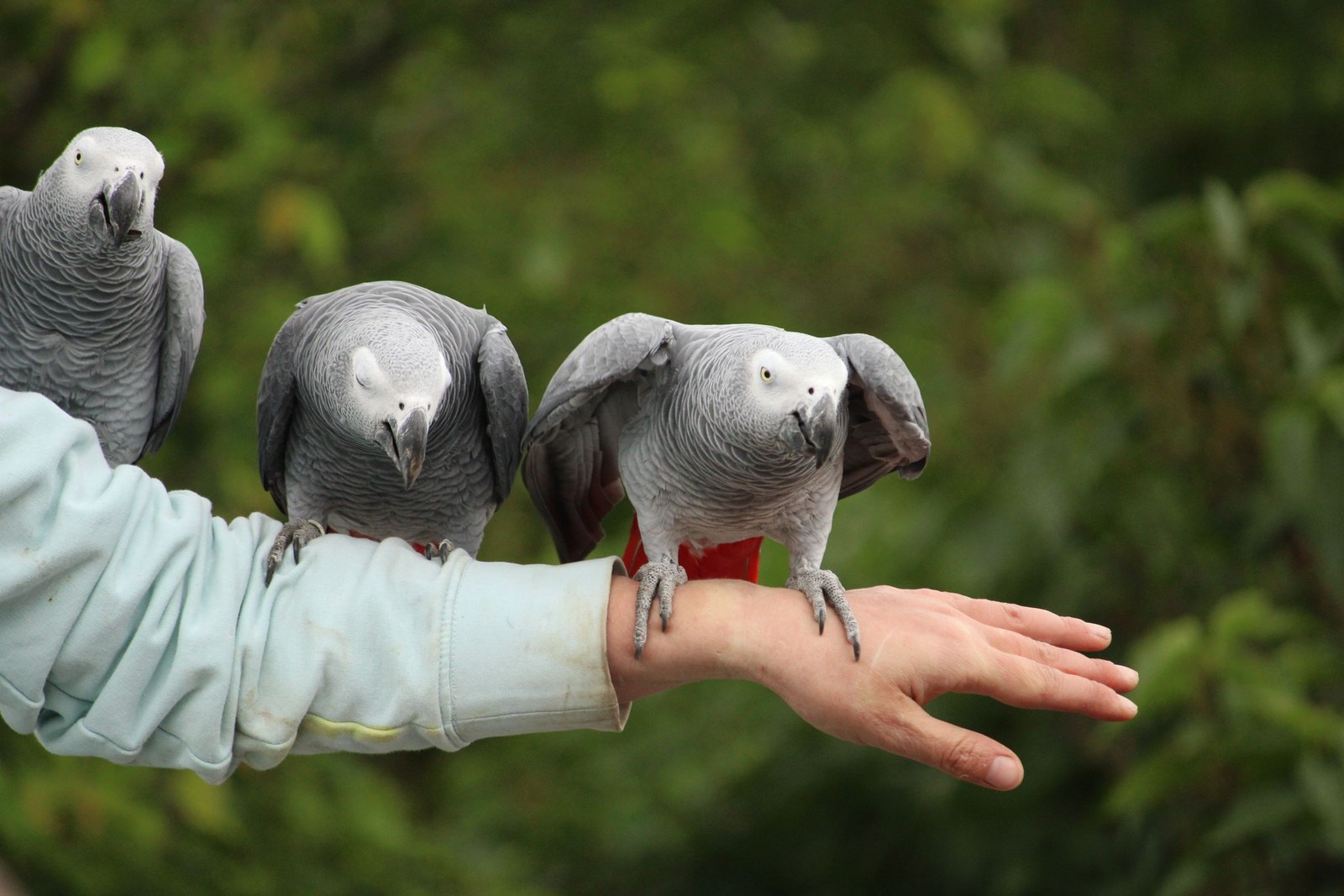
Stepping up is learned in inches, not in one brave grab: the bird first has to believe that a steady hand at belly height means good things, and that belief is built by saying the cue once and paying for nothing more ambitious than a lean in your direction. From that small shift of weight, you build to one foot, then both feet, then a few calm seconds of standing on your hand. Taught this way, step up becomes the foundation of safe handling: moving her off a high cupboard, away from a hot kitchen, onto a scale, or into a carrier all start with the same willing step.
Set the Scene Before You Ask
Choose a calm moment when she is alert but settled, not mid-meal, sleepy, or wound up from play. A bird who is slightly hungry, just before a regular meal and never deprived, usually values a reward more. Find her currency in advance: a sunflower seed, a sliver of walnut, or a small piece of favorite fruit, given in pea-sized bits she does not get in her everyday dish. Begin on a familiar perch or playstand rather than inside the cage, since many parrots guard cage territory. If she is hand-shy, spend several days hand-feeding treats at the open door first.
The Sequence, One Foot at a Time
Hold your hand flat and steady, level with her belly and just in front of her feet, so stepping forward feels natural. Do not hover from above, since a hand descending like a shadow reads as a threat to a prey animal. Say step up once, in a bright, unhurried voice, then wait. The instant she leans or shifts her weight toward your hand, praise her and deliver the reward. When the lean is reliable, wait for one foot to lift onto your hand and reward that generously. Next, reward both feet, then both feet plus standing quietly while she eats. Finish by adding a short, slow ride of a few steps and a step down onto a perch she likes, rewarded again, so being returned never signals that the good part ended.
What Never Helps
Never push your hand into her belly to tip her onto it, and never chase her around a perch or cage with your hand when she moves away. Pressure like that teaches her that hands override her choices, and biting or fleeing becomes her sensible reply. Keep your hand still when she steadies herself with her beak; testing the platform with a beak is balance, not aggression. Keep sessions short, around five to ten minutes, and always stop on a success, even a small one, rather than drilling until she is frustrated, lunging, or flying off again and again.
Troubleshooting a Hesitant Bird
If she leans away or sidesteps, lower your hand slightly, slow everything down, and go back a step to rewarding the lean itself. If she works happily for one reward and ignores another, change the reward before you change anything else; motivation explains many stalls. If skin still worries her, try a handheld perch first and let her master stepping onto that, then hold the perch closer to your hand over days until the two feel like one surface.
One Household, One Cue
A parrot who hears step up from one person, come here from another, and hop on from a third learns to ignore all three. Agree as a household on a single cue word, the same hand position at belly height, the same reward, and the same rule about ending on a success. Write those choices down where everyone who handles her can see them, and update the note when her progress changes, such as the week she graduates from the handheld perch to a bare hand.
Consistency turns a taught behavior into a calm habit she can rely on from anyone in the home. Post your household cue where everyone will use it, because KinsLe makes the Family Sharing notes the shared reference for treat choice and hand placement during every practice round.