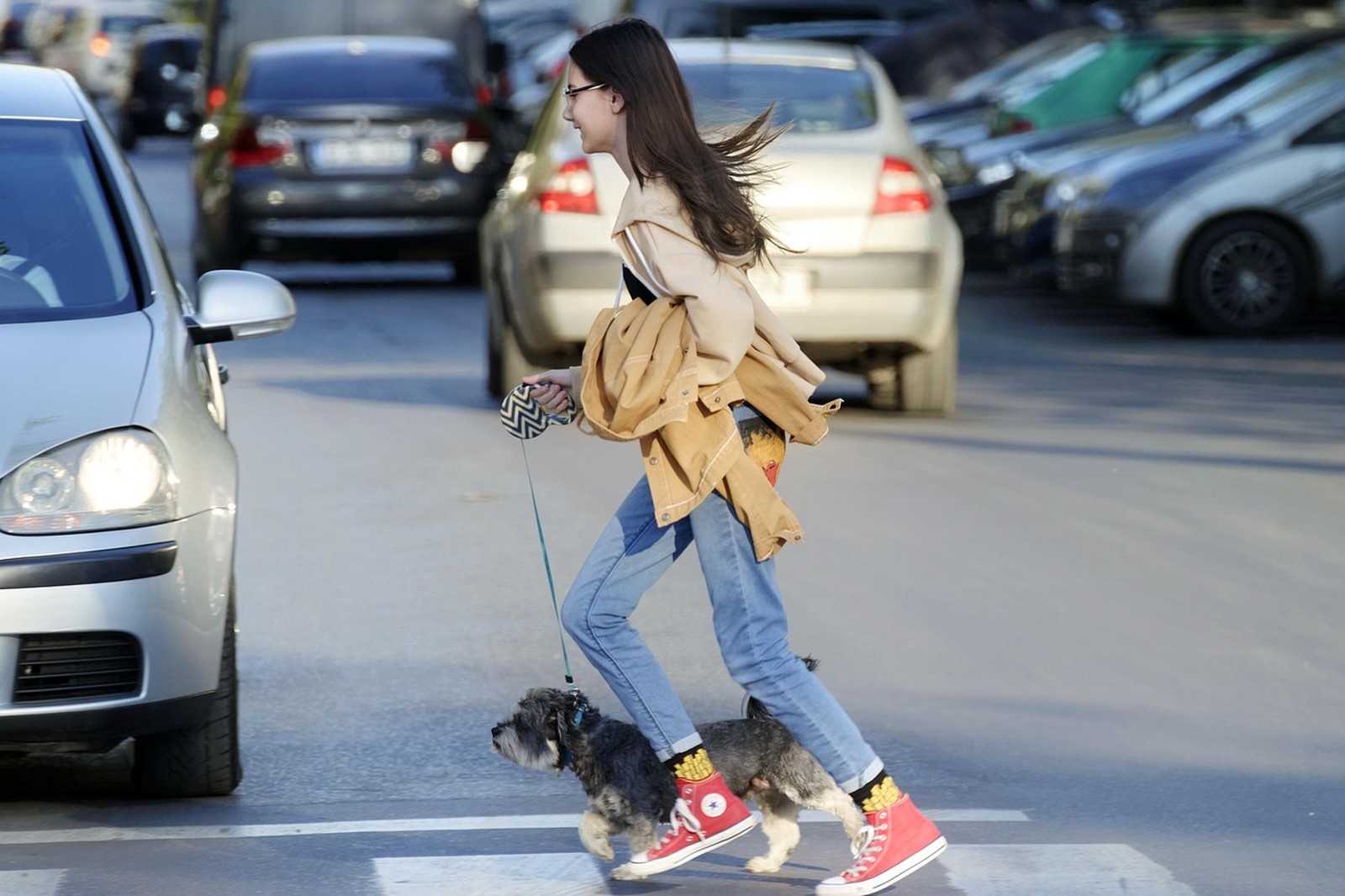
Most walks do not need a formal heel. A dog free to wander a little, sniff, and check back in is having the walk dogs actually need. The skill worth building is different: a heel that switches on for the twenty seconds when precision genuinely protects the dog, and switches off again the moment the road is crossed or the narrow stretch is passed.
What the Cue Should Mean
Give this heel its own clear meaning in the dog's mind: when the cue comes, move in close beside your leg, match your pace, and stay there until the release word ends the job. It is not a stricter version of ordinary walking and it is not a punishment pulled out when the dog pulls. It is a short, well-paid task with a beginning and an end, closer to asking a child to hold a hand at a curb than to marching. Choosing one cue word and one release word, and using nothing else in those moments, keeps the meaning clean.
Building It in Quiet Places
Start somewhere boring: a hallway, a driveway, a quiet stretch of sidewalk with no other dogs in view. Stand still, cue the heel, and reward the dog for arriving at your leg and settling into position beside it, shoulder roughly level with your seam. Position is what you are paying for at first, not distance. Once the dog offers the spot reliably, add two or three steps, reward in place, then release and let the leash loosen again. Build duration gradually across sessions: five steps, half a sidewalk block, the length of a parked row of cars. Short sessions scattered through the week teach more than one long drilling session, and ending while the dog is still succeeding keeps the cue cheerful rather than wearying. If the dog surges ahead or swings wide, the step was too big; drop back to the distance that worked and pay that well.
Using It Where It Counts
Introduce real crossings once the picture is solid at home. Cue the heel a few paces before the curb, keep rewards coming at your leg while you wait and while you cross, and release on the far side so the dog learns the road itself is the job's whole span. On narrow sidewalks, cue before you reach the person, stroller, or dog coming the other way, hold the position while you pass, and release once there is room again. Reward placement matters throughout: deliver food at your leg, in position, never out in front, because food handed ahead teaches the dog to drift ahead to collect it. Between these moments, deliberately return to ordinary loose-leash walking so the contrast stays obvious and the dog never has to guess which mode the walk is in.
One Standard for Every Walker
A situational cue collapses quickly when each walker improvises. Write the cue word, the release word, the reward spot at the leg, and the current step distance in one household log that every walker checks before taking the dog out. Whoever walks the dog practices at the level the dog has actually reached, releases at the same kinds of places, and notes anything that went wrong, such as a crossing where a passing dog broke the position. That written record stops one person's ambitious session from undoing another person's careful week.
Expect the polished version to take weeks, not days, and expect setbacks at genuinely hard crossings with traffic noise and other dogs close by. Shorten the job there, pay better, and release sooner rather than repeating the cue louder. A heel that appears exactly when it matters, holds calmly, and then melts back into a relaxed walk is the whole goal. The relatives you chose can look at that profile in KinsLe, where Family Sharing places it within their reach.