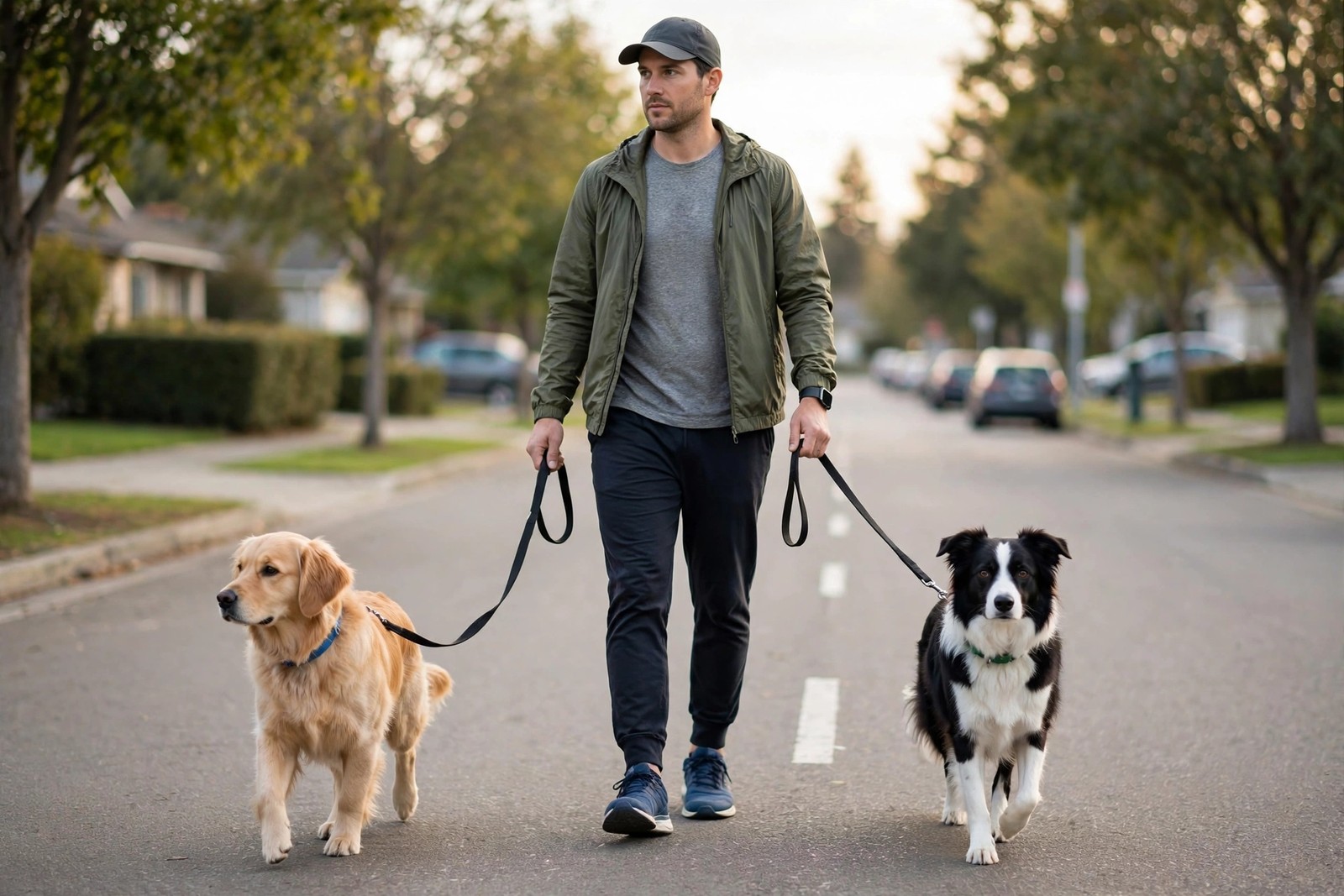
Two-dog walking fails in a predictable way: each dog is manageable alone, but together they braid the leads, pull toward different distractions, and wind each other up until the walk becomes crowd control. The tangle is a training problem, not an equipment problem. Couplers and splitter leads make it worse, because they remove each dog's ability to move independently and turn every lunge into a drag on the other dog. Separate leads, fixed structure, and solo skills first are what make the pair walk boring.
Each dog earns the pair walk separately
Before walking them together, each dog needs the solo basics: walking on a loose lead on quiet streets, checking in with you when asked, and recovering after a distraction without a spiral. The weaker dog sets the timetable. If one dog still lunges at other dogs alone, the pair version will include that lunge plus a second dog's reaction to it, so that dog's solo training continues until the behaviour is manageable.
Fix the lanes and the lead handling
Assign sides and never swap them: the steadier dog walks on the traffic side if she is calmer about vehicles, and the more reactive dog walks on the inside, furthest from passing dogs, where you can step between her and triggers. Hold one lead in each hand at similar lengths so each dog has her own lane and neither can drift across your body. Feed treats on each dog's own side, at her shoulder, so position pays where you want the dog to stay. Keep the lanes wide enough that the dogs are not shoulder to shoulder competing for the same smells, and let them take turns at sniff spots rather than crowding into every verge, which is where competitive scrambling starts.
The stop-and-reset replaces untangling on the move
Leads will cross; the skill is in how you respond. The moment a dog crosses in front of you or the leads braid, stop walking, plant your feet, and walk the crossed dog back around to her side, then pay both dogs for standing in position before moving off. Untangling while walking teaches the dogs that weaving works, because the walk continues regardless. Early pair walks should be short and on wide, quiet streets where stopping is easy; a second handler for the first combined walks is a shortcut, since each dog can be coached and paid individually while the pair picture is new. Add busier streets, narrower pavements, and passing dogs only when the quiet version is dull.
Manage arousal and competition between the pair
Two dogs feed each other's excitement, so work on keeping the pair's arousal low. Reward check-ins alternately and fairly, because a dog who watches her partner get paid for position while she gets nothing learns to crowd and compete for the payment zone. If one dog fixates on a trigger, turn the pair away together rather than correcting the fixated dog while her partner surges forward. When you stop for a poo bag, park both dogs in a sit or stand on their own sides before you bend down, since a loose moment at the kerb is where tangles and escapes tend to happen. Dogs who play rough together at home often need five calm minutes apart before a pair walk, so the walk does not simply continue the wrestling match outdoors.
Keep solo walks in the schedule permanently
Even once the pair walks beautifully, keep individual walks in the routine. Dogs walked only ever together can become anxious or chaotic apart, and solo walks are where each dog's training, confidence, and one-to-one bond with you are maintained. They are your pressure valve: on days when one dog is recovering from illness or the reactive dog has had a difficult morning, solo walks keep everyone's skills intact. KinsLe's Care Teams makes that mixed schedule workable, because solo and paired walks can be assigned across the week and each walk is timestamped, so a busy week never eats either dog's solo training.