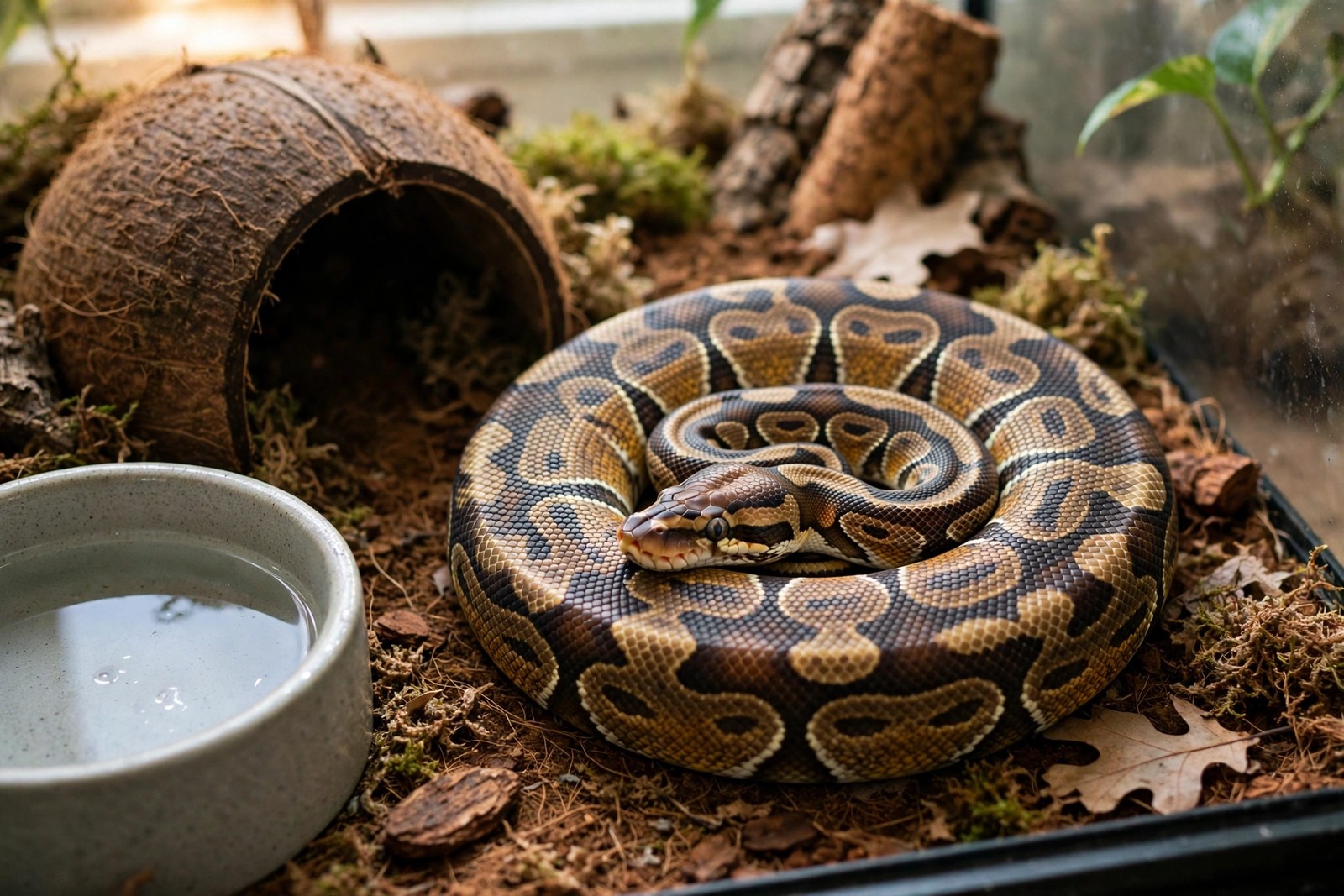
Ball pythons are famous among keepers for going on hunger strike, and the reputation is earned. They are ambush predators built for feast and famine, with slow metabolisms that let a well-grown adult coast for a long time on stored reserves. Understanding what is normal for this species, and what is not, comes down to three things: the snake's age, its body condition, and whether anything else has changed alongside the refused meals.
Normal Fasting, by Life Stage
A healthy adult ball python can refuse food for weeks, and fasts stretching to several months are documented keepers' experience with this species, particularly mature males in the cooler part of the year, when breeding behaviour suppresses appetite, and females at certain points in their cycle. Adults in good condition typically eat every two to four weeks when they are feeding, so a fast is measured against a naturally wide gap. Juveniles are a different case. A growing youngster usually feeds every five to seven days to every two weeks, carries far less reserve, and is still building the body an adult fasts on, so a refusal lasting beyond a few weeks in a young snake deserves investigation rather than patience. Hatchlings that have never established feeding at all need prompt, experienced help, not a waiting game.
Condition Matters More Than the Calendar
Weigh the snake monthly during a fast and handle the assessment honestly. A fasting adult who holds a rounded, muscular body shape, sheds cleanly, drinks, and moves with normal strength at night is usually a snake to monitor rather than panic over. The signs that change the picture are a backbone becoming visibly ridged along the back, skin that looks loose or tents when gently pinched, obvious weight loss on the scales across successive months, wheezing or discharge, a retained stuck shed, or a snake that has gone limp and unresponsive. Any of those alongside food refusal means a vet visit with a reptile-experienced vet, promptly, rather than another month of offering and hoping. Never attempt to force-feed a snake yourself; it is a stressful, risky procedure that belongs in veterinary hands only when genuinely needed.
Check the Setup Before Blaming the Snake
Most feeding strikes in a previously reliable snake trace back to the enclosure rather than the animal. Ball pythons commonly refuse when temperatures sit too low for digestion, so verify the warm side, commonly kept around 88 to 92 degrees Fahrenheit, and a cooler retreat in the high seventies to low eighties, with thermometers rather than guesswork. A snake with no secure, snug hide often feels too exposed to eat, and frequent handling during a fast adds stress that prolongs it, so cut handling back to weighing and welfare checks only. Offer food after dark, when this nocturnal species hunts, warm the prey item so it registers as live food to the snake's heat pits, and leave an uneaten item no longer than overnight before removing it. Avoid offering repeatedly every day, which stresses both parties; spacing offers about a week apart gives the snake time to change its mind.
Keeping the Record That Answers the Question
Because the honest answer is it depends, your own notes are what turn worry into judgement. Log the date of every accepted meal, every refusal, each shed, and each monthly weight in one place, and the pattern, seasonal, steady, or genuinely declining, becomes visible at a glance. KinsLe's Pet Passport holds that feeding and weight history together with the snake's other records in one portable packet, so if a long fast ever does reach a vet's consulting room, you arrive with months of clear evidence instead of a worried guess about when it last ate.