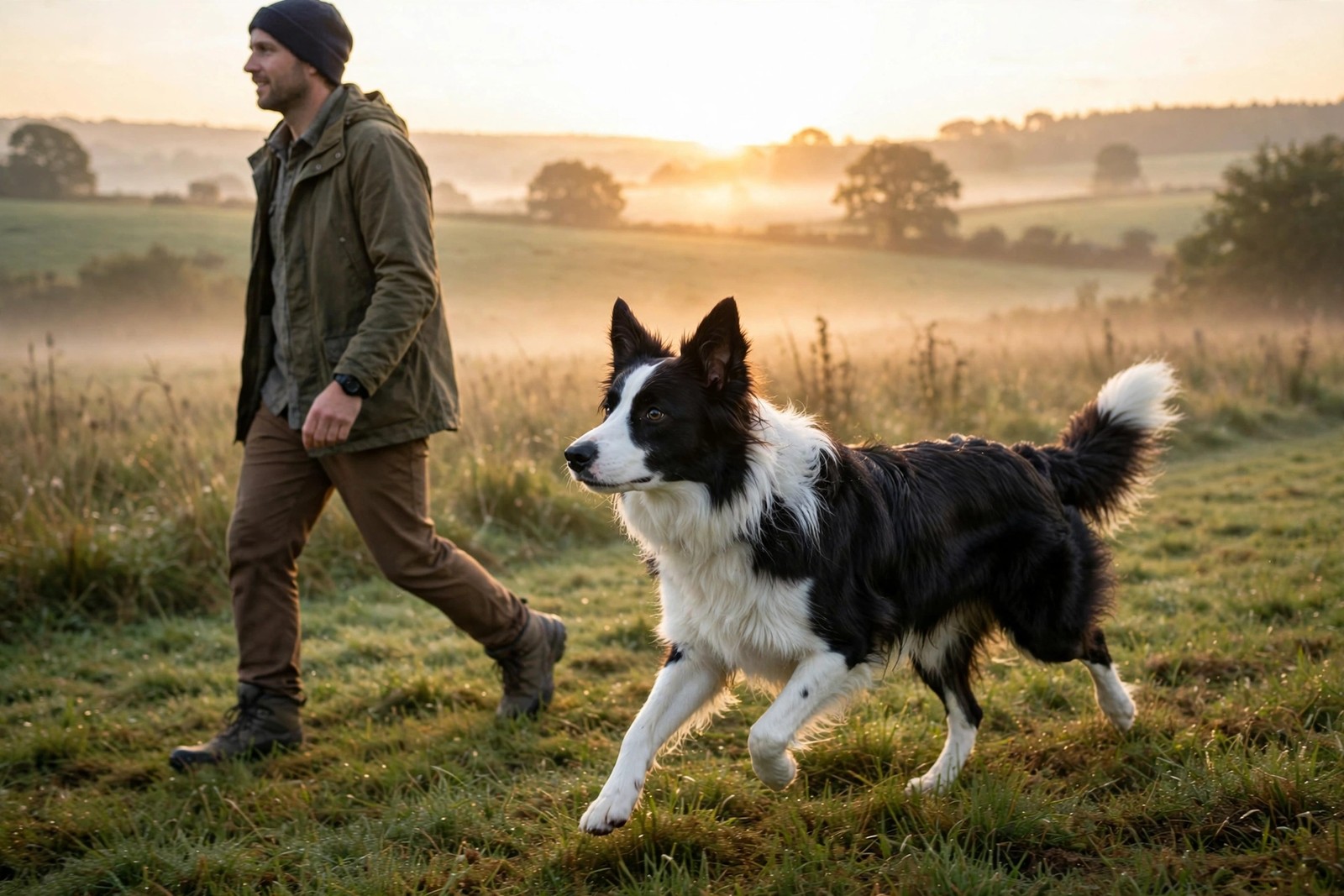
Border Collies usually live 12 to 15 years. That range reflects a lean, medium-sized working breed with no shortened muzzle or extreme proportions working against it, but it is still a range rather than a promise. Your individual dog's genetics, weight, dental health and how promptly changes reach a vet will move him or her to either side of it. Planning for a Collie means planning for a long, intense companionship: a puppy you bring home as a young adult may still be hiking beside you well past your dog's tenth birthday.
The Years in Stages
A Border Collie is typically still maturing mentally at two years old, even though growth has finished much earlier. The prime adult years, roughly from two to eight, are when the breed's stamina and focus peak, and when joint wear from repetitive jumping or tight turns can quietly accumulate. From about eight onward, treat your dog as a senior in waiting: keep the exercise, but swap endless ball launches for steadier walks, scent games and training that rewards thinking over speed. Stiffness after rest, a grey muzzle and longer naps are gradual changes; sudden slowing, limping or withdrawal is a vet visit, not an age shrug.
What to Watch in This Breed
Three areas deserve deliberate attention across the lifespan. Eyes come first: inherited eye conditions occur in the breed, so ask a breeder what eye testing the parents had and keep routine eye checks in your dog's adult vet visits. Hips come second: hip problems can develop in active Collies, and keeping your dog lean while building fitness gradually, rather than in weekend bursts, reduces strain. Hearing comes third in later life: an older Collie who seems to ignore calls may be losing hearing rather than choosing disobedience, and a vet can check ears and advise on hand signals and safety around roads. Also watch for obsessive shadow or light chasing, which can grow in under-stimulated dogs; more structured work and rest usually help, and persistent cases deserve professional advice.
Daily Habits That Support a Long Life
Feed measured meals rather than free-feeding, and check ribs monthly: you should feel them easily under a thin fat cover. Give your Collie a job every day, even if the job is a training session, a search game in the garden or carrying out a practised routine on a walk, because a tired mind settles better than a merely tired body. Protect teeth with regular brushing or vet-advised dental care, since mouth pain quietly reduces appetite and activity in older dogs. Keep a simple dated note of weight, appetite, mobility and any new behaviour, reviewed at each vet visit, so slow changes are visible instead of guessed at.
A long-lived Collie generates a long paper trail of vaccinations, screening results, weight records and vet notes, and keeping that trail complete is what makes senior care precise rather than approximate. KinsLe's Pet Passport keeps that lifetime record in one records packet for your Border Collie, so a vet meeting your dog for the first time can still see the whole 12 to 15 year story at a glance.