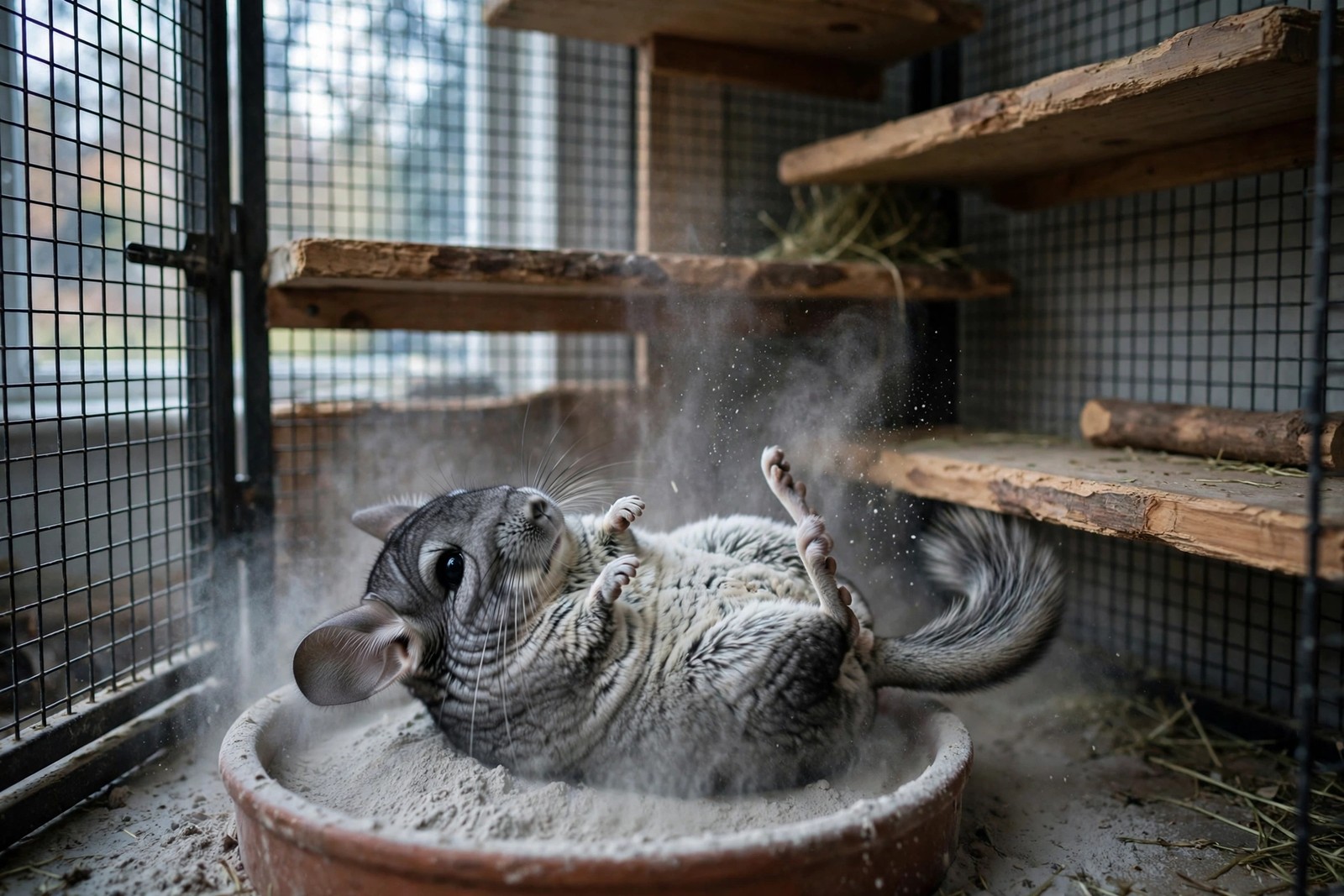
In captivity, a chinchilla's lifespan commonly runs from 15 to 20 years, with some individuals reaching their early twenties. That makes them one of the longest-lived rodents kept as pets — closer to a cat in commitment than to a hamster — and it catches out buyers who assumed a small cage pet meant a short obligation. In their native Andes mountains, cold dry air, sparse grasses, and constant grazing shaped an animal built for endurance, and the pets who reach 18 or 20 are the ones whose homes respect that design.
Teeth: The System That Decides Everything
A chinchilla's teeth, molars included, grow continuously for its entire life, and they stay the right length only if the animal spends hours a day grinding fibrous food. Unlimited grass hay is therefore not a treat or a bedding extra; it is the main event of the diet, backed by a measured amount of plain chinchilla pellets. A hay-based diet keeps the back teeth worn evenly and the gut moving. Drooling, dropping food, eating less hay, wet fur under the chin, or gradual weight loss are early dental warning signs, and they always warrant a veterinarian experienced with exotic mammals, because dental disease is the most common reason chinchillas fail to reach their teens.
Heat Is the Fast Danger
That famously dense fur — dozens of hairs from a single follicle — holds heat so well that chinchillas cannot cool themselves by sweating. They are comfortable around 60 to 70 degrees Fahrenheit (about 16 to 21 degrees Celsius) and face real heatstroke risk once the room pushes past roughly 75 degrees Fahrenheit (24 degrees Celsius), especially in humidity. A cool room, shade from direct sun, and a chilled stone slab to lie on in warm weather are lifespan equipment, not luxuries. For the same reason, chinchillas bathe in fine dust, never in water: they roll in a dust bath several times a week to strip oils from the coat, and a water-soaked chinchilla can chill and develop matted, fungus-prone fur.
Food Rules That Protect a Long Life
Rich food is the other slow trap. Chinchillas evolved on sparse mountain forage, so sugary treats, large amounts of fruit, nuts, and seeds overload a gut built for fiber and can trigger bloating and digestive shutdown. Keep treats rare and tiny, make changes to the diet gradually, and let hay dominate. Chinchillas are also active at dusk and through the night, so they need a quiet place to sleep undisturbed during the day and room to run, jump, and climb in the evening, ideally on a large solid-surface exercise wheel.
A pet who may be with you for twenty years will see households change and children grow older along the way, and the hay-first diet, dust-bath rhythm, and cool-room rule still need holding steady by whoever is at home. KinsLe Family Sharing is how an owner grants chosen family members access to its profile.