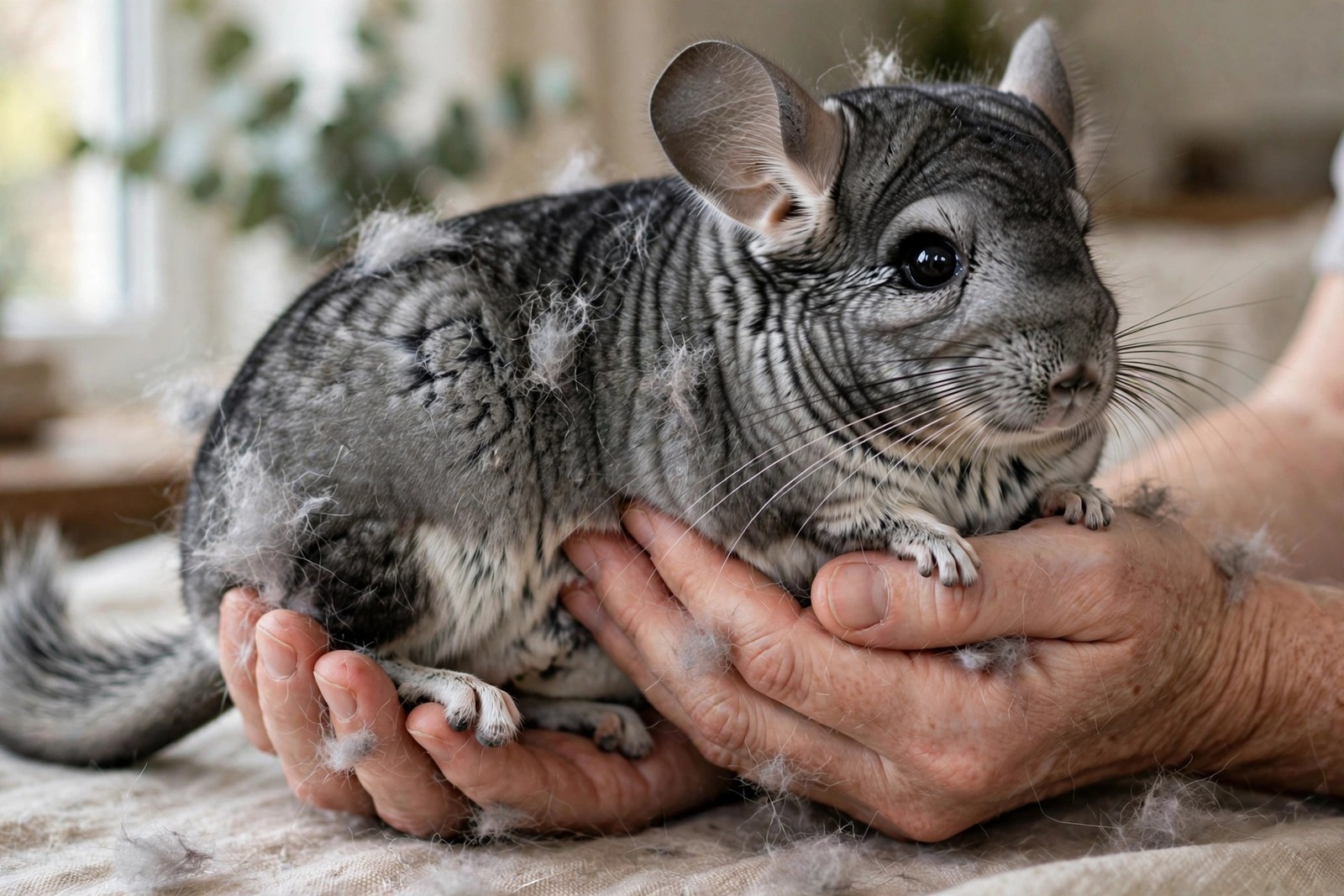
Finding a soft clump of chinchilla fur in your hand, and a neat bald patch on your chinchilla, is alarming the first time it happens. The mechanism behind it has a name, fur slip, and it is one of the neatest escape tricks in the small-mammal world. Chinchilla fur is famously dense, growing many fine hairs from each follicle, and it is anchored more loosely than most coats. When a predator seizes a chinchilla, that patch of fur releases and the attacker is left with a mouthful of fluff while the chinchilla, fast and almost impossibly agile, is gone.
What Triggers Fur Slip at Home
Domestic chinchillas run the same defence under the same conditions: being grabbed suddenly, especially from above or by the fur of the back and rump; being chased around the cage and cornered; rough play; a fight with a cage mate; or a fright such as a loud crash while being held. The patch comes away cleanly, leaving smooth, intact skin. It should not bleed, scab, or look inflamed. Regrowth takes weeks and sometimes a few months, and the returning fur can look slightly different in length or shade until the next full coat cycle evens it out.
A single slip after an obvious scare is the defence working as designed. Repeated slips tell you the handling routine, the housing setup, or a cage-mate relationship needs changing, because each episode means your chinchilla felt genuinely threatened.
Handling That Prevents It
Never pick a chinchilla up by the fur, the tail, or a single limb, and never snatch one that is retreating. Let your chinchilla step onto your hand or into a familiar dust bath or small carrier for moves, and lift by supporting the chest with one hand and the hindquarters fully with the other, held securely against your body so a wriggle cannot become a fall. Keep sessions on low surfaces until your chinchilla is confident, and supervise children closely: the grab that causes fur slip is usually an excited child's lunge, not unkindness.
Approach from the front at cage level, speak first, and offer the back of a still hand to sniff. Chinchillas who can choose to come out, rather than being extracted, slip far less, and many become genuinely hand-confident over weeks of this treatment. If catching is unavoidable for a vet trip, a calm towel scoop in a dimmed room is kinder than a prolonged chase.
When a Bald Patch Is Not Fur Slip
Fur slip has a clear cause and clean skin. Patches that appear without any grab or scare, or skin that is red, crusty, flaky, sore, or being scratched and bitten at, point elsewhere: fungal skin infection, mites, over-grooming by a stressed cage mate, or friction from cage fittings are all possibilities a veterinarian experienced with exotic pets should examine. Photograph the patch and note when it appeared; that timeline helps the vet separate a one-off slip from a spreading problem.
The handling lesson is worth writing down for anyone who feeds or cleans for you while you are away. KinsLe's Care Pass gives a sitter time-limited access to exactly those instructions for your chinchilla, including support-the-hindquarters handling and no-grab rules, so your pet is held safely even by someone meeting them for the first time.