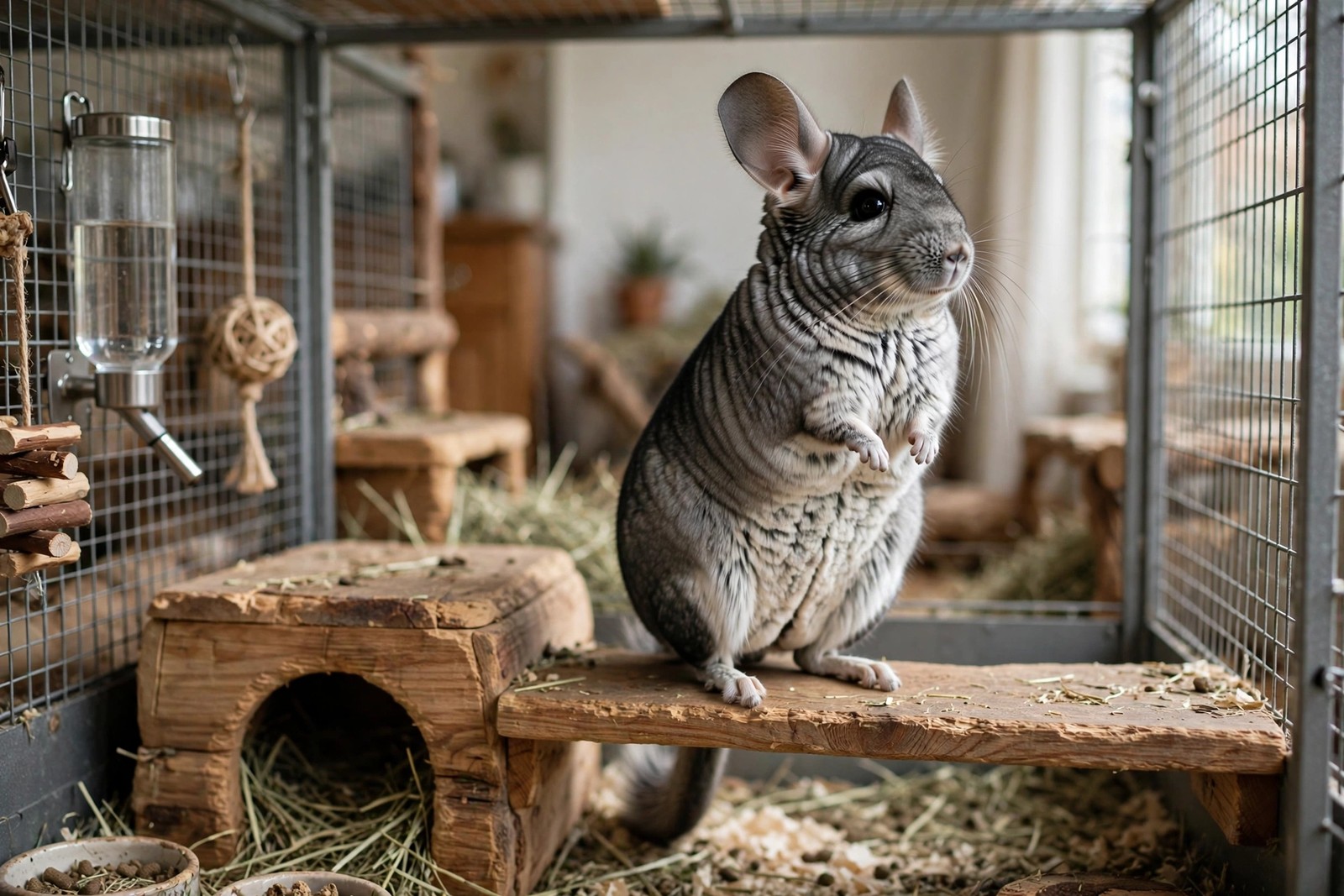
It does not sound much like a dog's bark, but the name fits: a chinchilla's bark is a loud, abrupt, repetitive call, often delivered in a short series, that carries across a room and straight through a quiet house at night. In the wild, chinchillas live in colonies on rocky ground where they are hunted by birds and mammals, and a barking colony member is an early-warning system. Pet chinchillas keep the full repertoire, and the first step to understanding your own chinchilla is deciding which of two messages you just heard.
The Alarm Bark
The alarm bark follows a startle: a shadow passing the window, a door slamming elsewhere in the house, an unfamiliar voice, a dog barking outside, or a hand reaching in from above, which mimics a swooping predator. The chinchilla usually freezes first, stands upright or bolts for a hide, and barks from cover, ears up and body tense. Other chinchillas in the room will freeze too, even if they saw nothing, which is exactly the point.
The right response is boring calm. Stop whatever changed, speak softly, and let your chinchilla watch you settle nearby rather than reaching in to offer a reassuring cuddle, which a frightened prey animal reads as a grab attempt. Most alarm barking fades within minutes once the trigger passes. Note what set it off: repeated barking at the same time each evening often traces back to something mundane, such as a heating pipe clicking, headlights sweeping the wall, or a cat taking up position outside the cage.
The Contact and Protest Bark
Not every bark is fear. Chinchillas also bark to get attention, to call a companion, and in mild protest, for example when a bonded partner is taken out of the cage or a favourite dust bath appears but stays out of reach. This version is usually delivered at the cage front, body relaxed, often aimed directly at you, and it stops when the social gap closes. Some chinchillas bark in their sleep or on waking, briefly and without the tense posture, which owners find alarming the first time but is typically just a startled waking moment.
Telling the two apart matters because they ask opposite things of you: space and stillness for alarm, company and interaction for contact. Posture is the clearest guide: frozen, hidden, and wide-eyed means alarm; forward, bright, and following you along the bars means contact.
When Barking Points to a Problem
Barking that is new, constant, or paired with other changes earns a closer look. A chinchilla barking whenever a particular cage mate approaches may be describing a bond that is breaking down. Barking alongside reduced appetite, less droppings output, hiding through the active evening hours, or sitting hunched and still is a reason to consult a veterinarian experienced with exotic pets, because chinchillas hide illness well and vocal changes can be an early clue. Sudden barking fits after a fall or a scare severe enough to cause injury should be checked the same way.
Day to day, the bark is best treated as useful information rather than noise to suppress. KinsLe's Family Sharing keeps a shared record of your chinchilla's triggers, routines, and handling notes on one profile, so everyone in the household, from partner to holiday sitter, reads the same bark the same way.