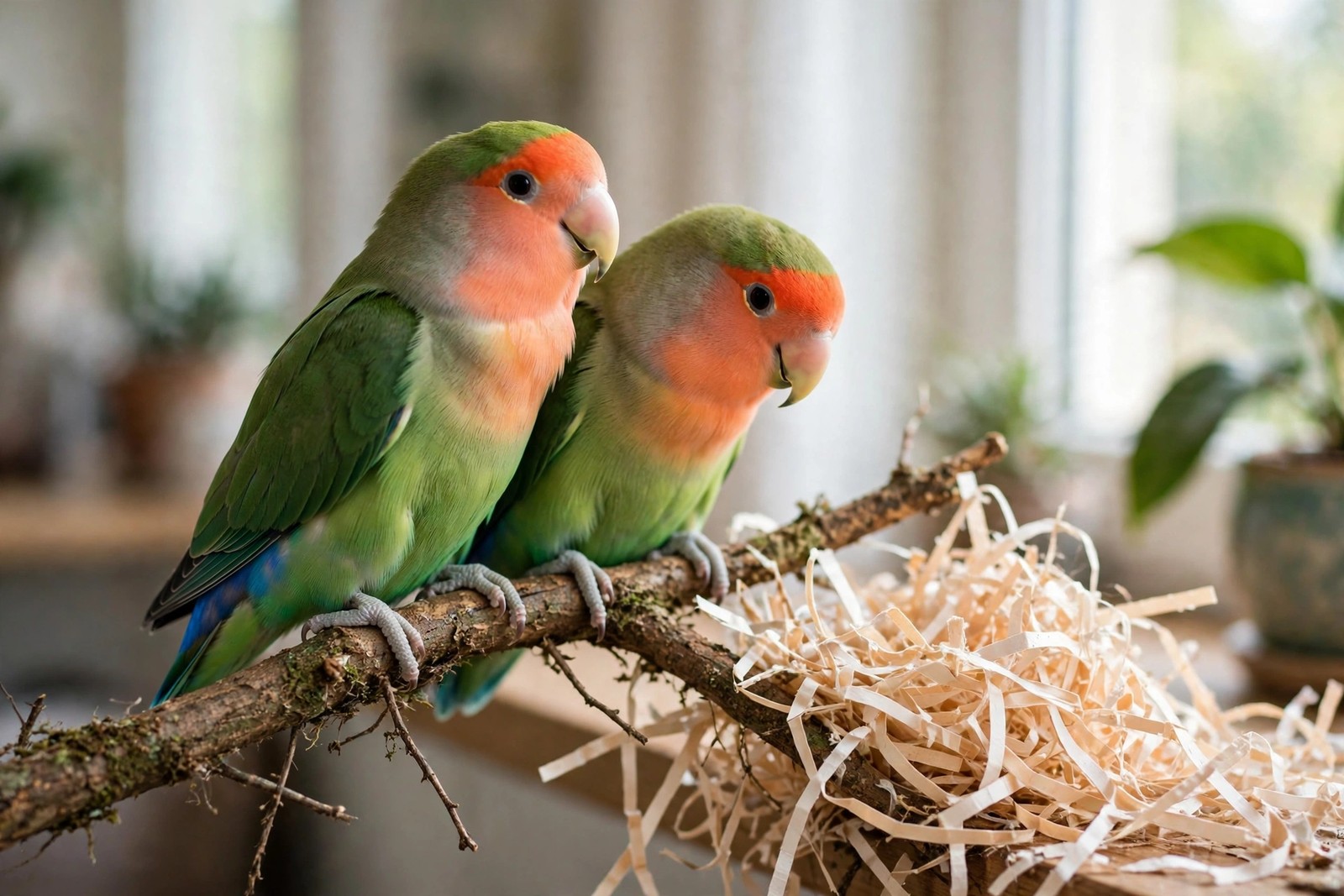
A lovebird is a decade-plus commitment in a very small, very loud package. Typical pet lovebirds live ten to fifteen years, and birds approaching twenty are well documented among well-kept pets. That is far longer than many buyers expect from a bird bought on impulse for its colours, and it is worth knowing before the purchase: the peach-faced youngster in the shop today could still be demanding breakfast, shredding paper, and supervising your mornings when today's schoolchild is finishing university.
Company Is a Lifespan Issue
Lovebirds earned their name honestly. In the wild they live in flocks and maintain a close pair bond, and in a home that social wiring does not switch off. A single lovebird kept alone needs several hours of direct interaction every day, plus toys and foraging work to fill the gaps; a chronically lonely lovebird may pluck feathers, scream for contact, or become cage-aggressive, and chronic stress is not good for any animal's long-term health. A bonded pair keeps each other company but brings its own management: hens can become fiercely territorial, and pairs given nest boxes, huts, or shreddable material may move into breeding mode, with chronic egg-laying that drains a hen and needs veterinary guidance. Choose single-with-company or pair-with-management deliberately, not by default.
Diet, Flight, and Housing
Seed-only feeding is the commonest quiet limiter of lovebird lifespan: it is fatty, incomplete, and encourages selective eating of the fattiest items. Birds who convert gradually to a formulated diet with vegetables, leafy greens, and some seed as part of the mix, rather than the whole of it, generally hold healthier weights and condition. Flight time outside the cage in a bird-safe room exercises the heart, lungs, and muscles that cage life underuses. Housing matters too: the largest cage you can fit, with room to fly horizontally between perches, varied perch diameters for foot health, and a position in the household's social centre — but out of the kitchen, where fumes from overheated non-stick cookware and aerosols can kill a small bird outright.
Illness Hides Well in Small Birds
Lovebirds, like most prey species, mask weakness until illness is advanced, so the owners who add years are the ones who monitor. Weigh monthly on a gram scale and know your bird's normal figure; a small drift is an early alarm. Watch droppings, appetite, and voice — a lovebird who goes quiet, sits fluffed away from their companion, or leaves food untouched needs a veterinarian promptly, not a wait-and-see week. Beak and feather changes, laboured breathing, or a hen straining as if to lay are same-day concerns. New birds should be quarantined and vet-checked before joining an established bird, protecting both lifespans at once.
Planning for Fifteen Years
Across ten to fifteen years, keep one unbroken record of hatch date, diet changes, weights, illnesses, and behaviour notes, because the vet treating a twelve-year-old lovebird needs the history of the two-year-old. Store that record in KinsLe Pet Passport, and every chapter of a small bird's long life stays attached to them, whoever is reading it.