
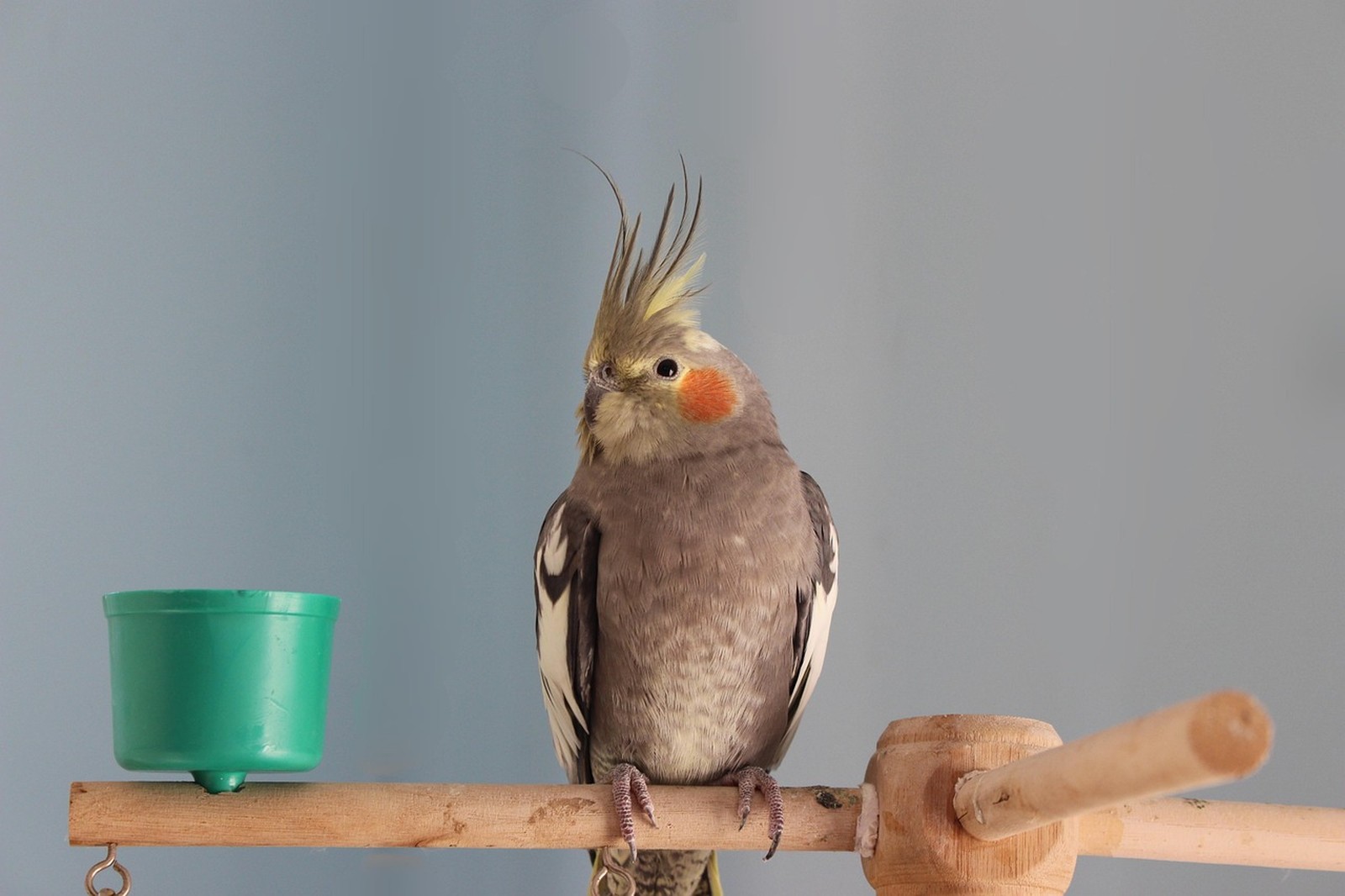
A cockatiel's crest is the clearest mood signal the bird owns. Those long feathers on top of the head rise, relax, and flatten in direct response to what the bird is feeling, and once you learn the three main positions you can predict most reactions before they happen.
Raised Tall: Alert, Curious, or Excited
When the crest stands straight up, sometimes curving slightly forward at the tips, your cockatiel is paying close attention. A new person entering the room, a favourite treat coming out of the cupboard, an interesting sound from another room, or the start of playtime all produce this tall crest. Paired with bright eyes, an upright posture, and movement toward the interesting thing, it reads as curiosity or excitement. If the tall crest arrives with a sudden freeze and wide, fixed staring, the bird is startled rather than pleased, so let it settle before you reach in.
Half-Raised and Relaxed: Calm and Content
The everyday resting position is a gentle half-raise, with the crest lying in a soft, smooth curve rather than pinned down or standing up. This is the crest you want to see during quiet time on a perch. It often comes with the classic contentment signals: slow blinking, one foot tucked up, fluffed cheek feathers, and beak grinding, that soft crunching sound a settled cockatiel makes before a nap. A bird showing this combination feels safe and is not asking for anything except to be left in peace.
Slicked Flat Back: Frightened or Angry
When the crest presses flat against the back of the neck and head, the bird wants distance. This is the fear and defence position, and it rarely appears alone: look for a crouched or leaning-away body, hissing with an open beak, lunging snaps at a hand, flattened body feathers, or frantic pacing along the perch. Common triggers are a hand reaching in too fast, an unfamiliar object near the cage, a loud household noise, or being grabbed when the bird does not want to step up. The correct response is to withdraw slowly, lower your energy, and let the crest relax before trying again.
Reading the Crest With the Whole Bird
Crest position is one word in a sentence. A tall crest plus whistling, head-bobbing, and wings held slightly out in a heart shape is a displaying male feeling pleased with himself. A flat crest plus raised wings and rocking can mean a hen guarding a corner she has claimed as a nest site. A crest that flicks rapidly up and down usually means the bird is processing something new, excited one second and unsure the next, which is normal during introductions to new toys, foods, or people.
Changes Worth Noting
A crest held flat for long stretches by a normally cheerful bird, especially alongside reduced appetite, quietness, or sitting fluffed on the cage floor, is a change from baseline worth a prompt call to an avian vet, because cockatiels hide illness and posture is often the first visible clue. Note when it started and what else changed.
Keeping a short daily note of crest and mood at key moments, such as morning greetings, out-of-cage time, and bedtime, turns guesswork into a pattern the whole household can share through KinsLe Care Teams.