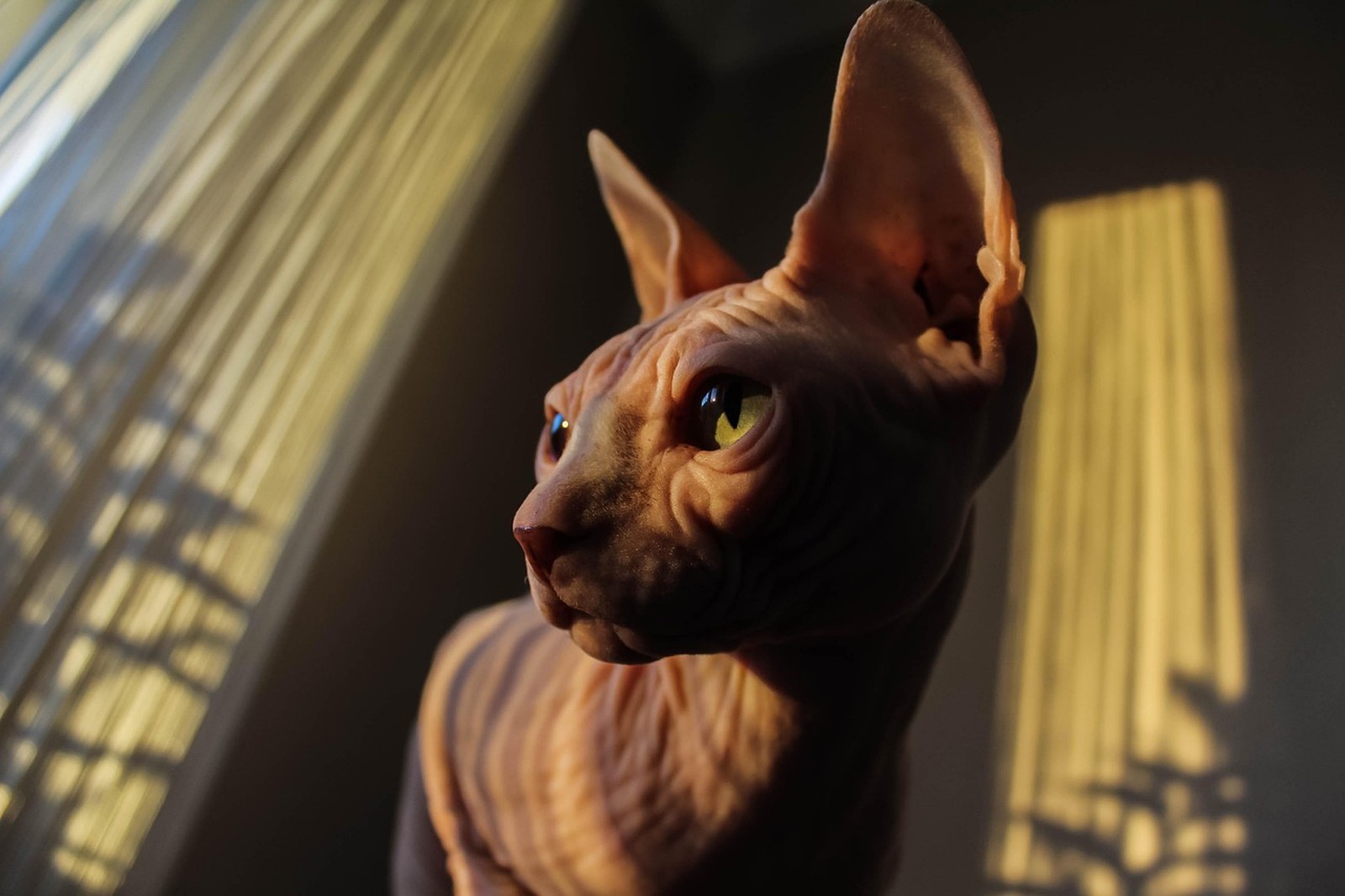
A Sphynx that has been healthy for a decade invites a particular kind of owner complacency, because the breed's care routine feels solved. The lifespan owners can reasonably hope for is commonly about 13 to 17 years, and reaching the far end of that range depends less on new interventions late in life than on the lifelong basics being kept up precisely when the cat becomes an old, slower version of itself. Senior care for a Sphynx is therefore familiar work done more attentively: skin, warmth, weight, and heart, the same four concerns the breed has always had, now with less margin for a skipped month.
Lifelong Skin Care and Warmth, Continued
A hairless cat's skin never stops producing oil, and without fur to absorb it, that oil builds up on the skin itself, in skin folds, and on bedding. The regular bathing cadence a Sphynx has kept since youth continues into old age, adjusted to the cat's tolerance, alongside cleaning between toes and checking folds where grime collects and can irritate. Senior skin may grow drier or more sensitive, so changes in flaking, redness, or odor are worth mentioning to the veterinarian rather than scrubbing harder at home. Warmth matters just as much. An older Sphynx still seeks the warmest spot in the room and still loses heat quickly, so heated bedding, blankets it can burrow into, and draft-free resting places remain essentials rather than luxuries. An aging cat that suddenly stops seeking warmth, or stops caring about food placed near its warm spot, is telling you something has changed.
Heart Screening and Weight in the Senior Years
Hypertrophic cardiomyopathy, a thickening of the heart muscle, is the health predisposition this breed is screened for, and screening matters more, not less, as a Sphynx ages. Keep the heart checks the veterinarian recommends on schedule and report the quiet signs that can accompany heart trouble in any cat: breathing faster at rest, tiring sooner in play, or new spells of hiding and reduced appetite. Weight deserves the same steady attention. A senior Sphynx that loses weight can hide the loss in plain sight because there is no coat to flatter or conceal the body, so hands and a scale both help, feeling along the ribs and spine at bath time and weighing on a regular rhythm. Appetite changes, weight drift in either direction, and skin that stops responding to the usual routine all belong in the next veterinary conversation rather than on a list to mention someday.
One Packet for Every Senior Check
Senior care generates paper: screening results, vaccination and weight history, notes on skin flare-ups and what settled them. The Pet Passport on KinsLe holds that packet as the Sphynx's own health record, so a veterinarian reviewing an aging cat sees screening history and weight trend together instead of reconstructing them from memory at the appointment desk. Keep the file current after every check and bath-time observation that matters. Keep screening dates and skin-care notes in KinsLe inside the Pet Passport, and each new veterinarian inherits the Sphynx's full senior story at a glance.