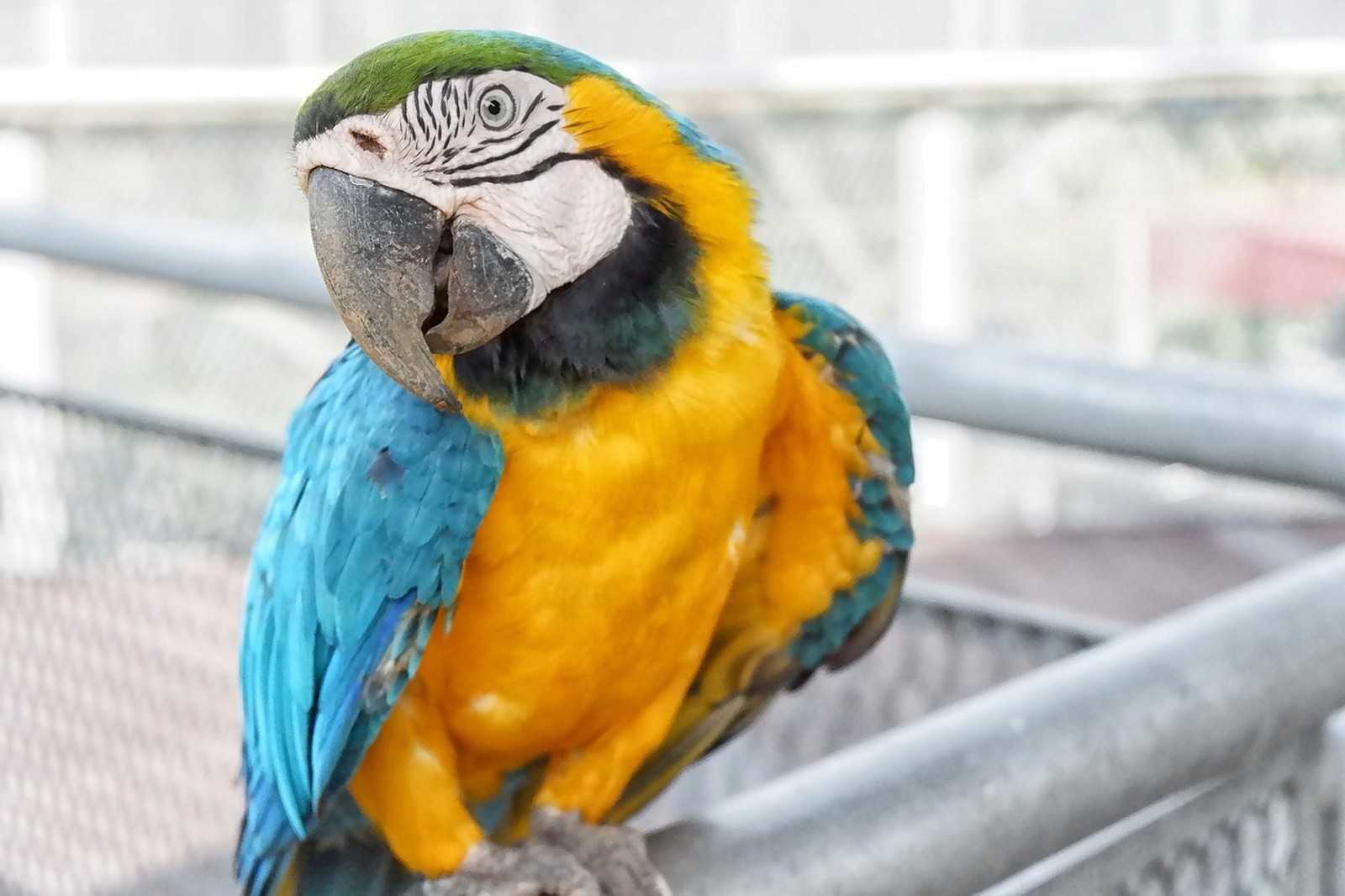
Honestly? A macaw is one of the loudest pet birds commonly kept in a home. A full-throated scream can top 100 decibels at close range. For comparison, a vacuum cleaner runs at roughly 70 decibels and busy traffic at about 85, so a macaw at full voice is not a little louder than household noise — it is in power-tool territory, and it is a sound designed by evolution to reach flockmates through dense forest. In a suburb it carries through walls, across gardens, and several houses down the street.
When the noise actually happens
Macaws are not loud all day, and the pattern matters more than the peak. Expect contact calls at dawn and again towards dusk, when a wild flock checks in before roosting. Expect a volley when you walk through the door, when visitors arrive, when the doorbell rings, and whenever the bird can see you but cannot reach you. A bored, lonely, or under-stimulated macaw adds long frustration sessions on top of those natural calls, and those are the bouts that can run for many minutes at a stretch.
What that means for your home
If you live in an apartment or a terraced house, be blunt with yourself: your neighbours will hear this bird clearly, every day, and no training programme turns a macaw into a quiet pet. Detached housing, distance from neighbours, and a household that is home and engaged for much of the day are the realistic setting. Close to the cage, a scream is genuinely startling and uncomfortable for your ears, phone calls in the same room are impossible while it lasts, and anyone working from home should plan meetings around a bird who may choose that moment to announce himself.
Reducing the volume, within limits
You cannot train the voice away, but you can remove the commonest reasons for extra screaming:
- Give 10 to 12 hours of dark, quiet sleep, uncovered at a consistent time each morning
- Stuff foraging toys and cardboard with food so the beak and brain work for breakfast instead of shouting for it
- Reward the quiet chatter and soft contact notes with attention, and wait for a pause before answering a scream, so calling you stops paying off in drama
- Build in real flock time — training games, a shower perch, supervised out-of-cage time — rather than leaving the bird to entertain himself all day
- Never shout back: to a macaw, your raised voice is a flockmate joining in, and the contest escalates
A sudden change is different from normal noise. A macaw who goes unusually quiet, stops eating, or sits fluffed and still is not being good — that is a bird who needs an avian vet promptly, because parrots hide illness and silence is often the first sign.
None of this makes a macaw manageable in the way a quieter parrot is manageable; it makes a loud bird a contented loud bird, in a home that chose the noise with its eyes open. KinsLe's Care Teams supports that routine directly, letting everyone in the household see who uncovers the cage, prepares the foraging toys, and handles the evening settle-down, with each finished duty timestamped so the predictable rhythm a macaw depends on never quietly slips.