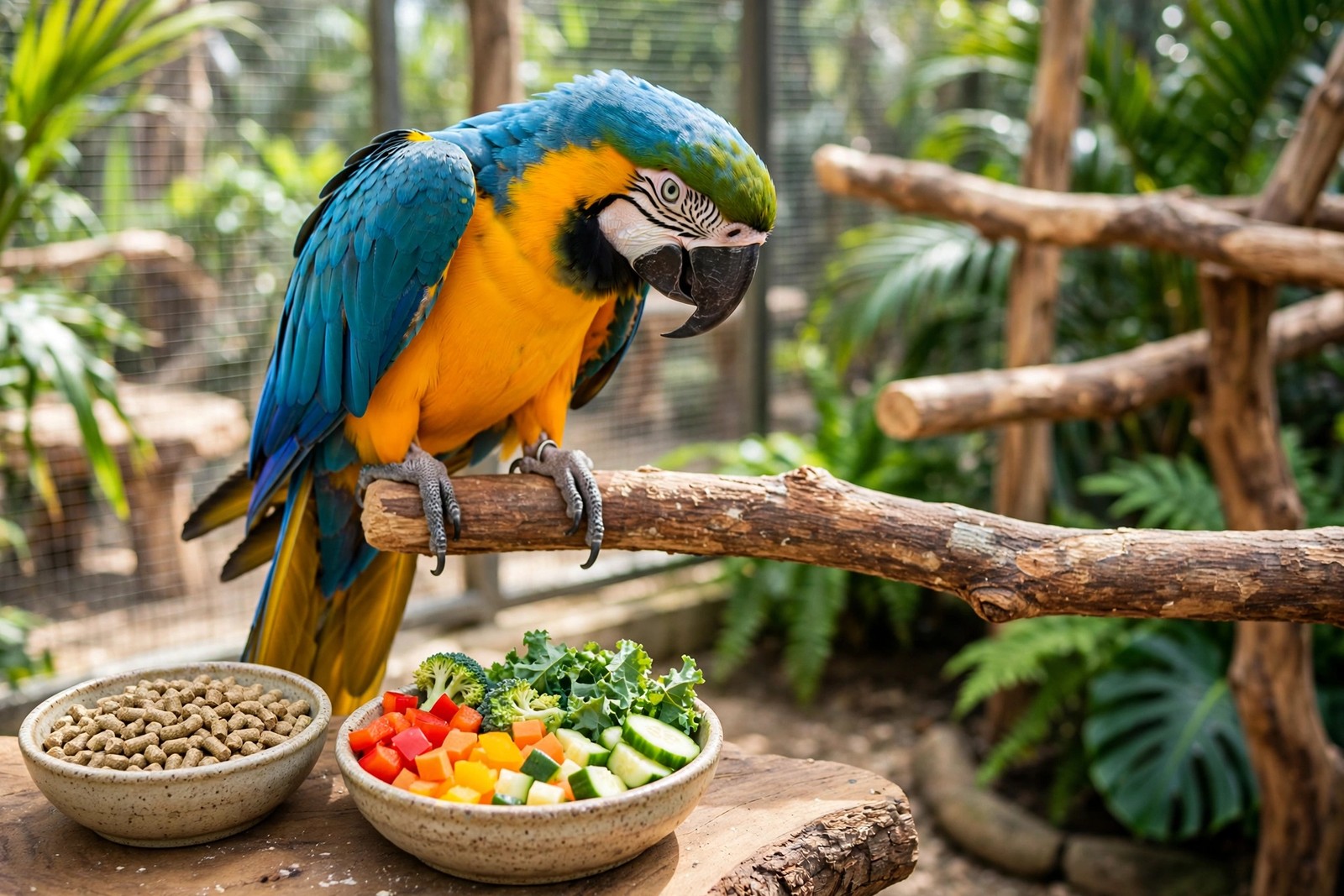
A macaw fed mostly on seed mix is living on the avian equivalent of snacks: energy-dense, short on calcium and several vitamins, and easy to overeat because the bird picks out the fattiest pieces first. A sound daily diet for a blue-and-gold, a green-winged, or any of the large macaws rests on three parts — a formulated pellet base, a real serving of fresh vegetables, and small, deliberate extras — with fresh water changed at least daily.
The Pellet Base and the Vegetable Bowl
Formulated pellets made for large parrots should form the main share of dry food, because every piece carries the same balance and the bird cannot edit the diet beakful by beakful. Alongside them, offer a daily chop of vegetables: sweet peppers, carrot, broccoli, green beans, leafy greens, peas, and cooked sweet potato or squash are all well accepted, and variety across the week matters more than any single superfood-style ingredient. Wash fresh food, remove what is uneaten after a few hours before it spoils in a warm room, and serve the chop in a separate bowl so you can see what was actually eaten rather than scattered.
Macaws do need more fat in the diet than many smaller parrots, which is where nuts belong: a few walnuts, almonds, or Brazil nuts a day, some offered in the shell so a strong beak has work to do, double as foraging occupation. Fruit — papaya, mango, berries, apple without its seeds — is a small side portion, not a second bowl, because its sugars crowd out the vegetables the bird needs more.
What Stays Off the Menu, Without Exception
Never offer avocado, chocolate, caffeine, or alcohol; all are dangerous to parrots and there is no safe small amount to experiment with. Keep fruit seeds and stones out of the bowl, keep salty, fried, and sweetened human food away, and treat seed mix as what it is: a training reward or a garnish in a foraging toy, not the foundation of the day. Dairy, raw dried beans, and heavily processed snacks have no place in the bowl either. If a food is not clearly safe for parrots, leave it out and check with an avian vet rather than testing it on the bird.
Watching Whether the Diet Is Working
Weigh your macaw weekly on a perch scale and keep a simple record; a steady adult weight with bright behaviour says more than any bowl measurement. Watch droppings, feather quality, and how much of the chop disappears versus how much decorates the floor, and adjust portions in small steps rather than refilling a bowl the bird empties by midday. Young, breeding, moulting, or unwell birds need their vet's specific guidance over these general lines. Because several people often feed a long-lived family bird, KinsLe's Care Teams lets you set the pellet, chop, and nut routine as assigned duties, so a helpful relative cannot quietly rebuild the diet around seed.