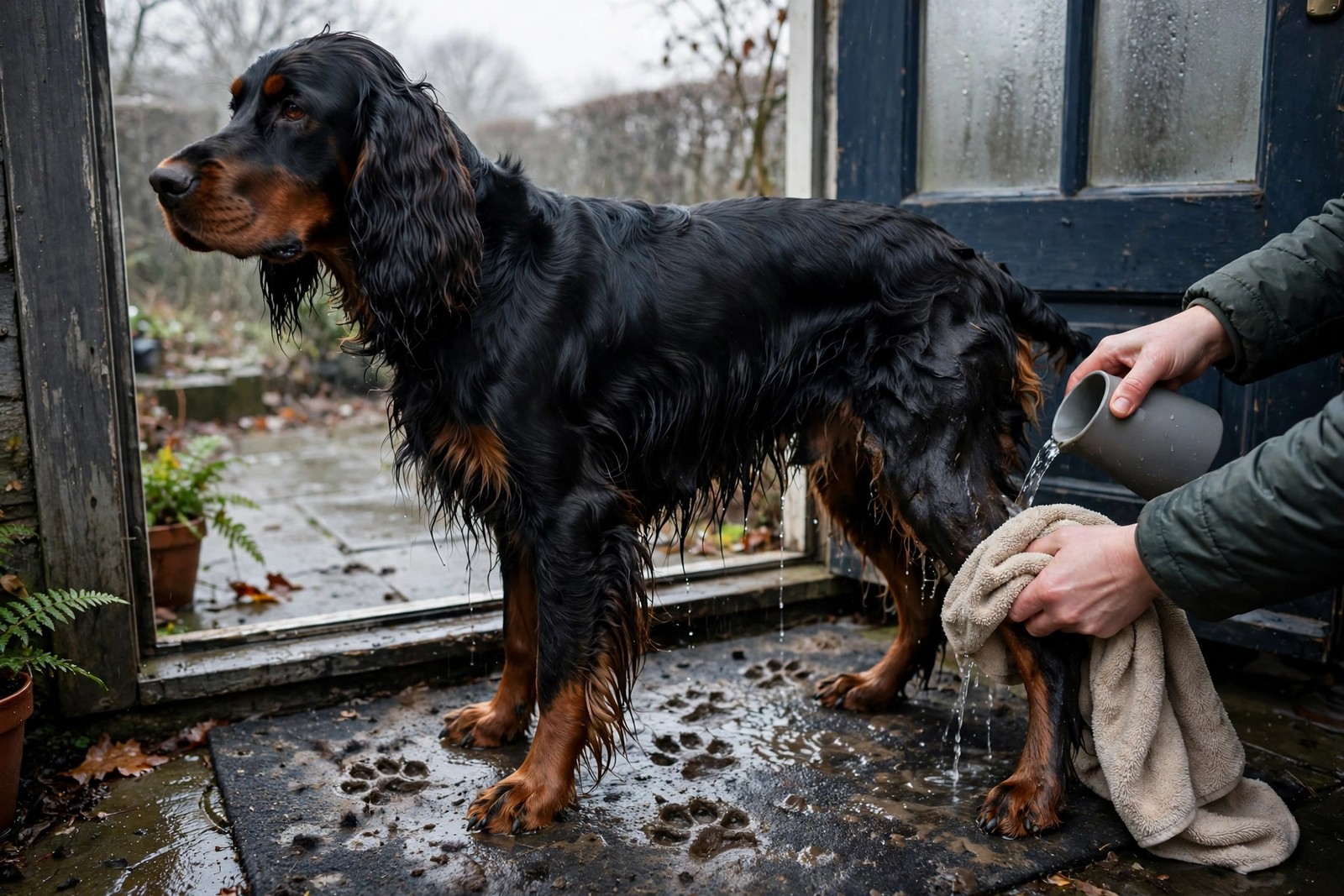
A Gordon Setter needs brushing several times a week all year round, and in winter the coat work extends to almost every walk. The Gordon is the heaviest of the setters, with a long, silky black-and-tan coat and generous feathering on the ears, chest, legs, belly and tail. That feathering is where the work lives: it tangles behind the ears, felts in the armpits and along the belly and collects everything the countryside offers, from burrs and grass seeds in summer to mud, grit and road salt in winter. Owners who treat grooming as a short, frequent habit find the breed easy; owners who groom in occasional marathons face mats, skin irritation and a dog that dreads being handled.
The Year-Round Baseline
Brush in layers, working from the skin outward with a slicker brush and finishing with a steel comb that should glide through to the skin; if the comb snags, the tangle is still there. Pay deliberate attention to the classic mat sites (behind and under the ears, the armpits, the chest fringe, the belly skirt and the tail feathering) because those areas felt first. Trim the hair between the pads and around the feet so the dog tracks less mud indoors and gets better grip on hard floors. Bathing about once a month, or when the dog is genuinely filthy, with a dog shampoo rinsed out thoroughly, keeps the coat manageable; over-bathing with harsh products dries the skin, while under-rinsing leaves residue that itches. Check ears weekly and after every wet outing: a Gordon's long, heavy ear flaps reduce airflow, so dry the inner flap gently and book a vet visit if you find redness, a sour smell or persistent head-shaking.
Winter Walks Add a Second Routine
After a muddy winter walk, the job is rinse, dry and inspect, in that order. Rinse legs, feet, belly and chest feathering with plain lukewarm water to remove mud, grit and road salt, which irritates skin and paws and should not be licked off in quantity. Pat and squeeze the feathering dry with towels rather than rubbing it into tangles, then brush through once the coat is dry enough not to drag. Check between the toes for compacted mud, small stones, ice balls and salt, and check the pads for cracks after repeated cold, wet outings. A dog that comes home wet several times a week needs its sleeping area kept dry too, because lying in damp bedding with a damp coat invites skin trouble. This post-walk sequence takes ten minutes done promptly and an hour of detangling done late, which is the whole argument for making it automatic.
Spring, Summer and the Shedding Seasons
Expect heavier shedding as the seasons turn, typically in spring and autumn, when loose undercoat needs extra sessions with an undercoat rake worked gently through the furnishings. In summer the risks change shape: grass seeds work into feathering, ears and between toes, so run your hands through the coat after field walks and remove burrs the same day, before they migrate into the skin. Rinse the dog after swimming, dry ears carefully and never leave a wet Gordon to dry slowly in a crate on a hot day. However the season changes the details, the pattern holds: several shorter sessions a week, every week. In a shared household that routine is easy to assume someone else has done. KinsLe's Care Teams lets you set your Gordon Setter's brushing, ear checks and post-walk rinses as shared tasks with reminders, so the coat care is covered even in the muddiest weeks.