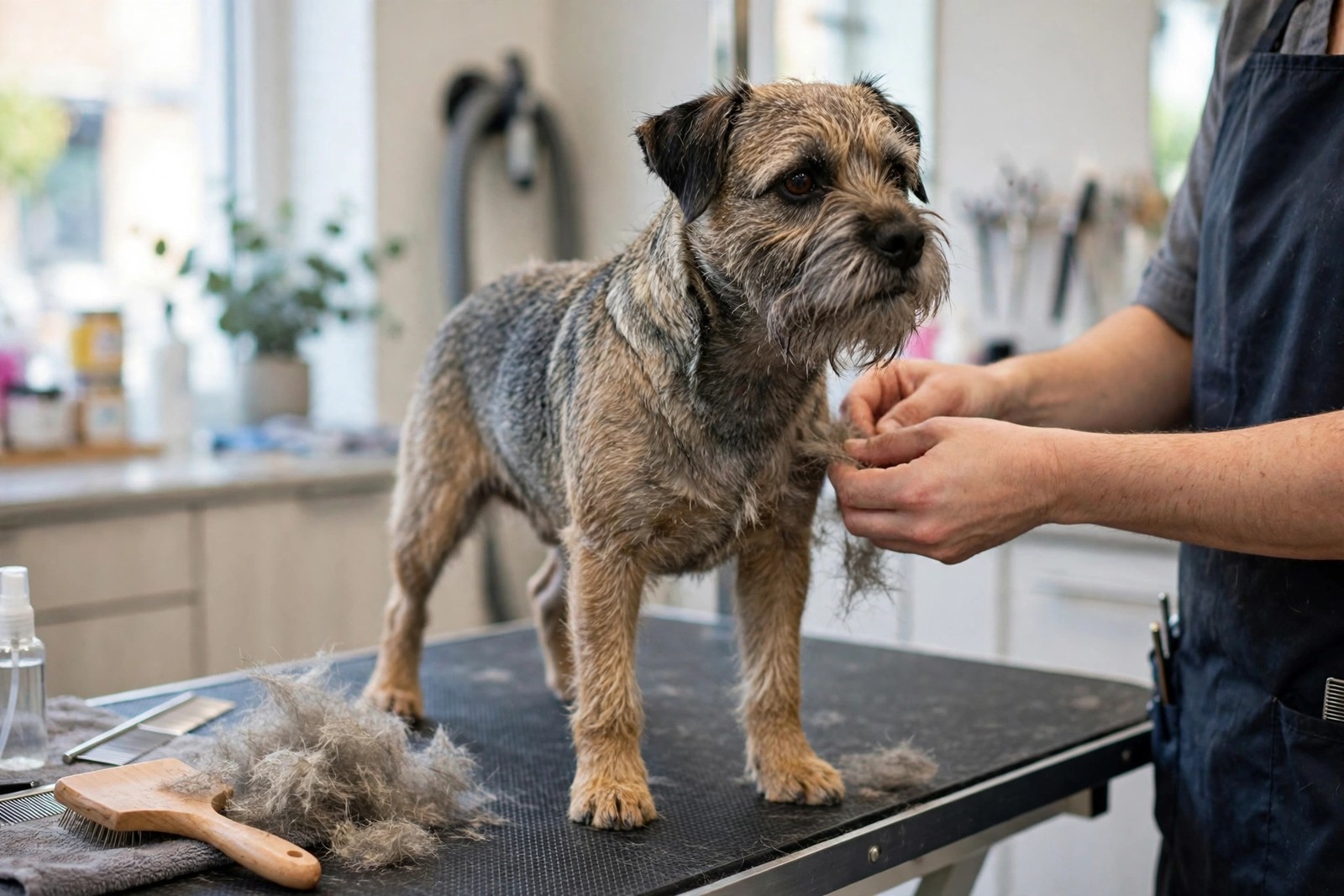
Plan on a weekly brush-out, a bath only now and then, and one real decision that shapes a Border Terrier's coat for life: whether it will be hand-stripped or clipped. The breed's double coat pairs a harsh, wiry outer layer with a short, dense undercoat, and that outer layer is what sheds weather, shrugs off mud, and gives the dog its characteristic otter-like outline and deep grizzle or red coloring. How the dead outer hair is removed decides whether the texture survives.
Hand-stripping, twice a year in most homes
Hand-stripping means taking hold of the dead outer hairs and pulling them out, by fingers or with a stripping tool, once the coat has grown long and loose enough to release them. Done at that ready stage, it does not hurt the dog, and it clears the way for a new wiry coat to grow in at full strength and color. In practice, stripping commonly happens about twice a year, often timed to spring and fall, with small tidying sessions on the head, ears, and legs in between. A full strip is slow work, so many owners book a groomer experienced with terrier coats, and a stripped coat usually costs more to maintain than a clipped one because of the hours involved.
Stripping a coat that is not yet ready means fighting live hair, which is uncomfortable for the dog and pointless for the owner.
Clipping: the honest trade-off
Clipping is a genuine choice, not a failure. It is faster, widely available, and perfectly comfortable for a pet dog whose coat is about easy living rather than texture. The consequence should be understood before the first clip, though: cutting the wiry hairs instead of removing them leaves the dead hair in place, and the coat that follows grows through softer, woollier, and noticeably paler. Weather resistance drops, the crisp outline softens, and restoring a clipped coat to full harshness takes repeated stripping cycles over many months, if it fully returns at all.
The weekly and monthly rhythm
Between the big sessions, the coat asks for little but asks regularly. A weekly brush-out with a brush and then a comb worked down to the skin lifts loose hair, spreads oils, and finds the small mats that start behind the ears, in the armpits, and through the beard and leg furnishings. Bathing stays occasional, reserved for a dog that has rolled in something or come home genuinely filthy, because frequent washing softens the very texture stripping works to preserve; the beard and legs may need a rinse and a wipe far more often than the whole dog needs a bath. Nails, ears, and teeth checks ride along with the weekly brush-out, turning coat care into the dog's regular once-over.
The coat history to collect before you commit
Because earlier choices change later options, a Border Terrier's coat history is worth real questions at the choosing stage. Has this dog, or a puppy's parents, been stripped or clipped, and when was the last session? What does the coat feel like now, and is that typical for the line? A rescue dog may arrive with an unknown past, and the coat itself tells part of the story: soft and faded suggests clipping, harsh and deep-colored suggests stripping or a coat left natural. Ask for that history in writing from the breeder, rescue, or previous owner rather than relying on a conversation.
That written history has a practical home once the dog is yours. The grooming record genuinely travels with the dog on KinsLe: the Transferrable Profiles record on KinsLe holds the last stripping date, notes on whether the coat has ever been clipped, and the groomer's observations, and it passes intact if the dog is ever rehomed. A new owner receiving the dog through KinsLe starts with the full coat story because Transferrable Profiles keeps stripping dates alongside the rest of the record.