An adult Bichon Frise needs about 45 minutes to an hour of exercise a day. That is a moderate amount for a small companion breed: more than a lapdog stereotype suggests, far less than a working breed demands. The pattern that suits a Bichon best is two walks of 20 to 30 minutes, topped up with short play and training games at home, rather than a single exhausting outing.
What the daily hour should look like
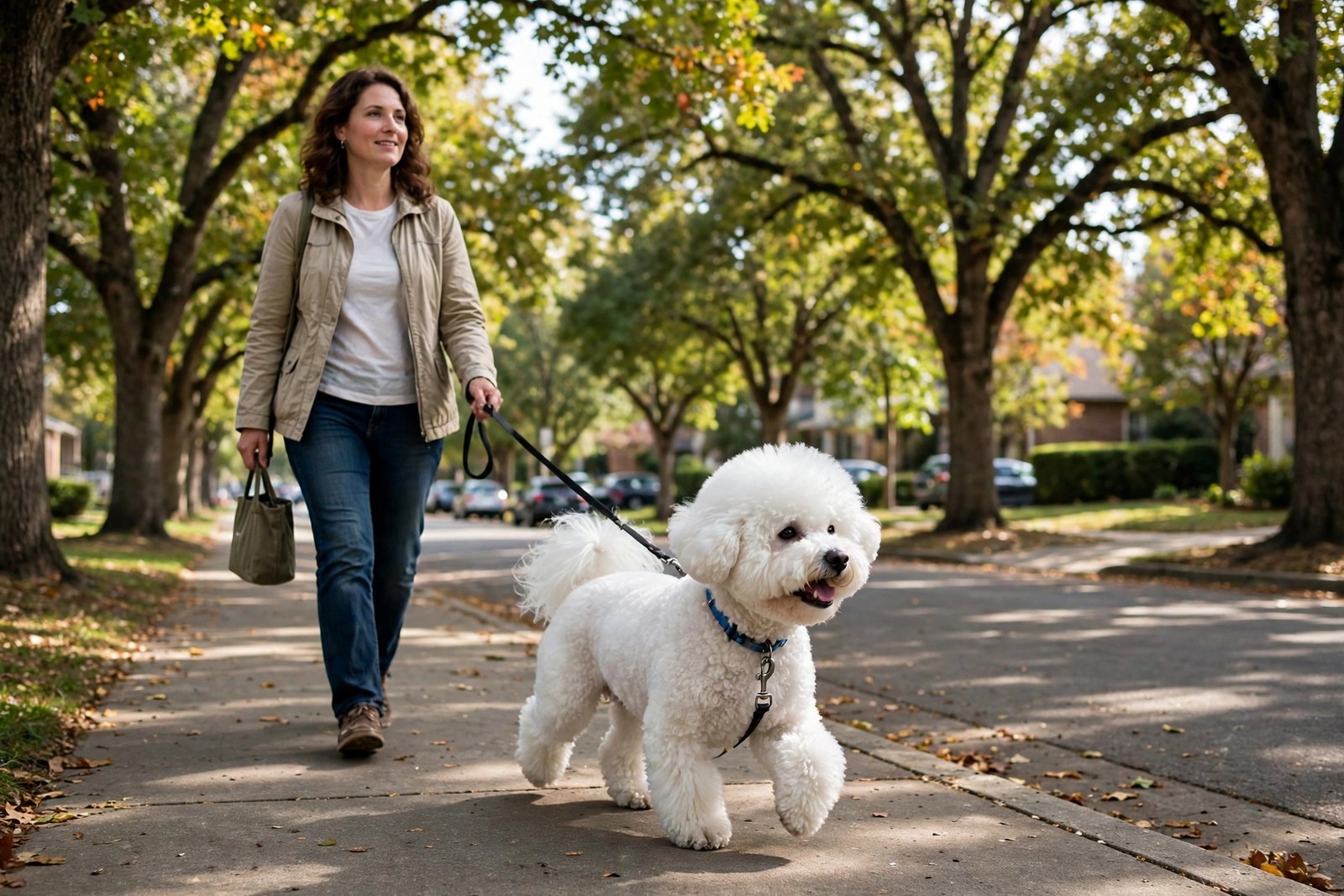
Bichons were bred as companions, and their exercise style matches: brisk walking, plenty of sniffing, and social stops along the way. A morning walk of about 25 minutes and an early evening walk of 25 to 30 minutes cover the core of it. Add five or ten minutes of indoor play — a soft toy chase down a hallway, a find-the-treat game, or practising cues for small rewards — and a healthy adult Bichon is genuinely done for the day.
What they do not need is distance running. Their short legs and small frame make them poor jogging partners, and repeated high-impact exercise is a poor fit for a breed that can be prone to knee problems. If your Bichon is lagging, panting hard, or sitting down on a run, the dog is not being stubborn; the session is wrong for the breed.
Puppies and young Bichons
A Bichon puppy needs much less structured walking, delivered in small pieces. A common guideline is about five minutes of lead walking per month of age, once or twice a day, so a four-month-old puppy gets walks of around twenty minutes at most. Free play in a garden or room makes up the rest, and puppies should be allowed to stop and rest when they choose. Carrying a tired puppy home is a normal part of the first months, not a failure.
Adolescent Bichons, from about six to twelve months, are the restless ones. They may seem to need endless activity, but much of that energy is mental. Short training sessions, puzzle feeders, and learning new cues tire a young Bichon more effectively than adding another half hour of walking.
Seniors and health adjustments
From around nine or ten years old, most Bichons slow down gradually. Keep the two-walk structure but shorten each outing to 15 to 20 minutes, choose flat routes, and let the dog set the pace. A senior who still trots to the door is telling you the walks still matter; a senior who hides from the lead needs a vet check, because reluctance in an older Bichon often signals pain rather than laziness.
On very hot days, walk early and late and cut the total back. Bichons cope reasonably with cold in a dry coat but chill quickly when wet, so a damp winter walk can be shorter if indoor play makes up the difference.
Signs you have the amount right
An exercised-enough Bichon settles in the evening, sleeps well, and greets walks with enthusiasm rather than frantic energy. Too little exercise shows up as night-time restlessness, destructive chewing, barking at small noises, and steady weight gain — Bichons put on weight easily, and an expanding waistline usually means the walks, not the food bowl, need adjusting first. Too much shows up as stiffness the next morning or reluctance to go out.
Splitting the two walks between people keeps the routine honest on busy days. Assigning the morning and evening walks in KinsLe's Care Teams means each walk is marked done once, the puppy never gets walked twice by mistake, and your Bichon's full hour quietly happens every day.