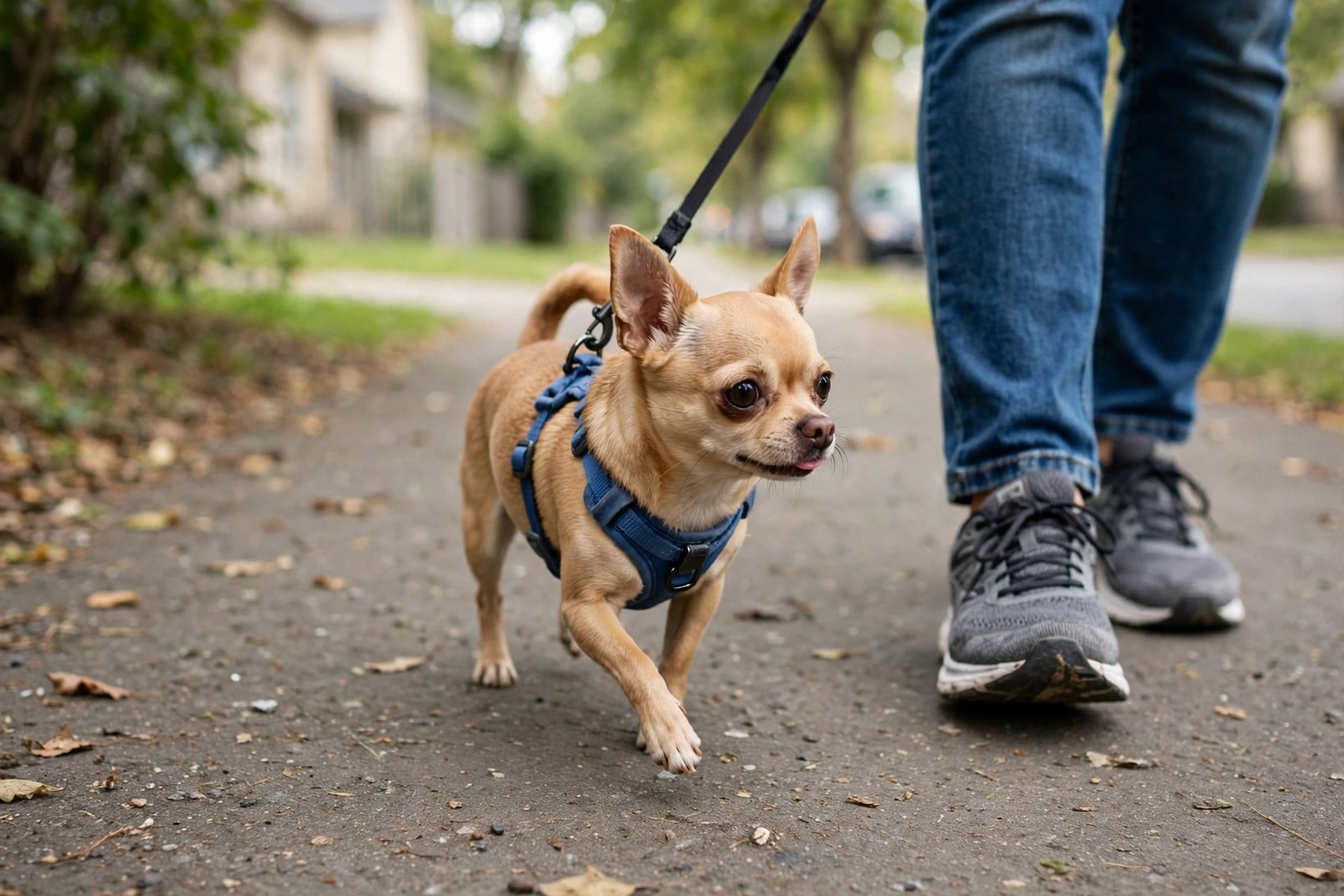
Plan on 30 to 60 minutes a day for an adult Chihuahua, in pieces. The most common Chihuahua exercise mistake is not laziness but its opposite error in miniature: assuming a dog this small needs almost none. A Chihuahua is a real dog with a real need to walk, sniff and explore, and one who is carried everywhere tends to become anxious, under-socialised and quietly overweight.
Splitting the Day for Small Legs
Two or three outings of 10 to 20 minutes beat one heroic trek. Their stride is short and their energy comes in bursts, so frequent, varied pavement and park walks with proper sniffing time give them far more than a single long route. Add indoor play to reach the total: a few minutes chasing a soft toy, a find-it game with treats in boxes, or a short training session, which tires a small dog surprisingly fast. Use a well-fitted harness rather than a collar for walks, since tiny necks and throats are delicate, and let them walk on their own feet on safe ground instead of defaulting to arms or a bag.
Puppies, Cold Weather and Confidence
Chihuahua puppies have fragile joints and, in the very smallest, a risk of low blood sugar if they overdo things, so keep sessions to a few minutes at a time with meals and naps doing most of the day's work, building up gradually as they grow. Cold and wet weather genuinely matters at this size: a Chihuahua loses heat fast, so shorten winter outings, use a coat if your dog shivers, dry them properly afterwards, and let indoor games carry more of the total until spring.
Do not skip the social side of exercise. Regular walks are where a Chihuahua learns that other dogs, traffic and strangers are ordinary, and a well-walked Chihuahua is typically calmer with visitors and less prone to the constant alarm barking the breed gets blamed for.
Weight and the Signs to Act On
Because the portions are tiny, a few extra treats a day can add visible weight within weeks, and extra weight loads small knees that are already the breed's weak point. If your Chihuahua starts limping, skipping on a back leg, refusing walks they used to enjoy, breathing hard, or coughing, see a vet rather than simply cutting exercise, since heart and joint problems both appear in this breed and both change what is appropriate. Short, shared and daily is the formula, and KinsLe's Care Teams lets you assign each brief walk and play session to a named helper, timestamped when done, so a tiny dog's routine does not depend on one person's memory.