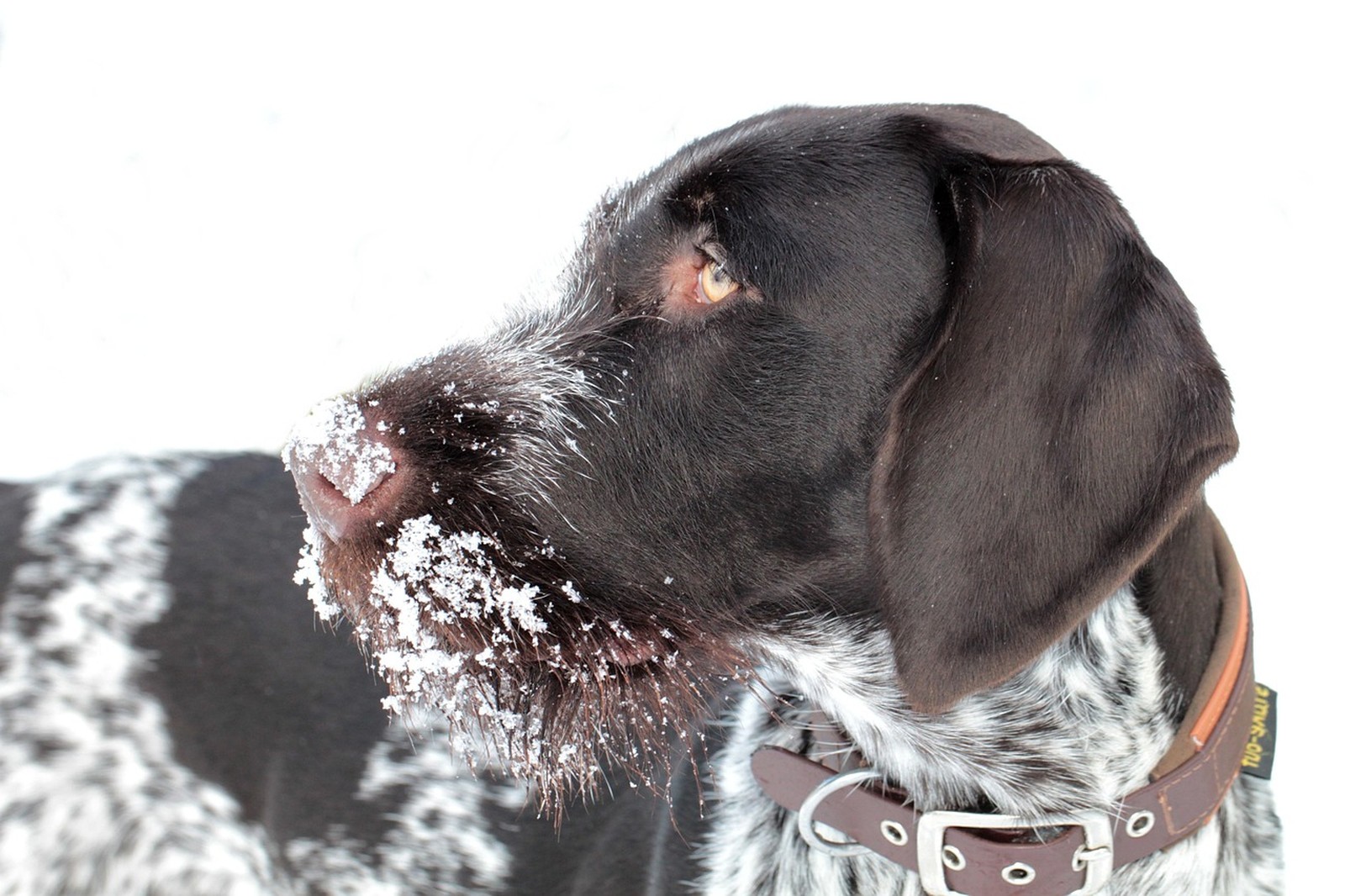
Two hours a day is a starting point for a fit adult German Wirehaired Pointer, not an ambitious extra. This is a versatile hunting breed developed to search wide ground, point, retrieve from land and water, and keep going in rough weather under that harsh wire coat. The result is an athlete with unusual stamina, real speed, and a work ethic that does not recognise a token walk as a day's employment. People who meet this breed's needs get a magnificent, devoted partner. People who cannot will live with a dog who dismantles the house looking for the job he was promised.
Exercise That Looks Like the Original Job
Wirehairs need to run, search, and use their noses across big spaces. Long countryside outings where the dog can range ahead in a secure area or on a long line, quartering ground and checking back, form the core. Add marked and hidden retrieves, swimming in safe water, and scent searches in cover, and the dog's body and brain both finish the day properly used. Canicross or bikejoring with a fit adult dog, introduced gradually with proper harness equipment and on suitable surfaces, can suit some Wirehairs well, but they supplement field-style work rather than replacing the searching and retrieving the breed lives for.
Recall and a reliable stop need serious proofing before off-lead freedom near game, roads, or livestock. A Wirehair locked onto scent or a deer is moving fast and thinking like a hunter, and training that only worked in the garden will not hold there.
Intensity at Home When Work Falls Short
Under-exercise in this breed is not subtle. Expect fence running, digging, escaping, chewing through boredom, relentless demands for activity, and predatory interest in anything that moves, which can include the household cat if management slips. Wirehairs bond intensely and can become clingy and anxious when their physical and mental tanks are both full, so exercise is also behaviour insurance. A genuinely worked Wirehair, by contrast, is often a calm, affectionate house dog who stretches out and sleeps hard, which is exactly why the daily investment cannot be faked with a weekend splurge. Fitness and behaviour both need the work spread across the week.
Coat, Feet, and Recovery After Rough Ground
The wire coat protects in brambles and cold water, but post-exercise checks are part of this breed's routine. Run hands over the body for thorns, cuts, and ticks, check pads after flinty or frozen ground, and look inside ears after swimming. Feed the athlete appropriately and keep him lean and hard rather than heavy, because extra weight blunts the stamina you are relying on and loads joints during high-mileage work. Young Wirehairs still need protection while growing: build distance and speed gradually through the first year and beyond, favour free running and swimming over forced road miles, and let enthusiasm never be the measure of what young joints should repeat.
Sharing a Two-Hour Daily Commitment
Few single owners should carry this breed's schedule alone every day, so plan the rota like the serious commitment it is: a long morning run and search session, an evening outing with retrieves or training, and bigger expeditions across the week. KinsLe Care Teams makes that sharing explicit by assigning Wirehair sessions to named household members and time-stamping each one when it is completed.