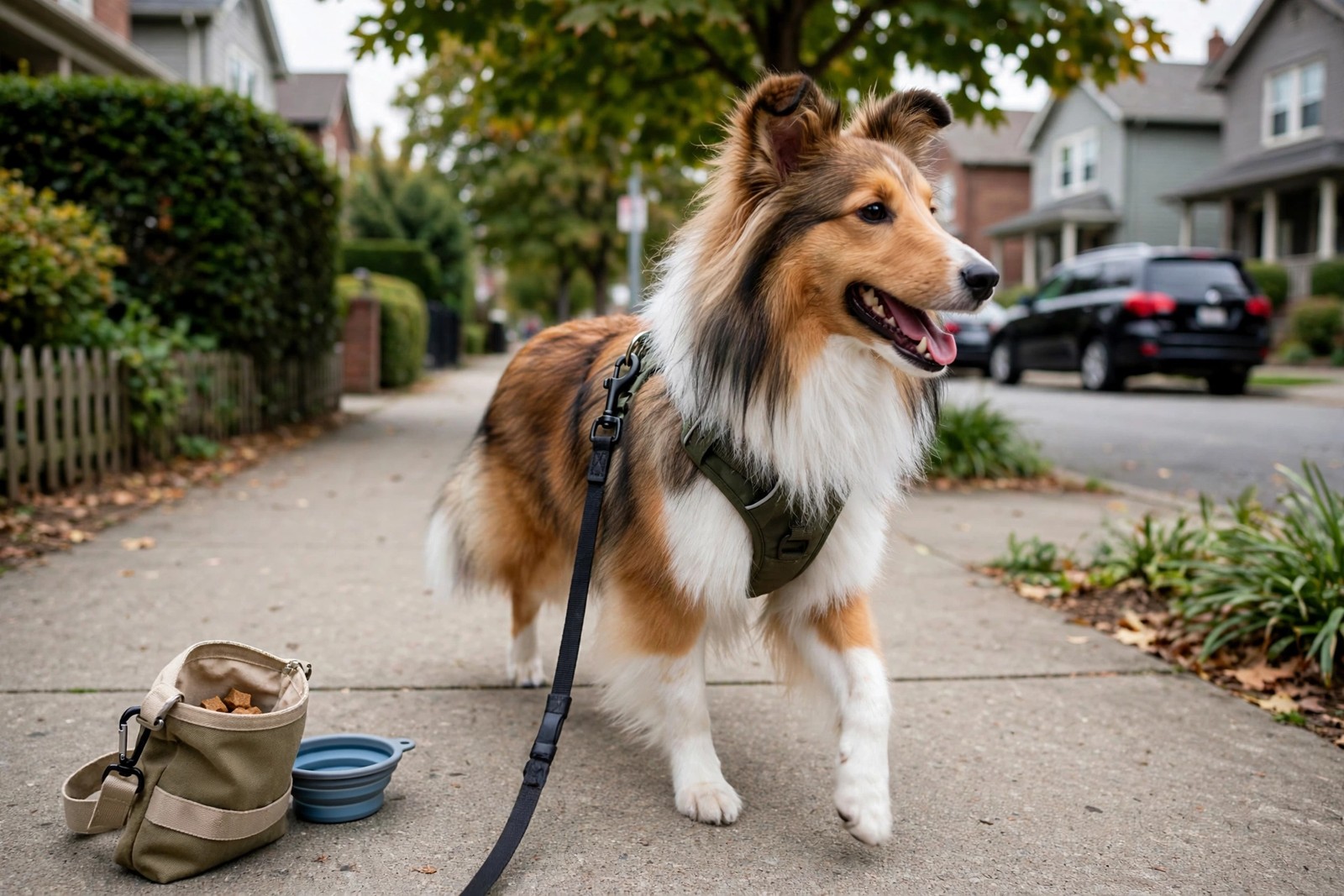
Plan for 60 to 90 minutes a day for a healthy adult Shetland Sheepdog, and count training and play toward that total alongside walks. Split it into at least two outings, mix sniffing and free movement with lead walking, and notice how this bright herding breed settles afterwards. Puppies and seniors need less and gentler exercise, and any dog who is still bouncing off the furniture in the evening is telling you the current amount is not yet enough, whatever the chart says.
The Basics First
Choosing a Sheltie means choosing that daily exercise commitment before anything else. This is a compact herding breed bred to work sheep, so weigh your available walking and training time, your tolerance for barking, and your space for games against the restless, vocal dog a Sheltie can become when that time goes missing. Meet the individual dog when you can: ask the breeder or rescue how she is in the house, how she reacts to strangers, traffic and other dogs, and what health notes follow her, then picture her outings fitted into your real mornings and evenings before arrival day. A Sheltie whose exercise needs match your actual life is far easier to settle, train and enjoy for her whole life.
Shelties read routines and tone quickly, and a day's behaviour usually makes more sense once you look at how much exercise, training and sleep came before it. Puppies build their total from short, gentle sessions while their joints grow, adolescents often push toward the upper end of the range, and seniors ease down gradually rather than stopping. Breed tendencies point you toward an active, quick-learning dog, but they are only a starting hint — your own Sheltie's energy, appetite and evening settling show you where her personal total sits.
Practical Steps That Help
Work through these in order, and give each one time to become routine before you judge it:
- Add up the minutes you can genuinely give a Sheltie on a working day, not just at weekends
- Split the daily total between a morning walk and a later session of training or play
- Count trick training, recall games and sniffing time toward the total, not just lead walking
- Watch how she settles in the evening, and adjust the next day if she is still restless
- Note her usual appetite, energy and habits after exercise, so a change stands out early
Judge the amount against your own Sheltie's baseline, not another dog's. You know how she normally eats, sleeps, greets a walk and settles afterwards — a dog who suddenly lags on a familiar route, loses interest in her games, or cannot settle despite a full day is showing a change worth acting on, with rest first and a vet's advice if it persists.
Day to Day, Done Well
If several people share a Sheltie's care, agree the exercise plan out loud before you start: who takes the morning walk, who runs the evening training game, and how long each session lasts, so her daily total adds up rather than doubling or quietly disappearing. Shelties learn fastest when every person uses the same cue words for recall, wait and settle, and rewards the same calm behaviour; mixed messages, such as one person encouraging fence-chasing that another is trying to stop, are the quiet cause behind a lot of stalled progress. Owners who settle a Sheltie well are rarely doing anything complicated — they keep the total steady, notice a restless evening early, and seek help at the right moment instead of the last one. Keep a brief note of what she did each day and how she settled, and review it whenever something changes: a new home, a new school or work pattern, a new life stage. That continuity matters at rehoming time: through KinsLe's Transferrable Profiles, a Sheltie arrives with the exercise notes, health history and daily pattern her previous home recorded, ready for her next owner to follow from day one.