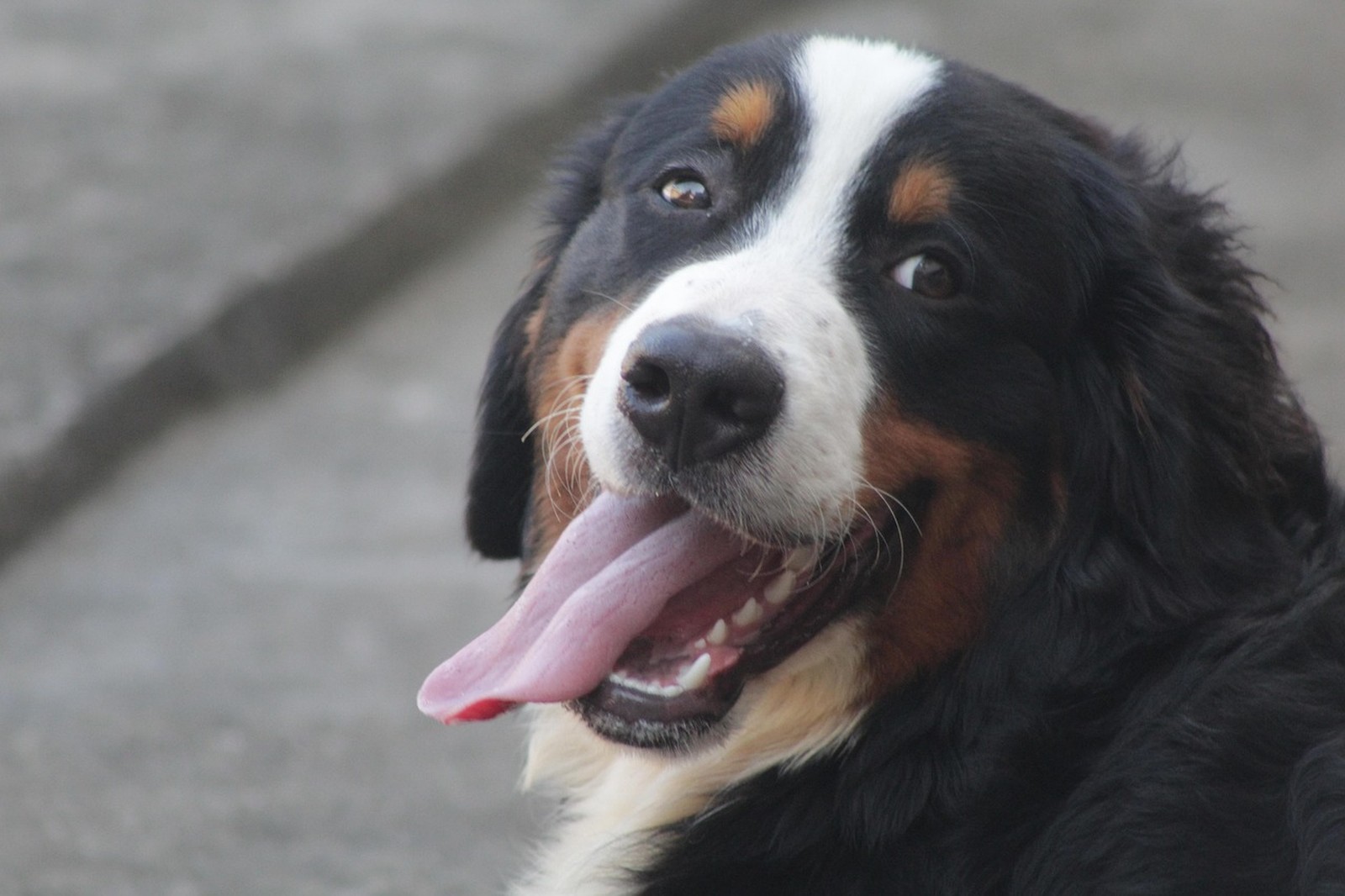
A working range for a very large dog
Most adult Bernese Mountain Dogs land somewhere around three to five cups of complete dry food a day, divided between a morning and an evening meal. A smaller, quieter female may sit near the bottom of that range, while a large, active male in cold weather may sit near the top. Treat the range as a starting point only. The right amount for your individual dog is the amount that holds her at a lean, comfortable weight, and that can only be judged on the dog in front of you.
Two meals suit a giant breed better than one. A single enormous sitting is hard on digestion and makes the day's intake harder to monitor, while two measured bowls spread the load and give you two chances a day to notice appetite changes in a breed that is usually an enthusiastic, steady eater.
Growing a Bernese puppy slowly on purpose
Bernese puppies should not be fed to grow as fast as possible. This breed matures into a heavy dog, and rapid growth and excess weight during the first year add load to developing hips, elbows, and joints. Feed a food formulated for large-breed puppies, follow the guide for expected adult weight rather than current appetite, and keep the puppy visibly lean, with ribs easy to feel as she grows. Puppies need three to four smaller meals a day at first, moving to two as they mature.
Owners sometimes worry a correctly fed Bernese puppy looks slim beside a rounder puppy of another breed. That lean look is the goal, not a problem to fix with extra scoops.
Judging condition under a thick Bernese coat
That famous tricolour coat conceals a great deal. Run your hands over your dog weekly: ribs should be felt with slight pressure, there should be a waist behind them, and you should not have to search through padding to find either. Viewed from above, a Bernese in good condition still shows a shape that narrows behind the ribs, even allowing for the breed's broad, sturdy build.
Adjust in small steps. If condition is creeping up, trim a little from each bowl and hold the new amount for a few weeks before judging again. Bernese appetites are honest and hopeful; a dog asking for more is expressing enthusiasm, not need, and this breed's fondness for food plus a slower, heat-sensitive metabolism in warmer months makes quiet weight gain common in adult life. Count chews and training treats inside the day's total, and be firm about scraps, which a dog this size can collect from several family members.
Heat, age, and appetite shifts
Bernese Mountain Dogs feel heat more than many breeds, and eating may dip on hot days while drinking stays normal. Keep meals to cooler times, ensure water is always available, and do not chase a heat-related dip with rich extras. Senior Bernese generally need less food as activity falls, but an older dog who loses interest in food, loses weight, or becomes less keen on walks should be checked by a veterinarian rather than simply served less, since this breed can develop serious health problems in later life that first show up as vague changes.
Contact the vet promptly if a Bernese puppy goes off food and becomes lethargic, or if an adult shows vomiting, diarrhoea, a swollen or tight abdomen, or attempts to vomit without producing anything, which in a deep-chested giant breed needs emergency attention.
One measure, every feeder
A dog eating this volume is often fed by several people. KinsLe Care Teams records the agreed Bernese amount against each feeding duty, so morning and evening helpers serve the same dog the same ration and log it done for the next person to see.