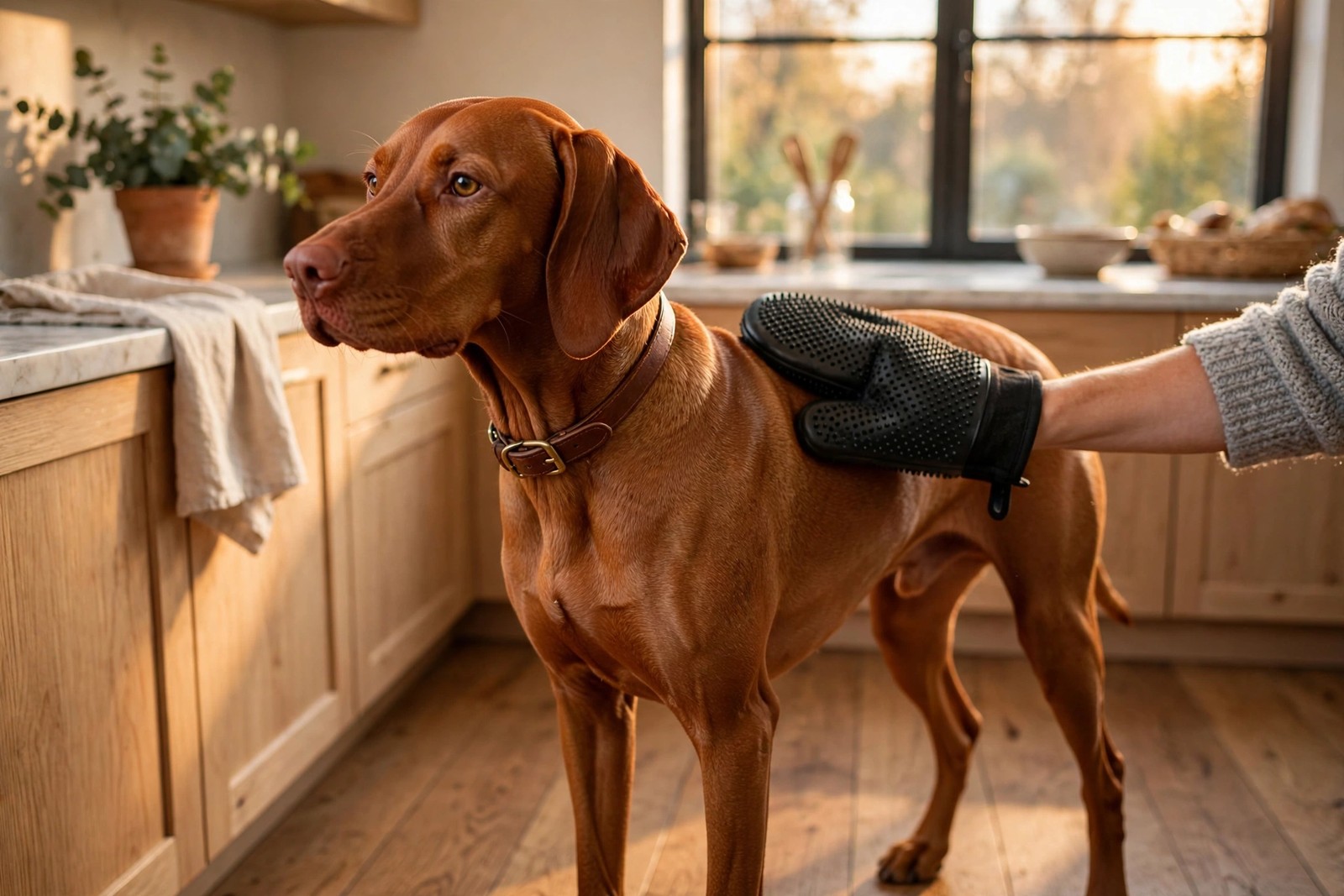
A Vizsla is one of the lower-effort coats you will ever live with. The breed wears a short, dense, single coat that lies flat, sheds lightly through the year, and has no undercoat, so there is nothing underneath to mat, felt, or need stripping out. One weekly rub-down of about ten minutes is the whole coat routine for a typical pet Vizsla. The value of that session is only partly the hair you remove. Working slowly over the whole dog also lets your hands find ticks after a walk, thorns or burrs picked up in cover, small cuts on the legs, and sore spots that a dog who runs hard may never show you by limping.
The weekly ten-minute session
Start with a soft grooming mitt or a rubber brush and work with the lie of the coat, from neck to tail, then down each leg. Short strokes suit this coat better than long dragging ones, and many Vizslas lean into the pressure happily, as the mitt feels like firm stroking. Loose hair collects on the mitt rather than floating around the room, which is a quiet bonus with a breed that shares sofas and beds as closely as this one does.
Use the same session for three checks. Look at the nails and trim or file any that have grown long enough to click on a hard floor, paying attention to dewclaws, which wear down less than the other nails. Lift each ear flap and look and sniff: a healthy Vizsla ear looks pale and clean and smells neutral, while redness, dark wax, or a yeasty smell deserves a veterinary call. Finally, run a thumb over each paw pad and between the toes, where grass seeds, small stones, and cracked skin tend to hide after runs on rough ground.
Bathing, shedding, and skin
Bathe a Vizsla only when your dog is genuinely dirty or smelly. That might mean after rolling in something dreadful, after a muddy winter walk that a rinse cannot rescue, or rarely at all for a dog who mostly runs on dry ground. Washing to a fixed calendar usually dries this coat out rather than improving it, and a plain warm-water rinse handles ordinary dust and dried mud without shampoo. Between baths, a wipe with a damp cloth takes off pollen and surface dirt in a minute.
Shedding stays modest, but you may notice more loose hair in spring and autumn. The same weekly rub-down handles those weeks too; there is no need to add extra sessions, stronger tools, or coat sprays. What should change your routine is what your hands find, not the calendar. Dry flaking, bald patches, a dull coat that used to shine, or scratching that is new for your dog are all reasons to book a vet visit rather than groom harder, because coat condition in this breed often reflects diet, parasites, allergies, or thyroid trouble that brushing cannot fix.
Fitting it around a high-energy dog
Do the session after exercise, when a Vizsla is settled rather than vibrating with unused energy, and keep it on the same day each week so it becomes part of the dog's expected rhythm. Puppies need shorter handling practice at first: a minute or two of mitt strokes, one paw held, one ear lifted, then play, building toward the full session without ever pinning a wriggling puppy down for the whole routine. Senior Vizslas may need a non-slip surface underfoot and a little more gentleness over bony hips and elbows.
That is the whole commitment: one weekly session of about ten minutes, bathing only when your dog is genuinely dirty or smelly, and prompt vet advice when the coat or skin changes. KinsLe Care Teams keeps that weekly session from drifting by letting you assign the rub-down and the nail, ear, and paw checks to whoever is home, with a timestamp showing when each part was actually done.