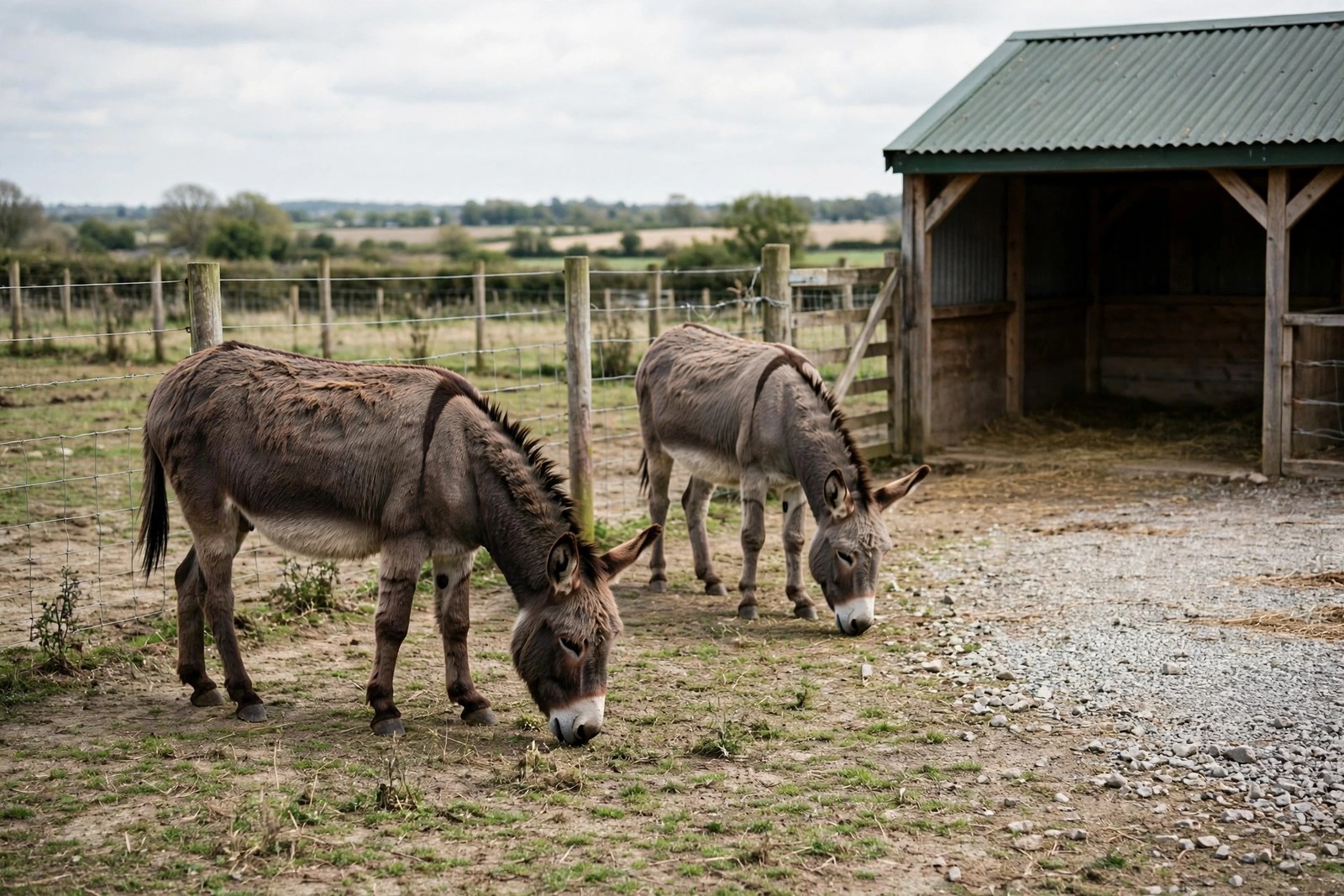
For two donkeys, about one acre set aside for grazing is a workable starting figure, with hardstanding plus a field shelter provided in addition to that grazing rather than carved out of it. One acre equals 43,560 square feet (about 4,047 square metres), and how you divide and use that ground matters more than the headline number. Two donkeys turned out together on one undivided acre of rich grass can end up fatter and less healthy than two donkeys on the same acre split into sparse, rotated paddocks, because donkeys evolved on dry, scrubby land and extract a great deal from poor forage.
Why rotation changes the answer
Split the acre into three paddocks and graze one at a time for about a week each. That pattern gives the paddock you have just left roughly two weeks of rest before donkeys return to it, which lets the grass recover, breaks the build-up of worm larvae on the pasture, and stops the pair from grazing their favourite corner down to bare earth while ignoring the rest. Move the water trough or take water to the paddock in use so the rotation does not fail on a practical detail, and poo-pick the resting paddocks so they come back clean.
Rotation also gives you control over intake. In spring, when grass grows fast and rich, you can keep the pair on the most grazed-down paddock for longer and use strip grazing or a smaller temporary section to slow them down. Donkeys put on weight quietly, and excess weight raises the risk of laminitis, a painful hoof condition that needs prompt veterinary care. Feeling for a fat crest on the neck and ribs that have disappeared under padding, and recording body condition regularly, tells you whether your acre is feeding them too well long before your eyes adjust to the change.
The ground that is not grazing
The dry standing area earns its space every wet week. A hardstanding apron by the shelter and gate gives donkeys somewhere dry to stand, eat hay, and have their feet picked out, and it protects gateways from turning into deep mud that softens hooves. Donkey hooves suffer in persistent wet ground, so this area is welfare equipment, not a luxury. The shelter itself needs to be big enough for both donkeys to stand and lie down inside together with room to turn, with a dry bed, and open enough that a lower-ranking donkey cannot be trapped in a corner by its companion.
Fencing must suit donkeys rather than horses alone: secure, visible, and low enough that a donkey cannot push under or force its way out, with no barbed wire at donkey height. Check gates, water supply, and the boundary before the pair arrives, and walk the ground for ragwort and other toxic plants, removing them rather than assuming donkeys will always avoid them when grazing gets short.
When an acre is not the right figure
Very poor, sparse land may support two donkeys on less grazing, topped up with straw and hay, and some owners deliberately keep donkeys mainly on a large dry yard with measured forage because a vet has advised strict weight control. Rich lowland pasture may make even an acre too much unless you rotate tightly, take hay cuts from part of it, or graze it down with the rotation above. Company matters too: donkeys bond strongly and need equine companionship, and two is a sensible minimum pairing, but adding a third donkey later means revisiting the land sum rather than stretching the same acre silently.
So the honest figure is about one acre of grazing for two donkeys, divided into three paddocks and rotated weekly, plus hardstanding and shelter on top of that acre. Chosen parents and grandparents may receive access to a profile for both donkeys through KinsLe Family Sharing.