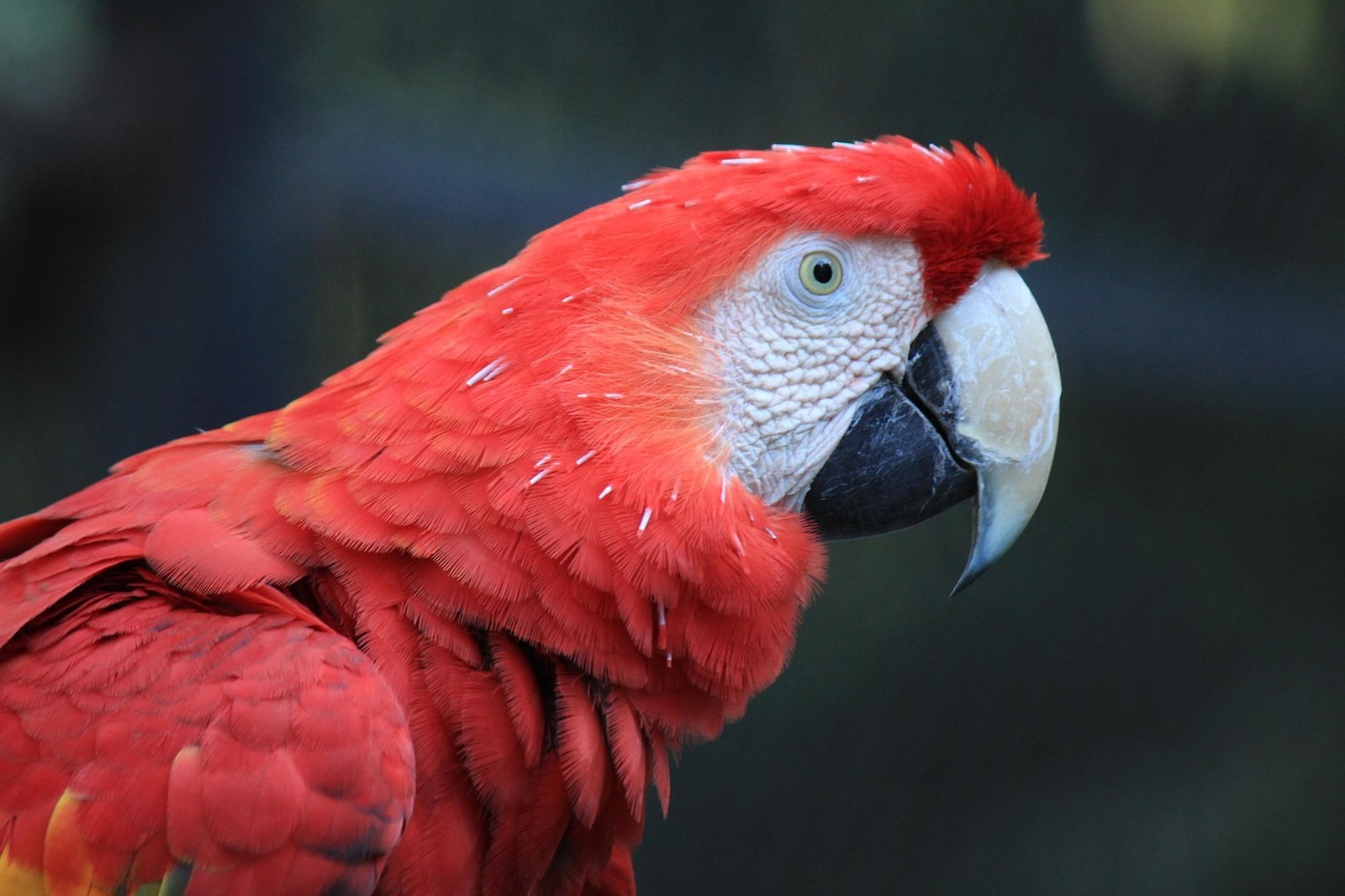
A macaw needs at least 3 to 4 hours of supervised time out of its cage every day. For most households the workable pattern is 1.5 to 2 hours in the morning and another 1.5 to 2 hours later in the day, which adds up to the full 3 to 4 hours. Many macaws will happily use more, and an active, noisy bird asking to come out again in the evening is usually asking for company and occupation, not being difficult for its own sake.
What out-of-cage time has to contain
Time out only counts if the macaw can use its body and its mind. A large parrot needs room to walk, climb, flap, bathe, and work through destructible toys and safe wood or cardboard with that powerful beak. Direct social time matters just as much: talking, training in short sessions, and simply being near the household's activity. A macaw parked alone on a stand in an empty room for four hours has technically left the cage, but it has not had the interaction those hours are meant to provide.
Build the time around two anchors. The morning session suits feeding foraging toys, a shower or misting if your bird enjoys it, and some energetic play before the household leaves. The later session suits training, chewing projects, and calm company. Short extra spells out for a change of room can be added, but they do not replace either anchor session.
Making a room safe for a bird this size
Out-of-cage time for a macaw is never genuinely unsupervised time. Before each session, check the room as a routine rather than from memory. Ceiling fans stay off, exterior doors and unscreened windows stay closed, and other free-roaming pets are kept in a separate room. Kitchens are poor play spaces because of hot pans, open water, and fumes from overheated non-stick coatings, which are dangerous to birds. Move toxic houseplants, exposed cables, and small objects that can be bitten apart and swallowed out of reach.
Expect chewing damage to be part of the bargain and plan for it with a dedicated play stand, replaceable perches, and toys bought for destruction, rather than scolding a macaw for doing with furniture exactly what it does with a toy. Rotate the toys every few days so the stand stays interesting.
Too little time, and what it looks like
A macaw regularly left in its cage for most of the day often shows the shortfall in behaviour first: prolonged screaming for contact, biting when it is finally handled, fear of hands, or feather-damaging behaviour. Those signs have medical causes too, so a bird that starts plucking or changes temperament also needs an avian vet, but the first honest question is whether its daily hours out, sleep, and interaction have quietly shrunk.
Increase time gradually if your bird is currently getting far less. A nervous macaw may first need shorter sessions close to the cage, stepping up willingly and returning without a chase, because an outing that ends in a towel capture teaches it to avoid the next one.
Fitting several hours into a real household
Four hours is a serious daily commitment, which is exactly why macaw ownership suits households where people are home for much of the day, or where the sessions can be shared reliably. Put the two sessions on the calendar at fixed times, and treat a missed session as something to make up later that day rather than skip. KinsLe's Care Teams can assign the morning and evening sessions to different people in your macaw's household, with the finished session timestamped so everyone can see the bird has genuinely had its time out.