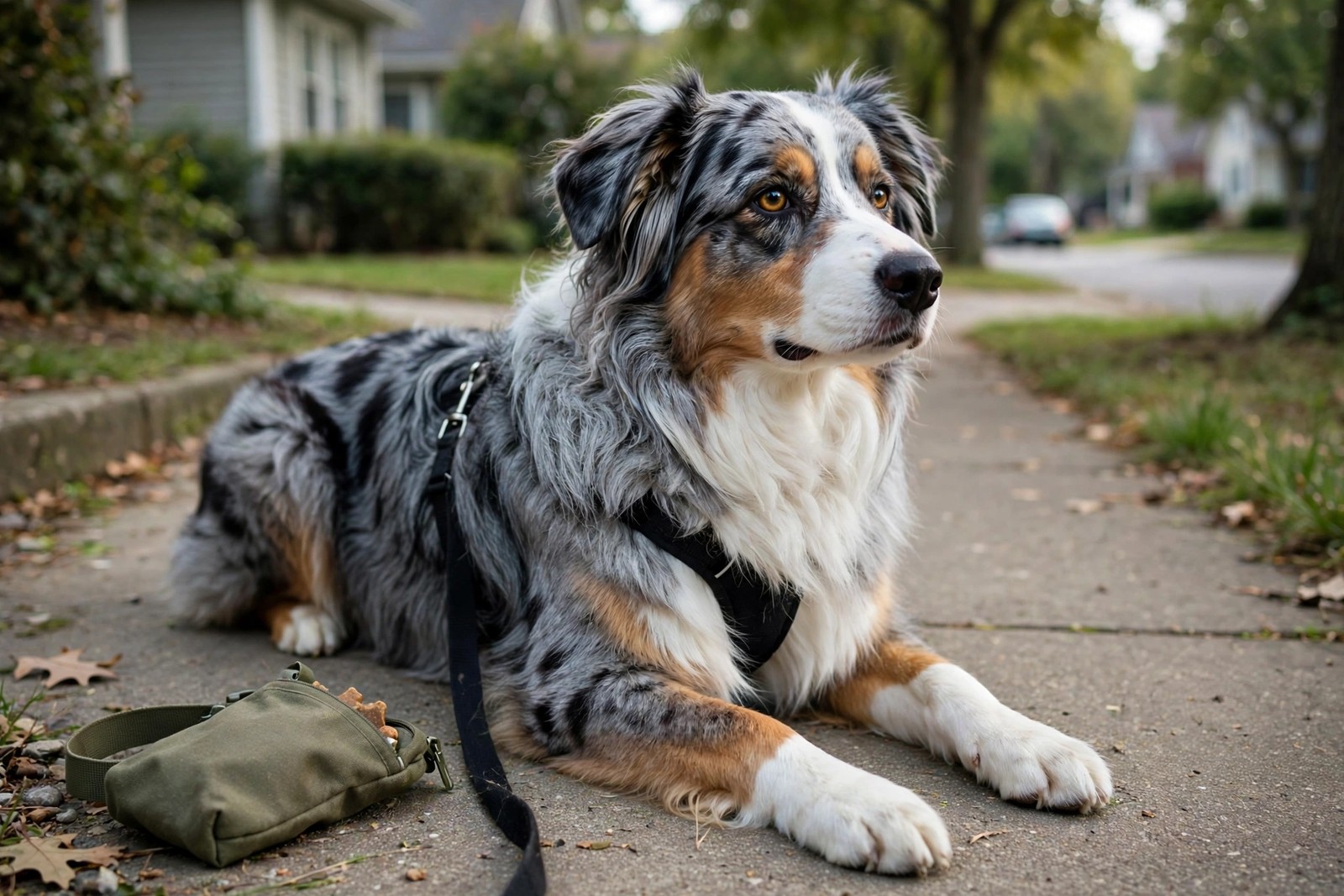
An adult Australian Shepherd typically weighs 40 to 65 lb, which converts to about 18 to 29 kg. Males usually occupy the upper part of that span at roughly 50 to 65 lb (about 23 to 29 kg), and females sit lower at roughly 40 to 55 lb (about 18 to 25 kg). Height drives much of the variation. A tall, strongly boned male and a compact female can differ by more than 20 lb while both carry ideal condition.
Why the Scale Alone Misleads With This Breed
Australian Shepherds carry a dense double coat that adds visual bulk without adding body fat, and the coat hides the waist that owners rely on with short-coated breeds. A dog can look broad and substantial in full coat while the body underneath stays lean, and a freshly clipped or wet dog can look startlingly slight by comparison. Judging an Aussie by silhouette invites errors in both directions, so hands matter more than eyes with this breed.
Working and sport lines also carry heavier muscle than show lines of the same height. Muscle weighs more than fat, and a fit herding dog in hard condition may sit above the mid-range figure while a softer pet dog of the same weight carries excess fat. The scale reports a total, and only a condition check separates useful mass from padding.
Run the Feel Test Monthly
Part the coat and run flat hands along the ribcage. Ribs should be easy to feel under a thin fat layer with light pressure, and you should not need to dig through coat and padding to find them. Press over the spine and hip bones next. Those bones should feel covered and smooth rather than sharp. Then look from above once the coat is flattened by your hands or by a bath. A waist should narrow behind the ribs even under the breed's abundant coat.
Check the muscle as well. Shoulders and thighs should feel firm and rounded in a dog who works or trains regularly. Soft, shrinking thighs in a dog whose weight stays constant can signal lost muscle masked by gained fat, and that pattern deserves a vet conversation.
Adjust Food to Workload, Question Unexplained Change, and Audit at Bath Time
Few breeds swing in daily activity as widely as this one. A Shepherd who trains, herds, or runs with an owner most days burns far more than the same dog during a quiet month of short walks. Portions should follow the workload in small steps, with condition checks every few weeks rather than a fixed bowl that ignores the calendar. Weight creep in this breed usually arrives during rest periods, when the appetite of an athlete meets the schedule of a pet.
Sustained gain or loss outside your adjustments deserves veterinary input. A vet can investigate possibilities that feeding changes cannot explain, and regular weight records give that conversation a clear history. Adolescents also need patience, because young Aussies often fill out late and look gangly for months before muscle arrives.
Use bath time as a scheduled audit. Twice a year an Australian Shepherd sheds the undercoat heavily, and the outline changes enough to confuse even attentive owners. A wet, flattened coat during a bath reveals the true waist and rib coverage, so pair each seasonal bath with a weigh-in and a hands-on check. Record both figures together, because the comparison across seasons exposes gain that a single reading hides beneath coat growth.
The routine holds when the household shares one target and one checking rhythm, and KinsLe Care Teams keeps the monthly weigh-in assigned and the result recorded rather than left to whoever remembers.